GLP-1 Side Effects: What's Common, Serious & How to Manage
Disclosure: Some links on this site are affiliate links. If you purchase through these links, we may earn a commission at no extra cost to you. Thank you for supporting our site. For informational purposes only—not medical advice.

On this page
The 30-Second Answer
GLP-1 side effects are primarily gastrointestinal—nausea affects 20-44% of users, followed by vomiting, diarrhea, and constipation. These symptoms typically peak during the first 4-8 weeks and improve as your body adjusts to the medication.
Serious but rare side effects include pancreatitis (<1%), gallbladder problems (1-2%), and severe allergic reactions. Most people tolerate GLP-1 medications well, but knowing what's normal versus what needs medical attention can make the difference between a manageable journey and an unnecessary scare.
This guide covers every documented GLP-1 side effect, compares them across medications (Ozempic, Wegovy, Mounjaro, Zepbound, and others), and gives you clear protocols for managing symptoms—plus exactly when to call your doctor.
Quick Navigation: Pick Your Situation
Jump to what you need:
- I'm about to start a GLP-1 → What should I expect?
- I'm on a GLP-1 and feel sick → Is this normal?
- I'm worried about pancreatitis or gastroparesis → Red flags
- What about long-term risks? → Cancer, kidneys, eyes
- Side effects in women → Menstrual changes, pregnancy, fertility
- Side effects in men → What to know
- Surgery coming up → Anesthesia risks
- Which GLP-1 has the fewest side effects? → Comparison
- How do I manage these side effects? → Practical playbooks
What Counts as a GLP-1 Medication?
Before we dive into side effects, let's clarify which medications we're talking about. "GLP-1" is shorthand for glucagon-like peptide-1 receptor agonists—a class of medications that mimic a natural incretin hormone your gut produces after eating.
These medications help with blood sugar control and weight loss by:
- Slowing stomach emptying (so you feel full longer)
- Signaling fullness to your brain (reducing appetite)
- Stimulating insulin release when blood sugar rises
- Reducing glucagon secretion
GLP-1 Medications Covered in This Guide
| Medication (brand) | Generic | What it's FDA-approved for (U.S.) | Form |
|---|---|---|---|
| Wegovy | semaglutide | Chronic weight management; reduces risk of major CV events in adults with established CVD + obesity/overweight; MASH w/ fibrosis (accelerated approval, injection) | Weekly injection; daily tablet |
| Ozempic | semaglutide | Type 2 diabetes; reduces risk of major CV events (in T2D + established CVD); reduces risk of CKD progression outcomes (in T2D + CKD) | Weekly injection |
| Rybelsus | semaglutide | Type 2 diabetes; reduces risk of major adverse CV events in adults with T2D who are at high risk for these events | Daily oral tablet |
| Zepbound | tirzepatide | Chronic weight management; obstructive sleep apnea in adults with obesity | Weekly injection |
| Mounjaro | tirzepatide | Type 2 diabetes | Weekly injection |
Note: Ozempic and Mounjaro are commonly prescribed off-label for weight loss, but their FDA approvals differ from Wegovy/Zepbound.
Important note: Tirzepatide (Mounjaro/Zepbound) is technically a "dual agonist" that works on both GLP-1 and GIP receptors, but it's commonly discussed alongside GLP-1 medications because the side effect profile is similar.
The side effects across this class are similar because they all work through related mechanisms. However, frequency and severity can vary by specific medication, dose, and individual factors—which we'll break down throughout this guide.
GLP-1 Side Effects: The Complete List
Here's every documented GLP-1 side effect, organized by how common and how serious they are. We've compiled this from FDA prescribing information for all major GLP-1 medications.
Common Side Effects (Expected in Many Users)
These side effects are well-documented in clinical trials and affect a significant percentage of users. Most improve with time.
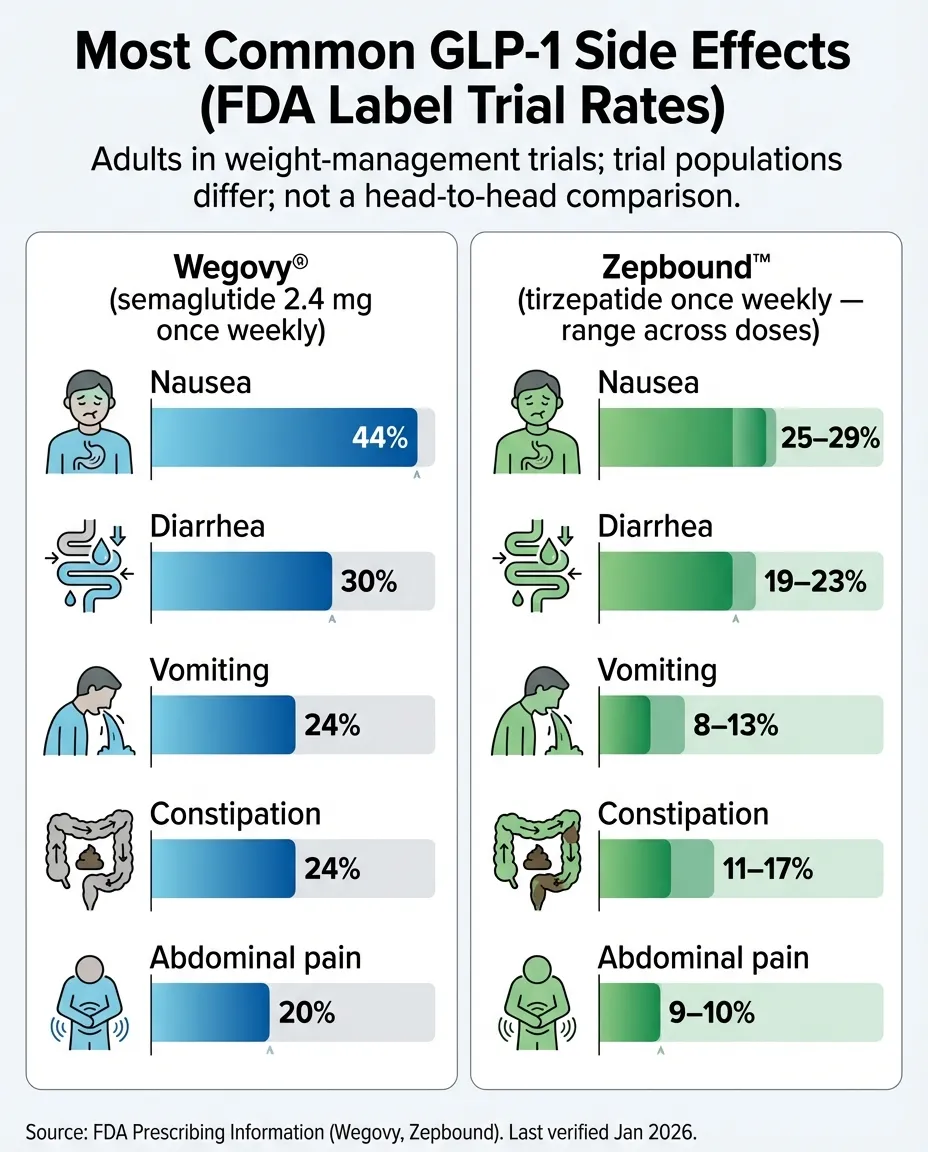
Wegovy injection (semaglutide 2.4 mg once weekly) — adults, weight reduction (Percentages from FDA label trial table.)
| Adverse reaction | Wegovy | Placebo |
|---|---|---|
| Nausea | 44% | 16% |
| Diarrhea | 30% | 16% |
| Vomiting | 24% | 6% |
| Constipation | 24% | 11% |
| Abdominal pain | 20% | 10% |
| Headache | 14% | 10% |
| Fatigue | 11% | 5% |
| GERD | 5% | 3% |
| Hair loss | 3% | 1% |
| Eructation (burping) | 7% | <1% |
Source: Wegovy prescribing information (Table of adverse reactions)
Zepbound (tirzepatide) — adults, weight reduction (Percentages vary by dose; shown as range across doses.)
| Adverse reaction | Zepbound (range across doses) | Placebo |
|---|---|---|
| Nausea | 25–29% | 8% |
| Diarrhea | 19–23% | 8% |
| Vomiting | 8–13% | 2% |
| Constipation | 11–17% | 5% |
| Abdominal pain | 9–10% | 5% |
| Fatigue | 5–7% | 3% |
| GERD | 4–5% | 1% |
| Injection site reactions | 6–8% | 1% |
| Hair loss | 4–5% | 1% |
| Eructation (burping) | 4–5% | 1% |
Source: Zepbound prescribing information (Trial adverse reactions table)
These rates come from specific FDA trials at specific doses. You can't compare products perfectly across different trials, but they show a consistent pattern: GI effects are most common, and higher doses often have higher rates.
General Timeline and Management
| Side Effect | When It Appears | Typical Duration | What To Do |
|---|---|---|---|
| Nausea | First 1-4 weeks, dose increases | Usually improves by week 8 | Eat smaller meals, avoid fatty foods |
| Diarrhea | First few weeks | 2-4 weeks typically | Stay hydrated, bland diet temporarily |
| Vomiting | First weeks, dose increases | 4-8 weeks typically | Small sips of fluid, contact doctor if can't keep fluids down |
| Constipation | Can occur anytime | May persist; manageable | Increase fiber gradually, hydration |
| Abdominal pain | Early treatment | Usually temporary | Monitor; severe pain needs evaluation |
| Headache | Early treatment | 1-2 weeks typically | Hydration, OTC pain relief if needed |
| Fatigue | First weeks | 4-8 weeks typically | Ensure adequate nutrition, hydration |
| Heartburn/reflux | Anytime | Variable | Smaller meals, don't lie down after eating |
| Decreased appetite | Starts early | Ongoing (intended effect) | Ensure adequate nutrition |
| Injection site reactions | With injections | Brief | Rotate sites, proper technique |
| Dizziness | Early treatment | Usually temporary | Rise slowly, stay hydrated |
| Bloating/gas | Early weeks | Usually improves | Smaller meals, eat slowly |
Less Common But Important Side Effects
These affect fewer people but warrant awareness and monitoring.
| Side Effect | How Common | Notes |
|---|---|---|
| Increased heart rate | 1-4 bpm average increase | GLP-1–based weight-loss drugs have been associated with small average increases in resting heart rate (about 1–4 bpm in trials), and some people experience larger transient jumps. Usually not clinically significant; discuss with doctor if you have heart conditions. |
| Hair thinning | 3-5% report noticeable loss | Related to rapid weight loss, not the medication itself; usually temporary. See our guide on Ozempic face for more on facial and hair changes. |
| "GLP-1 face" (facial volume loss) | Variable with weight loss | Occurs with any rapid weight loss; more noticeable with larger losses |
| Hypoglycemia (low blood sugar) | Uncommon alone; higher with insulin/sulfonylureas | Know the symptoms; may need medication adjustment |
| Burping/belching | Can occur with both injectable and oral forms | Eructation (burping) can occur with both injectable and oral GLP-1–based therapies; it's not exclusive to oral formulations. |
Rare But Serious Side Effects (Require Medical Attention)
These occur in a small percentage of users but require prompt recognition and action.
| Side Effect | Frequency | Warning Signs | Action Required |
|---|---|---|---|
| Pancreatitis | <1% | Severe abdominal pain radiating to back, persistent vomiting | Seek immediate medical care |
| Gallbladder problems | 1-2% | Upper right abdominal pain, especially after fatty meals, fever | Contact doctor promptly |
| Gastroparesis | Very rare | Severe nausea/vomiting not improving, feeling full after tiny amounts | Medical evaluation needed |
| Bowel obstruction | Very rare | Severe cramping, inability to pass gas/stool, distension | Emergency care |
| Acute kidney injury | Very rare | Usually from dehydration; dark urine, significantly decreased urination | Seek medical care; stay hydrated |
| Severe allergic reaction | Very rare | Swelling of face/throat, difficulty breathing, severe rash | Call 911 |
| Thyroid tumors | Unknown in humans | Lump/swelling in neck, trouble swallowing, hoarseness | Report to doctor; boxed warning on labels |
Important Context on Serious Risks
Pancreatitis: A 2023 analysis in JAMA reported a higher relative risk of pancreatitis among GLP-1 agonist users compared with bupropion-naltrexone, though events were still uncommon in absolute terms.
Gallbladder disease: The increased risk is partly related to rapid weight loss itself (a known risk factor for gallstones), not just the medication. Slower weight loss may reduce this risk.
Thyroid cancer warning: Many (but not all) GLP-1–based medicines carry a boxed warning about thyroid C-cell tumors based on rodent studies; the relevance to humans is unknown. Some GLP-1 agents do not include this boxed warning, so always check the label for your specific product. However, these medications are contraindicated if you have a personal or family history of medullary thyroid carcinoma or Multiple Endocrine Neoplasia syndrome type 2 (MEN2).
Eye Side Effects
Eye-related side effects are an important consideration, especially for people with diabetes.
What the Labels Warn About
FDA labels warn about diabetic retinopathy complications in patients with type 2 diabetes, especially if glucose improves rapidly. Rapid improvement in blood sugar control can temporarily worsen diabetic retinopathy in some patients.
Who's at Higher Risk
- People with pre-existing diabetic retinopathy
- Those with poorly controlled diabetes who experience rapid glucose improvement
- Patients with a history of eye complications from diabetes
What To Do
If you have diabetes:
- Get a baseline eye exam before starting GLP-1 treatment
- Follow your ophthalmologist's recommended exam schedule
- Report any vision changes to your doctor promptly
Seek urgent care if you experience:
- Sudden vision loss or significant changes
- New floaters or flashes of light
- Blurred vision that doesn't improve
- Any sudden or unexplained eye symptoms
Important Context
These complications are related to how the medication affects blood sugar control, not a direct toxic effect on the eyes. For most people without pre-existing diabetic eye disease, this is not a significant concern.
Is This Normal? The GLP-1 Side Effect Decision Framework
One of the biggest questions people have is: "Should I be worried about what I'm feeling?" Use this framework to decide what action to take.
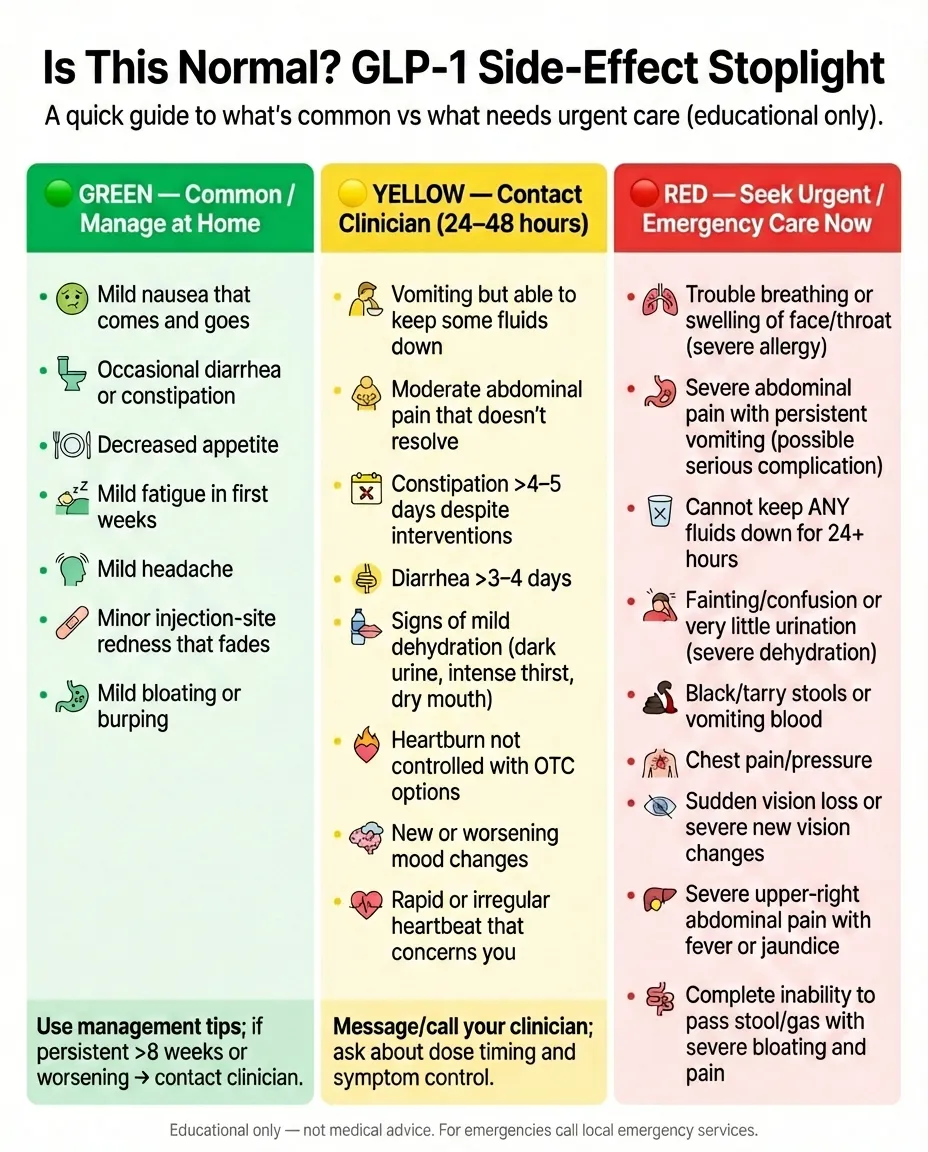
GREEN: Normal — Manage at Home
These symptoms are expected and generally safe to handle on your own:
- Mild nausea that comes and goes
- Occasional diarrhea or constipation
- Decreased appetite (this is the medication working)
- Mild fatigue in the first few weeks
- Minor injection site redness that fades within hours
- Occasional bloating or burping
- Mild headache
What to do: Use the management strategies in this guide. If symptoms persist beyond 8 weeks or significantly worsen, move to Yellow.
YELLOW: Caution — Contact Your Doctor Within 24-48 Hours
These warrant a call to your healthcare provider but aren't emergencies:
- Vomiting that makes it hard to keep fluids down (but you can keep some down)
- Moderate abdominal pain that doesn't resolve with dietary changes
- Constipation lasting more than 4-5 days despite interventions
- Diarrhea lasting more than 3-4 days
- Noticeable hair loss that concerns you
- Signs of mild dehydration (dark urine, thirst, dry mouth)
- Injection site reaction that doesn't improve in 24-48 hours
- Heartburn not controlled with over-the-counter medications
- New or worsening mood changes (anxiety, depression, irritability)
- Persistent fatigue that doesn't improve after 6-8 weeks
- Rapid or irregular heartbeat that concerns you
What to do: Call your doctor's office or send a message through your patient portal. Most of these can wait until the next business day unless they significantly worsen.
RED: Urgent — Seek Immediate Medical Attention
These are medical emergencies or require same-day evaluation:
Call 911 or go to the ER for:
- Severe allergic reaction: swelling of face, lips, tongue, or throat; difficulty breathing; widespread hives
- Severe abdominal pain, especially if it radiates to your back (possible pancreatitis)
- Inability to keep ANY fluids down for 24+ hours
- Signs of severe dehydration: confusion, rapid heartbeat, little to no urination, fainting
- Vomiting blood or material that looks like coffee grounds
- Bloody or black, tarry stools
- Chest pain or pressure
- Suicidal thoughts or urges to self-harm: Call 988 (Suicide & Crisis Lifeline)
Seek urgent/same-day care for:
- Severe upper right abdominal pain with fever (possible gallbladder emergency)
- Complete inability to have a bowel movement with severe bloating and pain
- Severe headache unlike any you've had before
- Lump or swelling in your neck
- Sudden vision changes (especially if you have diabetes)
Why GLP-1s Cause Side Effects
Understanding why side effects happen can help you manage them better and know when to be patient versus when to be concerned. Learn more about how GLP-1 medications work for weight loss.
The Stomach Slowdown
GLP-1 medications work by slowing gastric emptying—how fast food moves from your stomach into your intestines. This is actually how they help you lose weight: food sits in your stomach longer, so you feel full faster and stay full longer.
But this same mechanism causes most GI side effects:
- Nausea: Your stomach isn't emptying at its usual pace
- Bloating: Food sitting longer creates a "full" sensation
- Constipation: Slower movement throughout the entire GI tract
- Reflux: Full stomach can push contents upward
The Dose Escalation Pattern
Here's a critical insight: most side effects peak when you start the medication or increase your dose. This is why GLP-1s are started at low doses and gradually increased over weeks to months.
Typical timeline:
- Week 1-2: Side effects often begin as body adjusts
- Week 2-4: May peak in intensity
- Week 4-8: Usually improving significantly
- After 8 weeks: Most people find a "new normal" with minimal symptoms
When you increase your dose, this cycle may repeat (though usually milder). This is normal and expected.
The Food Volume Mismatch
Many people continue eating the same portion sizes they ate before starting a GLP-1. But your stomach is now emptying more slowly, so the same amount of food causes problems.
The fix: Eat smaller portions, eat more slowly, and stop when you first feel satisfied (not "full"). Your body will tell you when it's had enough—listen to it. For detailed guidance, see our article on what to eat on GLP-1 medications.
Side Effect Frequency by Medication
One of the most common questions is: "Which GLP-1 has the fewest side effects?" Here's what the clinical trial data shows.
Head-to-Head Comparison: GI Side Effects
| Side Effect | Semaglutide (Wegovy/Ozempic) | Tirzepatide (Zepbound/Mounjaro) | Liraglutide (Saxenda) |
|---|---|---|---|
| Nausea | 20-44% | 12-33% | 39% |
| Vomiting | 6-24% | 6-17% | 16% |
| Diarrhea | 8-30% | 12-23% | 21% |
| Constipation | 6-24% | 6-17% | 19% |
| Abdominal pain | 5-20% | 5-10% | 5% |
| Discontinuation due to side effects | 4-7% | 4-7% | 9-10% |
Data from STEP trials (semaglutide), SURMOUNT trials (tirzepatide), SCALE trials (liraglutide)
Key Findings
Tirzepatide (Mounjaro/Zepbound) generally shows similar or slightly lower rates of nausea and vomiting compared to semaglutide, despite producing greater weight loss. A 2025 head-to-head trial (SURMOUNT-5) comparing tirzepatide directly to semaglutide found:
- Both had primarily GI side effects
- Most were mild to moderate
- Most occurred during dose escalation
- Discontinuation rates due to GI adverse events were similar
Liraglutide (Saxenda) tends to have higher overall adverse event rates and higher discontinuation rates (9-10%) compared to newer medications, along with less weight loss.
Semaglutide (Ozempic/Wegovy): GLP-1 medicines have nearly two decades of post-marketing experience in diabetes, and semaglutide now has large outcomes trials (e.g., cardiovascular and kidney outcomes) plus extensive real-world exposure.
Which One Should You Choose?
There's no universally "best" option—it depends on your situation:
| If you... | Consider... | Why |
|---|---|---|
| Want maximum weight loss | Tirzepatide | Clinical trials show ~20% weight loss vs ~15% for semaglutide |
| Need proven heart protection | Semaglutide (Ozempic/Wegovy) | SELECT trial showed 20% reduction in cardiovascular events |
| Have kidney concerns | Semaglutide | FLOW trial demonstrated kidney protection |
| Have needle phobia | Oral semaglutide (Rybelsus, Wegovy tablets) | Available as daily pill |
| Tried one and had issues | Switch to the other | Different people tolerate different medications |
| Have insurance constraints | What's covered | Check your specific plan |
Important: Discuss with your healthcare provider. They can help you weigh these factors against your personal health history.
GLP-1 Side Effects in Women
Women make up approximately 70% of GLP-1 users and experience side effects differently than men. Here's what the research shows.
Women Experience More GI Side Effects
A 2025 real-world EHR analysis found that women experience nausea and vomiting at approximately 2.5 times the rate of men while taking GLP-1 medications. (Truveta Research)
Why? Research points to several factors:
- GLP-1 receptor expression is higher in certain brain regions in females
- Hormonal interactions: Estrogen levels appear to affect how the body processes these medications
- Body composition differences affect drug distribution
Despite higher side effect rates, women typically achieve greater weight loss than men on GLP-1 medications.
Menstrual Cycle Changes
Many women report menstrual changes after starting GLP-1 medications, though this isn't well-studied in clinical trials. Reported changes include:
- Irregular cycles
- Heavier or lighter periods
- Temporary spotting
- Skipped periods
Why this happens: Rapid weight loss and changes in body fat percentage affect estrogen levels and can disrupt normal ovulation patterns. This usually normalizes as weight stabilizes.
Fertility and "Ozempic Babies"
Critical information:
- GLP-1 medications are not approved for use during pregnancy
- Stop semaglutide at least 2 months before planned pregnancy
- For tirzepatide, discuss timing with your prescriber if you plan pregnancy; product labeling emphasizes discontinuing if pregnancy is recognized and counseling people who intend to become pregnant
- Weight loss can dramatically improve fertility in women with PCOS or obesity-related infertility
- Unexpected pregnancies have occurred when women who previously struggled to conceive lost weight on GLP-1s
If you're of childbearing age and sexually active, discuss contraception with your doctor before starting. If you become pregnant while taking a GLP-1, stop immediately and contact your healthcare provider.
Contraception Considerations
GLP-1 medications slow gastric emptying, which can theoretically affect the absorption of oral medications—including oral contraceptives.
For tirzepatide (Mounjaro/Zepbound): The prescribing information specifically recommends switching to non-oral contraception or adding a barrier method for 4 weeks after starting and after each dose increase.
For semaglutide: While not specifically highlighted in the same way, delayed gastric emptying could still affect absorption.
Recommendation: Discuss with your healthcare provider whether you should use backup contraception or switch to a non-oral method (IUD, implant, injection, ring, patch).
Breastfeeding
GLP-1 medications are not recommended while breastfeeding due to insufficient safety data. If you're breastfeeding or planning to, discuss alternatives with your healthcare provider.
Bone Health (Especially Post-Menopause)
Rapid weight loss from any cause can affect bone density. For women, especially those who are post-menopausal:
- Ensure adequate calcium and vitamin D intake
- Include weight-bearing exercise in your routine
- Discuss bone density monitoring with your doctor if you have other risk factors
Hair and Facial Changes
Some women notice facial volume loss (sometimes called "Ozempic face") or hair thinning during rapid weight loss. These are typically related to the weight loss itself, not a direct medication effect, and often improve once weight stabilizes.
GLP-1 Side Effects in Men
Men generally experience fewer and less severe side effects than women, but there are still important considerations.
Lower GI Side Effect Rates
Men typically experience nausea and vomiting less frequently than women. This may allow for:
- Faster dose escalation in some cases (discuss with your doctor)
- Generally smoother adjustment periods
Body Composition Concerns
Many men worry about losing muscle along with fat. Here's the reality:
- Some muscle loss occurs with any significant weight loss
- GLP-1 medications don't specifically target muscle
- Prevention: Adequate protein intake (0.7-1g per pound of body weight daily) and resistance training can help preserve muscle mass
Testosterone and Sexual Function
Good news: Obesity is associated with lower testosterone levels. Weight loss from GLP-1 medications often improves testosterone levels, not decreases them.
Similarly, erectile function often improves with weight loss due to:
- Better cardiovascular health
- Improved blood flow
- Reduced inflammation
- Better hormone balance
There's no evidence that GLP-1 medications negatively affect male sexual function or fertility.
The "Ozempic Penis" Phenomenon
Some men have reported a perceived increase in penis size while on GLP-1 medications. This is not an actual medication effect—it's related to weight loss reducing the fat pad around the pubic area, making more of the penis visible. The same thing happens with any significant weight loss.
Long-Term Side Effects
GLP-1 medications have been used to treat diabetes for nearly two decades, giving us substantial long-term safety data. Here's what we know.
Evidence Tiers: Separating Fact from Fear
Not all "side effects" have equal evidence. We've categorized long-term concerns by evidence strength:
Tier A: Well-Established (Strong Evidence)
- GI side effects typically improve over time, not worsen
- Cardiovascular benefits are sustained (protective, not harmful)
- Gallbladder risk is real but modest (1-2%)
- Weight maintenance requires ongoing treatment for most people
Tier B: Label Warnings (Precautionary)
- Thyroid C-cell tumor warning (from animal studies; not confirmed in humans)
- Pancreatitis risk (rare, <1%)
- Acute kidney injury risk (usually from dehydration)
Tier C: Under Investigation
- Long-term effects of 10+ years of use for weight loss specifically (newer indication)
- Effects in younger populations
- Any potential cancer risks beyond thyroid
Tier D: Internet Claims Not Supported by Evidence
- "GLP-1s cause permanent gastroparesis in most users" (false—severe gastroparesis is rare)
- "Everyone loses muscle" (preventable with protein + exercise)
- "GLP-1 patches are FDA-approved" (no GLP-1 patch is currently FDA-approved for weight loss)
The Cancer Question
This is one of the most common fears. Here's what we actually know:
Thyroid cancer (specifically medullary thyroid carcinoma):
- Animal studies: GLP-1s caused thyroid tumors in rodents
- Human studies: No confirmed link after nearly 20 years and millions of patients
- Why the difference? Rodent thyroid cells have many more GLP-1 receptors than human cells
- Still contraindicated if you have a personal or family history of MTC or MEN2
- Continue to report any thyroid symptoms (neck lump, trouble swallowing, hoarseness)
Pancreatic cancer:
- Some early concerns from database analyses
- Larger, better-designed studies have not confirmed an increased risk
- Some research suggests GLP-1s might even have anti-tumor effects (not enough evidence to claim this as a benefit)
Other cancers:
- No consistent signal for increased risk of other cancers
- Some studies suggest possible protective effects (research is ongoing)
What Happens When You Stop?
This isn't technically a "side effect," but it's crucial to understand:
- Most people regain weight when they stop GLP-1 medications
- Studies show approximately 2/3 of lost weight is regained within one year of stopping (PMC)
- Appetite returns to pre-treatment levels
- This doesn't mean the medication "broke" anything—it means obesity is a chronic condition that requires ongoing management
Implications: GLP-1 medications are typically considered long-term or lifelong treatments, similar to blood pressure medications. Discuss your long-term plan with your healthcare provider.
Serious Side Effects Deep Dive
Let's take a closer look at the rare but serious side effects that cause the most concern.
Pancreatitis
What it is: Inflammation of the pancreas, which can range from mild to life-threatening.
How common: Less than 1% (rare; rates vary by population and study). (PMC)
Warning signs:
- Severe pain in the upper abdomen
- Pain that radiates to your back
- Pain that worsens after eating
- Nausea and vomiting that doesn't improve
- Fever
- Rapid pulse
- Abdominal tenderness
What to do:
- Stop taking your GLP-1 medication (do not take your next dose)
- Seek immediate medical attention (ER or urgent care)
- Tell healthcare providers you're on a GLP-1 medication
Important context:
- Most cases are mild and resolve with treatment
- Risk factors include: history of pancreatitis, heavy alcohol use, very high triglycerides, gallstones
- If you've had pancreatitis before, discuss whether GLP-1s are appropriate for you
Gallbladder Problems
What they are: Gallstones (cholelithiasis) or gallbladder inflammation (cholecystitis)
How common: 1-2% of GLP-1 users
Why the risk increases:
- Rapid weight loss itself is a risk factor for gallstones—this happens with any rapid weight loss method (including bariatric surgery, very low-calorie diets)
- GLP-1s may also directly affect bile composition
- Higher risk with faster weight loss and higher GLP-1 doses
Warning signs:
- Pain in the upper right part of your abdomen
- Pain that may radiate to your right shoulder or back
- Pain after eating fatty or heavy meals
- Nausea or vomiting with abdominal pain
- Fever or chills (suggests possible infection)
- Yellowing of skin or eyes (jaundice)
What to do:
- Contact your doctor promptly (same day if fever/jaundice present)
- You may need imaging (ultrasound) and blood tests
- Treatment depends on severity—may range from monitoring to surgery
Prevention:
- Slower weight loss may reduce risk (though this isn't always controllable)
- Maintain adequate fluid intake
- Don't completely avoid dietary fat (some fat actually helps empty the gallbladder)
Gastroparesis and Bowel Obstruction
What they are:
- Gastroparesis: Severe slowing or stopping of stomach emptying
- Bowel obstruction: Blockage in the intestines
How common: Very rare—exact rates unknown but documented in post-marketing reports
Context is important: GLP-1s intentionally slow gastric emptying, so some degree of "slower stomach" is expected and normal. True gastroparesis is when this becomes severe and persistent.
Warning signs of severe gastroparesis:
- Vomiting that doesn't improve over days
- Vomiting undigested food from hours earlier
- Feeling extremely full after just a few bites
- Severe, persistent bloating
- Significant unintentional weight loss from inability to eat
Warning signs of bowel obstruction:
- Severe, cramping abdominal pain
- Complete inability to pass gas or stool
- Progressive abdominal distension
- Vomiting (may become fecal-smelling in severe cases)
What to do:
- For severe gastroparesis symptoms: Contact your doctor; may need to stop medication
- For bowel obstruction symptoms: Seek emergency care immediately
Acute Kidney Injury
What it is: Sudden decrease in kidney function
How common: Very rare with GLP-1 use
Why it can happen: It's not a direct toxic effect of the medication. It happens when:
- Severe vomiting and/or diarrhea causes dehydration
- Dehydration leads to decreased blood flow to kidneys
- Risk is higher if you're also taking certain medications (NSAIDs, diuretics) or have pre-existing kidney disease
Warning signs:
- Significantly decreased urination
- Very dark urine
- Swelling in legs or ankles
- Confusion or fatigue
- Persistent vomiting/diarrhea without adequate fluid replacement
Prevention:
- Stay well hydrated, especially if having GI symptoms
- Report persistent vomiting or diarrhea to your doctor
- Avoid or minimize NSAID use (ibuprofen, naproxen)
- Your doctor may check kidney function periodically
Good news: The FLOW trial (2024) actually showed that semaglutide has protective effects on kidneys in people with type 2 diabetes and kidney disease.
Mental Health: The Current Evidence
Mental health concerns have been a hot topic for GLP-1 medications. Here's the current state of evidence as of January 2026.
What FDA Found After Comprehensive Review
In January 2026, FDA requested removal of suicidal behavior and ideation warning language from the labels of Wegovy, Saxenda, and Zepbound after a comprehensive review found no increased risk of suicidal thoughts or behavior with GLP-1 receptor agonists. (FDA Drug Safety Communication)
Labels may take time to update, so you may still see older wording in some materials.
What Patients Should Know
Despite the reassuring evidence, it's still wise to:
- Monitor your mood when starting any new medication
- Report any new or worsening symptoms of depression, anxiety, or mood changes to your doctor
- Seek immediate help if you have suicidal thoughts: Call or text 988 (Suicide & Crisis Lifeline)
Why Mood Changes Can Still Happen
Even without a direct medication effect, significant weight loss and lifestyle changes can affect mood:
- Positive: Improved self-esteem, better sleep, more energy, reduced inflammation
- Challenging: Relationship changes, identity shifts, unfulfilled expectations, loss of food as comfort
These psychological aspects are real and valid. If you're struggling, talk to your healthcare provider about support resources.
Surgery and Anesthesia
This is a critical safety topic that many people don't know about until it's too late.
The Risk: Pulmonary Aspiration
GLP-1 medications slow stomach emptying, which means food can stay in your stomach longer than usual. During anesthesia, there's a risk of stomach contents being regurgitated and inhaled into the lungs (aspiration), which can cause serious complications.
What the FDA Labels Say
FDA labels warn that pulmonary aspiration has been reported in patients receiving GLP-1 receptor agonists during general anesthesia or deep sedation and instruct patients to inform healthcare providers of planned procedures. The labeling does not specify a universal "hold" interval. (FDA Access Data)
How Many Anesthesia Teams Handle It Now (Risk-Based)
Multi-society guidance recommends that most patients can continue GLP-1 therapy before elective surgery, while higher-risk patients (early dose escalation, high dose, or active GI symptoms) may need additional measures (e.g., modified diet, anesthesia plan adjustments, or rescheduling).
Bottom line: Don't self-stop. Ask the clinician doing anesthesia for procedure-specific instructions.
Your Pre-Surgery Checklist
If you're scheduled for any procedure involving sedation or anesthesia:
- Tell your surgeon you're on a GLP-1 medication
- Tell your anesthesiologist (at pre-op appointment and day of surgery)
- Ask about medication timing specific to your procedure
- Follow fasting instructions carefully
- Report any GI symptoms you've been having (nausea, vomiting, reflux)
- Report whether you're in dose escalation and at what dose
- Don't stop your medication on your own—get specific guidance from your healthcare team
This Also Applies To:
- Colonoscopy (bowel prep may also be affected)
- Upper endoscopy (EGD)
- Any procedure requiring sedation
- Dental procedures under sedation
How to Manage GLP-1 Side Effects
Here are evidence-based strategies for managing the most common side effects. For food-specific guidance, see our complete guide on what to eat on GLP-1 medications.
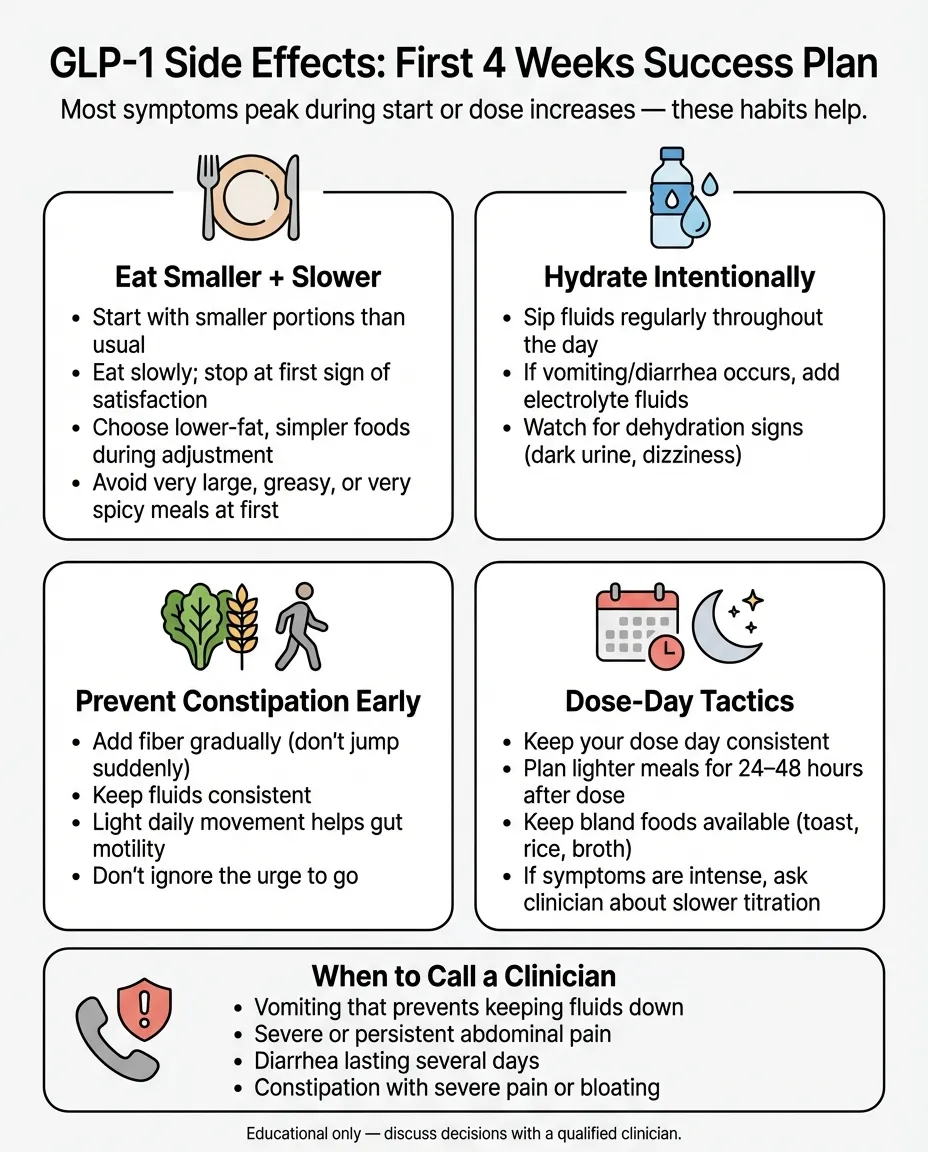
The "First 4 Weeks" Plan
When starting a GLP-1 or increasing your dose, proactively adjust your habits:
Eating Strategy:
- Eat smaller portions (50-75% of your previous "normal")
- Eat slowly—put your fork down between bites
- Stop at the first sign of fullness (don't push through)
- Choose bland, low-fat foods while adjusting
- Avoid greasy, fried, or very spicy foods
- Limit alcohol (worsens nausea and dehydration)
Hydration Strategy:
- Drink at least 64 oz (8 cups) of water daily
- Don't wait until you're thirsty (appetite suppression can blunt thirst signals)
- Keep water visible and accessible
- Consider electrolyte drinks if you're having diarrhea or vomiting
Constipation Prevention:
- Gradually increase fiber (too fast can worsen GI symptoms)
- Stay well hydrated
- Don't ignore the urge to go
- Light physical activity helps gut motility
- Consider a stool softener if needed (ask your pharmacist)
Timing Tips:
- Many people take their weekly injection in the evening or before a weekend so any initial nausea doesn't interfere with work
- Keep your injection day consistent
- Have bland foods on hand for the first few days after each dose
Managing Nausea: The Complete Playbook
Nausea is the #1 complaint. Here's everything that can help:
Before Eating:
- Don't let yourself get too hungry (can worsen nausea)
- Have something small every 3-4 hours
- Try ginger: ginger tea, ginger candies, or ginger supplements
- Peppermint tea or candies can help some people
While Eating:
- Small portions are crucial
- Eat slowly—meals should take 20+ minutes
- Avoid drinking large amounts with meals
- Choose bland, easy-to-digest foods:
- Plain crackers, toast, rice
- Bananas, applesauce
- Plain baked or grilled chicken
- Broth-based soups
After Eating:
- Don't lie down for at least 30-60 minutes
- Light walking can help digestion
- Avoid tight clothing around your waist
- Fresh air can help
Foods to Avoid (Temporarily):
- Fatty, fried, or greasy foods
- Very spicy foods
- Strong-smelling foods
- Heavy, rich meals
- Carbonated beverages (can worsen bloating)
When to Get Help:
- Nausea persists beyond 8 weeks
- You can't eat enough to meet basic nutritional needs
- You're losing more weight than expected
- Vomiting is frequent or prevents you from keeping food/fluids down
Medical options: If dietary changes aren't enough, your doctor may prescribe anti-nausea medication (such as ondansetron) or suggest slowing your dose escalation.
Managing Constipation
Prevention and Treatment:
- Fiber: Gradually increase (too fast worsens bloating)
- Fruits, vegetables, whole grains
- Consider fiber supplements (Metamucil, Benefiber)
- Hydration: Especially important when increasing fiber
- Movement: Physical activity stimulates the gut
- Don't ignore urges: Go when you feel the need
- Consider supplements:
- Stool softeners (docusate/Colace)
- Magnesium citrate (occasional use)
- Miralax (polyethylene glycol) if needed regularly
Warning signs requiring evaluation:
- No bowel movement for 4+ days
- Severe abdominal pain
- Vomiting with constipation
- Blood in stool
Managing Diarrhea
Immediate Management:
- Stay very well hydrated
- Electrolyte solutions (Pedialyte, Gatorade, or homemade)
- BRAT diet: Bananas, Rice, Applesauce, Toast
- Avoid dairy, high-fiber foods, caffeine, alcohol temporarily
- Avoid artificial sweeteners
When to Contact Your Doctor:
- Lasts more than 3-4 days
- Blood in stool
- Fever
- Signs of dehydration
- Severe cramping
Preventing Hair Loss
Hair thinning from rapid weight loss (telogen effluvium) is usually temporary and preventable.
Prevention Strategy:
- Protein: Aim for adequate daily intake—this is more than most people eat
- Nutrition: Ensure you're meeting basic caloric and nutritional needs despite reduced appetite
- Rate of loss: If possible, aim for steady, sustainable weight loss rather than extremely rapid loss
- Gentle hair care: Avoid heat styling, tight hairstyles during this period
Hair loss can occur; it's often related to rapid weight loss. Prioritize adequate protein, calories, and sleep. Ask your clinician about checking iron/ferritin, vitamin D, and B12 if shedding is significant. Hair loss is reported in trials/labels (Wegovy: 3%, Zepbound: 4-5%).
If Hair Loss Occurs:
- It's usually temporary—regrowth begins once weight stabilizes
- Consider seeing a dermatologist for evaluation
- Minoxidil may help accelerate regrowth
Before You Start: The Complete Preparation Checklist
Setting yourself up for success before you begin can make a significant difference.
Questions to Ask Your Healthcare Provider
- What are MY personal risk factors for side effects?
- What's the dose escalation schedule, and can we go slower if I have issues?
- How should I manage side effects when they occur?
- Do I need to adjust any of my other medications?
- How will we monitor my health while I'm on this medication?
- What's the plan if I can't tolerate this medication?
- How long should I plan to take this medication?
- What happens to my weight if I stop?
Tests to Discuss
- Baseline kidney function (creatinine, eGFR)
- Thyroid function (TSH) — especially if symptoms arise
- Blood sugar / A1C (to monitor improvement)
- Iron, vitamin D, B12 levels (to prevent deficiencies)
- Lipid panel (to track improvements)
- Eye exam if you're diabetic with existing retinopathy
Conditions to Disclose
Tell your doctor if you have:
- Personal or family history of medullary thyroid cancer
- Personal or family history of MEN2 (Multiple Endocrine Neoplasia type 2)
- History of pancreatitis
- Severe GI conditions (gastroparesis, inflammatory bowel disease)
- Kidney disease
- History of eating disorders
- History of depression, anxiety, or suicidal thoughts
- Pregnancy or plans to become pregnant
- Current breastfeeding
For more details on who should not take these medications, see our guide on GLP-1 contraindications.
Medications That May Need Adjustment
- Insulin (dose may need to be reduced to prevent low blood sugar)
- Sulfonylureas (same as insulin)
- Oral contraceptives (may need backup method)
- Any medication with narrow dosing window (absorption may be affected)
Frequently Asked Questions
Do GLP-1 side effects go away?
Yes, most do. The majority of GLP-1 side effects improve significantly within 4-8 weeks as your body adjusts to the medication. GI symptoms like nausea and diarrhea are typically worst when starting or increasing your dose, then improve. If side effects persist beyond 2-3 months or are intolerable, talk to your doctor about adjusting your dose, slowing your titration, or trying a different medication.
Which GLP-1 has the least side effects?
It depends on the specific side effect and individual factors. Research suggests tirzepatide (Mounjaro/Zepbound) may have slightly lower rates of nausea and vomiting compared to semaglutide (Ozempic/Wegovy), though both have similar overall profiles. Liraglutide (Saxenda) tends to have higher discontinuation rates due to side effects. Individual responses vary significantly—some people tolerate one medication much better than another. If you're experiencing side effects on semaglutide and considering tirzepatide, our guide on how to switch from semaglutide to tirzepatide covers the transition process and what to expect.
Can GLP-1 medications cause permanent damage?
For most people, no. Common side effects are temporary and resolve with time or after stopping the medication. Rare serious complications like pancreatitis or gallbladder disease can cause lasting effects if not treated promptly, which is why recognizing warning signs matters. There's no evidence of permanent damage from common side effects like nausea, fatigue, or temporary hair loss.
Does GLP-1 cause cancer?
Current evidence does not support an increased cancer risk in humans. Many GLP-1 medications carry a boxed warning about thyroid C-cell tumors based on animal studies, but after nearly 20 years of human use and millions of patients, no causal link has been established. Large epidemiological studies have not found increased rates of thyroid, pancreatic, or other cancers in GLP-1 users. Ongoing monitoring continues.
How long do GLP-1 side effects last?
Most resolve within 4-8 weeks. The timeline varies by symptom:
- Nausea: Usually worst weeks 1-4, improving significantly by week 8
- Diarrhea: Often resolves within 2-4 weeks
- Constipation: May persist but is manageable
- Fatigue: Usually improves after 4-8 weeks
- Hair loss (if it occurs): Temporary, with regrowth beginning once weight stabilizes
Should I stop my GLP-1 before surgery?
Discuss with your surgical team. FDA labels warn that pulmonary aspiration has been reported in patients on GLP-1s during anesthesia and instruct patients to inform providers of planned procedures. Multi-society guidance recommends that most patients can continue GLP-1 therapy before elective surgery, while higher-risk patients may need additional measures. Don't stop without consulting your healthcare team, as abrupt stopping also has implications.
What should I do if I can't stop vomiting?
Contact your doctor promptly, and focus on hydration. If you can keep some fluids down, try small sips of water, electrolyte solutions, or clear broth. Avoid solid food temporarily. If you cannot keep ANY fluids down for 24 hours, have signs of severe dehydration (confusion, rapid heartbeat, little urination, dizziness), or are vomiting blood, seek emergency care.
Are GLP-1 side effects worse for women?
Yes, research shows women experience more GI side effects. Studies indicate women experience nausea and vomiting at approximately 2.5 times the rate of men. This may be due to differences in hormone levels and GLP-1 receptor expression. Despite higher side effect rates, women typically achieve greater weight loss. Women may benefit from slower dose escalation.
Can I drink alcohol on GLP-1 medications?
Alcohol isn't strictly prohibited, but caution is warranted. Alcohol can worsen nausea, contribute to dehydration, and increase low blood sugar risk if you're diabetic. Many people find their tolerance changes on GLP-1s—a small amount may affect them more than before. If you drink, do so in moderation, stay hydrated, and be aware of how it affects you.
What foods should I avoid on GLP-1 medications?
No foods are absolutely forbidden, but certain foods commonly worsen side effects:
- Greasy, fried, or high-fat foods (worsen nausea)
- Very large portions (overwhelm your slower-emptying stomach)
- Spicy foods (can worsen GI symptoms for some)
- High-sugar foods and drinks (can cause blood sugar spikes and "dumping" symptoms)
- Carbonated beverages (increase bloating)
- Alcohol (worsens nausea and dehydration)
Focus on lean proteins, vegetables, fruits, and whole grains in moderate portions. For more details, see what to eat on GLP-1 medications.
What happens to my weight when I stop taking GLP-1 medications?
Most people regain weight when they stop GLP-1 medications. Studies show approximately 2/3 of lost weight is regained within one year of stopping. Appetite returns to pre-treatment levels. This doesn't mean the medication "broke" anything—it means obesity is a chronic condition that requires ongoing management. This is why GLP-1s are generally considered long-term treatments—similar to blood pressure medications, they manage a chronic condition rather than "cure" it. Discuss long-term plans with your healthcare provider.
Is pancreatitis common with GLP-1 medications?
No, pancreatitis is rare with GLP-1 medications, occurring in less than 1% of users. However, it's important to know the warning signs: severe abdominal pain radiating to your back, persistent vomiting, and fever. If you experience these symptoms, stop your medication and seek immediate medical care.
Can I switch from one GLP-1 to another?
Yes, switching is common and often helpful. If you're having significant side effects on one GLP-1 medication, trying a different one (e.g., switching from semaglutide to tirzepatide or vice versa) may work better for you. Some people tolerate one medication much better than another. Discuss switching options with your healthcare provider.
Should I be worried about the thyroid cancer warning?
For most people, no, but it's worth understanding. The boxed warning is based on animal studies where rodents developed thyroid tumors—but rodent thyroid cells have many more GLP-1 receptors than human cells. After nearly 20 years of use in millions of humans, no causal link has been established. However, if you have a personal or family history of medullary thyroid carcinoma (MTC) or MEN2 syndrome, GLP-1 medications are contraindicated.
How do I know if my side effects are "too much"?
Use the stoplight framework in this guide. Green symptoms (mild nausea, decreased appetite, occasional GI issues) are normal and manageable at home. Yellow symptoms (persistent vomiting, prolonged constipation/diarrhea, mood changes) warrant contacting your doctor. Red symptoms (severe allergic reactions, severe abdominal pain, inability to keep fluids down) require immediate medical attention.
Myths vs Facts
| Myth | Fact |
|---|---|
| "GLP-1s cause permanent gastroparesis in most users" | Severe gastroparesis is very rare. Most people experience temporary slowing of stomach emptying that improves over time. |
| "Everyone loses muscle on GLP-1s" | Muscle loss is preventable with adequate protein intake (0.7-1g per pound body weight) and resistance training. |
| "GLP-1 patches are FDA-approved" | No GLP-1 patch is currently FDA-approved for weight loss. Approved options are injections and oral tablets. |
| "Side effects get worse over time" | The opposite is usually true—most side effects improve significantly after 4-8 weeks. |
| "You have to stop GLP-1s before any surgery" | Current guidance says most patients can continue; discuss with your surgical team for individualized recommendations. |
| "GLP-1s cause suicidal thoughts" | FDA completed a comprehensive review in January 2026 and found no evidence of this link; requested removal of the warning. |
Evidence Strength Summary
| Claim | Evidence Level | Summary |
|---|---|---|
| GI side effects are common | Strong (Tier A) | Well-documented in multiple large clinical trials |
| Side effects improve over 4-8 weeks | Strong (Tier A) | Consistent finding across studies |
| Cardiovascular benefits | Strong (Tier A) | SELECT, SUSTAIN-6, and other major trials |
| Kidney protection (semaglutide) | Strong (Tier A) | FLOW trial demonstrated clear benefits |
| Thyroid cancer risk in humans | Insufficient (Tier B/C) | Animal data only; no confirmed human link after 20 years |
| Pancreatitis risk | Moderate (Tier B) | Rare but documented; <1% of users |
| Gallbladder risk | Moderate (Tier B) | 1-2% of users; partly related to weight loss itself |
| Mental health effects | Low concern (Tier A) | FDA review found no evidence of suicidality link |
Sources and Citations
This guide was compiled from the following primary sources:
FDA Prescribing Information (accessed January 2026):
- Wegovy (semaglutide) injection FDA label
- Ozempic (semaglutide) FDA label
- Rybelsus (semaglutide) oral FDA label
- Zepbound (tirzepatide) FDA label
- Saxenda (liraglutide) FDA label
- FDA Requests Removal of Suicidal Behavior Warning (January 2026)
Clinical Trials and Peer-Reviewed Research:
- STEP trials (semaglutide for weight management)
- SURMOUNT trials (tirzepatide for weight management)
- SURMOUNT-5 head-to-head comparison (ACC summary)
- SELECT trial (cardiovascular outcomes with semaglutide)
- FLOW trial (kidney outcomes with semaglutide)
- JAMA 2023: GI Adverse Events with GLP-1s
- Weight regain after semaglutide withdrawal (STEP-1 extension)
- Truveta 2025: GLP-1 side effects in women
Multi-Society Guidance:
Update Log
| Date | Update |
|---|---|
| January 20, 2026 | Initial publication with comprehensive FDA label review, January 2026 FDA mental health update |
About This Guide
How We Verify Information
- Drug side-effect rates are taken from FDA prescribing information trial tables
- Safety updates reflect FDA Drug Safety Communications
- Clinical claims are supported by peer-reviewed research from PubMed/PMC
- Provider claims are verified weekly (see How We Rank)
This guide was created to provide comprehensive, FDA-sourced information about GLP-1 side effects. We prioritize accuracy over marketing and cite primary sources throughout.
Affiliate Disclosure: We may earn a commission if you start treatment through our partner links. This doesn't affect our editorial content or recommendations. See our full advertising disclosure for more information.
Not Medical Advice: This content is for educational purposes only. Always consult your healthcare provider before starting, stopping, or changing any medication.
How we rank + verify
Last verified: March 3, 2026
What we verified: FDA prescribing information for Wegovy, Ozempic, Rybelsus, Mounjaro, and Zepbound. Clinical trial data from STEP, SURMOUNT, and SCALE trials. Post-marketing safety reports and peer-reviewed research.
Sources: FDA drug labels accessed January 2026, JAMA meta-analyses, ACC trial summaries, peer-reviewed studies from PubMed and PMC
Related Articles
A comprehensive guide to GLP-1 medication side effects, how to manage them, and when to contact your doctor. Based on FDA prescribing information.
Optimize your GLP-1 weight loss results with smart food choices. Learn what to eat, what to avoid, and how to manage reduced appetite.
Ozempic face explained: causes, prevention, and treatment costs ($700-$20K+). Complete guide with before/after examples and doctor questions.
GLP-1 contraindications explained: FDA Section 4 lists MTC/MEN2 history and serious hypersensitivity. Learn what's a real contraindication vs warning.
How GLP-1 medications like Ozempic and Wegovy work for weight loss. Mechanism map, clinical trial results, side effects, and decision framework.
This content is educational only and does not replace professional medical advice. Always consult a qualified healthcare provider before starting any medication.