GLP-1 Contraindications: Who Should NOT Take GLP-1 Medications
For most GLP-1 medications — including Ozempic, Wegovy, Mounjaro, and Zepbound — the FDA lists only two true contraindication categories: personal or family history of medullary thyroid carcinoma (MTC) or MEN2, and known serious hypersensitivity to the medication. Most other commonly cited restrictions are warnings, not absolute contraindications.
 Medically Reviewed by Dr. Diana Isaacs, PharmD, BCACP, BC-ADM, CDCES, FCCP, FADCES
Disclosure: Some links on this site are affiliate links. If you purchase through these links, we may earn a commission at no extra cost to you. Thank you for supporting our site. For informational purposes only—not medical advice.
The bottom line
- Only 2 true FDA contraindications for most GLP-1s: MTC/MEN2 history and severe drug allergy.
- Pancreatitis, kidney disease, and pregnancy are warnings requiring discussion — not automatic disqualifiers.
- Hypothyroidism, Hashimoto's, and general 'thyroid problems' are NOT contraindications.
- Byetta and Adlyxin don't carry the MTC/MEN2 contraindication (hypersensitivity still applies) — an exception most sites miss.
On this page
The Bottom Line (Read This First)
If you searched "GLP-1 contraindications" (or even the common typo "GLP-1 contradictions"), you're probably trying to answer one urgent question:
"Is there any reason I absolutely should NOT take a GLP-1 medication?"
Quick Answer: For most GLP-1 medications—including semaglutide (Ozempic, Wegovy, Rybelsus), liraglutide (Victoza, Saxenda), dulaglutide (Trulicity), and tirzepatide (Mounjaro, Zepbound)—the FDA lists only two main contraindication categories in Section 4:
- Personal or family history of medullary thyroid carcinoma (MTC), OR a diagnosis of Multiple Endocrine Neoplasia syndrome type 2 (MEN2)
- Known serious hypersensitivity (severe allergic reaction) to the medication or its ingredients
Important exceptions most websites miss:
- Exenatide products (Byetta) have an additional contraindication: history of drug-induced immune-mediated thrombocytopenia from exenatide
- Byetta and Adlyxin do NOT carry the MTC/MEN2 contraindication
- Soliqua and Xultophy (combination products containing insulin) are also contraindicated during episodes of hypoglycemia
Many commonly listed items (e.g., history of pancreatitis, kidney disease, upcoming surgery) are warnings and precautions that require individualized discussion. Pregnancy is different: GLP-1 medications are generally not recommended during pregnancy, and labeling commonly advises discontinuation when planning pregnancy or when pregnancy is recognized (see product-specific labeling).
This guide does what most websites fail to do:
- Separates true FDA contraindications (Section 4) from warnings/precautions (Section 5)
- Provides a drug-by-drug matrix so you can see exactly what applies to each medication
- Gives you printable checklists for your healthcare appointment
- Answers every follow-up question so you don't need to keep searching
Quick 30-Second Screener: Are GLP-1s Contraindicated for You?
Use this decision tool to quickly identify where you stand. This is NOT medical advice—it's a framework to help you know what to discuss with your prescriber.
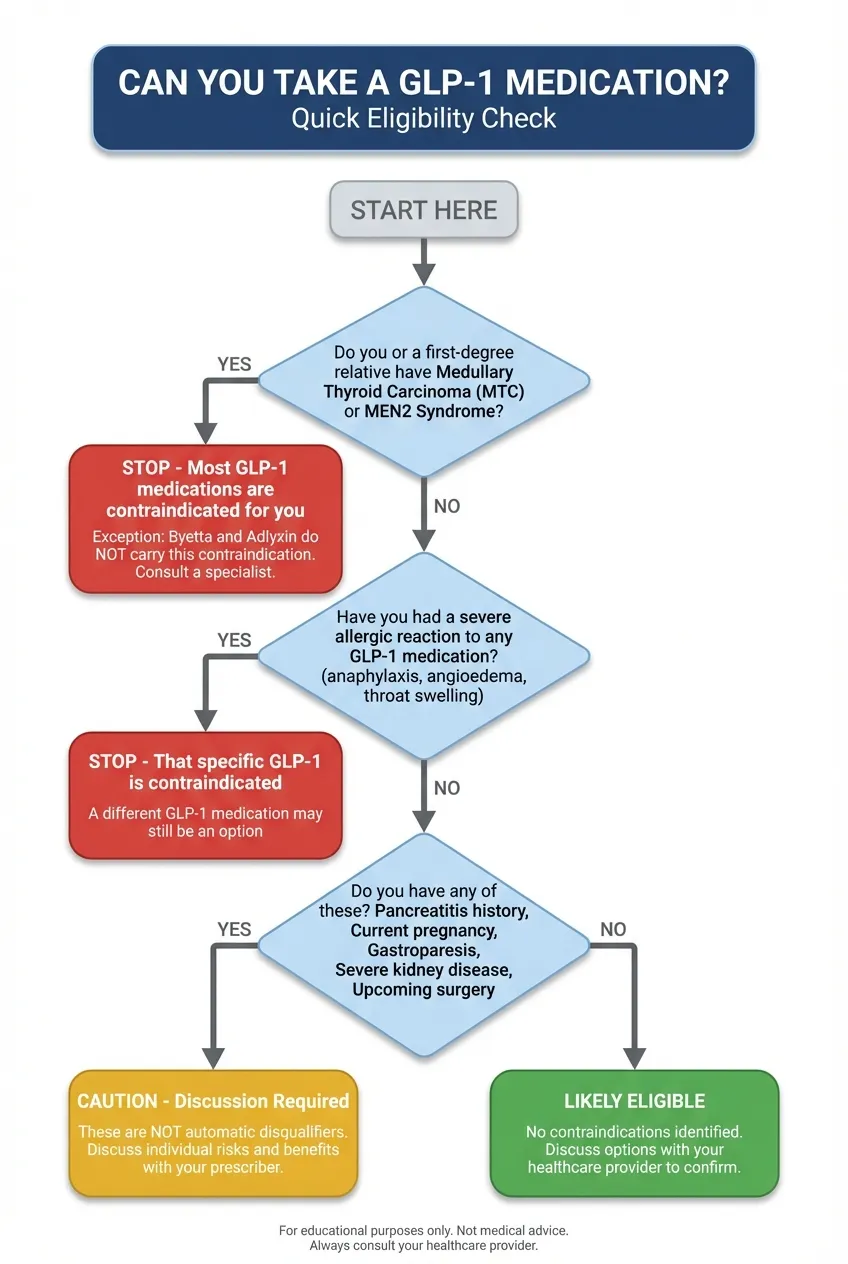
HARD STOP — True Contraindications
If you check ANY box below, that specific GLP-1 medication is likely contraindicated for you:
For MOST GLP-1 medications (Wegovy, Ozempic, Rybelsus, Mounjaro, Zepbound, Trulicity, Victoza, Saxenda, Xultophy):
| Condition | Applies To |
|---|---|
| Personal diagnosis of medullary thyroid carcinoma (MTC) | Most GLP-1s |
| Family history of medullary thyroid carcinoma (MTC) | Most GLP-1s |
| Diagnosis of Multiple Endocrine Neoplasia syndrome type 2 (MEN2) (in the patient) | Most GLP-1s |
| Severe allergic reaction (anaphylaxis, angioedema, difficulty breathing) to the specific GLP-1 being considered | All GLP-1s |
| History of drug-induced immune-mediated thrombocytopenia from exenatide | Exenatide products (Byetta) |
| Currently experiencing a hypoglycemia episode | Soliqua and Xultophy only |
| Currently pregnant (for weight loss indication) | Do not use; discontinue when pregnancy recognized |
If you checked any box above: Do not start that medication without prescriber review. Note that Byetta and Soliqua do NOT carry the MTC/MEN2 contraindication.
CAUTION — High-Priority "Discuss First" (Some may require avoiding/holding treatment)
These are commonly listed online as "contraindications" but are actually warnings/precautions that require a risk-benefit discussion:
| Category | Conditions |
|---|---|
| Reproductive | Planning pregnancy (timing depends on medication—see labeling; semaglutide requires 2+ months washout); Breastfeeding (discuss risk/benefit) |
| Pancreas & Digestive | History of pancreatitis; Gastroparesis/severe GI motility disorder; Active severe GI symptoms (persistent vomiting/poor intake); Prior bowel obstruction/ileus history (discuss individualized risk) |
| Kidney | Severe kidney disease (CKD stage 4-5, eGFR under 30); Currently on dialysis |
| Eyes | Diabetic retinopathy (especially if blood sugar is running high) |
| Gallbladder | History of gallstones or gallbladder disease |
| Genetic/Thyroid | Family history of MEN2 or known RET mutation in family (discuss genetic evaluation before proceeding) |
| Mental Health | Active eating disorder; Severe untreated depression (note: FDA removed suicidal ideation warning from GLP-1 labels in January 2026 — discuss mental health history with your prescriber) |
| Upcoming Procedures | Surgery requiring general anesthesia within 1-2 weeks; Endoscopy/colonoscopy scheduled soon |
| Medication Interactions | Currently taking insulin, glitinides or sulfonylureas (may need dose reduction); Taking oral birth control AND starting tirzepatide |
If you checked any caution box: These require evaluation, not automatic exclusion. Your prescriber will weigh individual risks vs. benefits.
COMMON MYTHS — Usually NOT Contraindications
These are frequent reasons people get scared unnecessarily:
| Condition | Status |
|---|---|
| Hypothyroidism (underactive thyroid) | NOT a contraindication |
| Hashimoto's thyroiditis | NOT a contraindication |
| Thyroid nodules (if evaluated and not MTC) | NOT a contraindication |
| Prior papillary or follicular thyroid cancer | NOT a contraindication (different from MTC) |
| "Having thyroid problems" in general | The label concern is specific to MTC/MEN2 |
| Fatty liver disease / MASH | NOT a contraindication (may actually help) |
| Previous gallbladder removal | NOT a contraindication |
| Mild to moderate kidney disease | NOT a contraindication for most GLP-1s, semaglutide (Ozempic) has benefits and others may as well |
| Regular reflux (GERD) | NOT a contraindication |
| Taking metformin or other diabetes medications | NOT a contraindication |
| Type 2 diabetes | This is an FDA-approved indication for many GLP-1 medications (not all) |
GLP-1 Contraindications Matrix: The FDA "Section 4" Truth
This table summarizes the actual contraindications from each medication's FDA prescribing information (Section 4)—not warnings, not precautions, not things websites incorrectly call contraindications.
| Brand | Generic (Type) | MTC/MEN2 Contraindication | Hypersensitivity Contraindication | Special Notes |
|---|---|---|---|---|
| Wegovy | Semaglutide 2.4mg (GLP-1 RA) | Yes | Yes | Pregnancy: May cause fetal harm. For weight reduction/CV risk reduction, discontinue when pregnancy is recognized. For MASH indication, use during pregnancy only if potential benefit justifies potential risk. (See Wegovy PI.) |
| Ozempic | Semaglutide 0.5-2mg (GLP-1 RA) | Yes | Yes | — |
| Rybelsus | Semaglutide oral (GLP-1 RA) | Yes | Yes | Levothyroxine interaction: monitor TSH |
| Mounjaro | Tirzepatide (GIP/GLP-1) | Yes | Yes | Oral birth control effectiveness: use backup method when starting or increasing the dose |
| Zepbound | Tirzepatide (GIP/GLP-1) | Yes | Yes | Same as Mounjaro |
| Trulicity | Dulaglutide (GLP-1 RA) | Yes | Yes | — |
| Victoza | Liraglutide 1.8mg (GLP-1 RA) | Yes | Yes | — |
| Saxenda | Liraglutide 3mg (GLP-1 RA) | Yes | Yes | — |
| Byetta | Exenatide short-acting (GLP-1 RA) | NO | Yes | Also contraindicated: history of exenatide-induced thrombocytopenia |
| Bydureon BCise | Exenatide ER (GLP-1 RA) | Yes | Yes | Also contraindicated: history of exenatide-induced thrombocytopenia |
| Adlyxin | Lixisenatide (GLP-1 RA) | NO | Yes | — |
| Soliqua | Lixisenatide + Insulin glargine | No | Yes | Also contraindicated: during hypoglycemia episodes because it contains insulin |
| Xultophy | Liraglutide + Insulin degludec | Yes | Yes | Also contraindicated: during hypoglycemia episodes because it contains insulin |
Last verified: January 2026. This table summarizes FDA prescribing information. See Sources for direct label links.
What "Contraindication" Actually Means (And Why the Internet Gets It Wrong)
A lot of panic around GLP-1 medications comes from one fundamental misunderstanding:
"Contraindication" does not mean "anything risky." It has a specific meaning in FDA labeling.
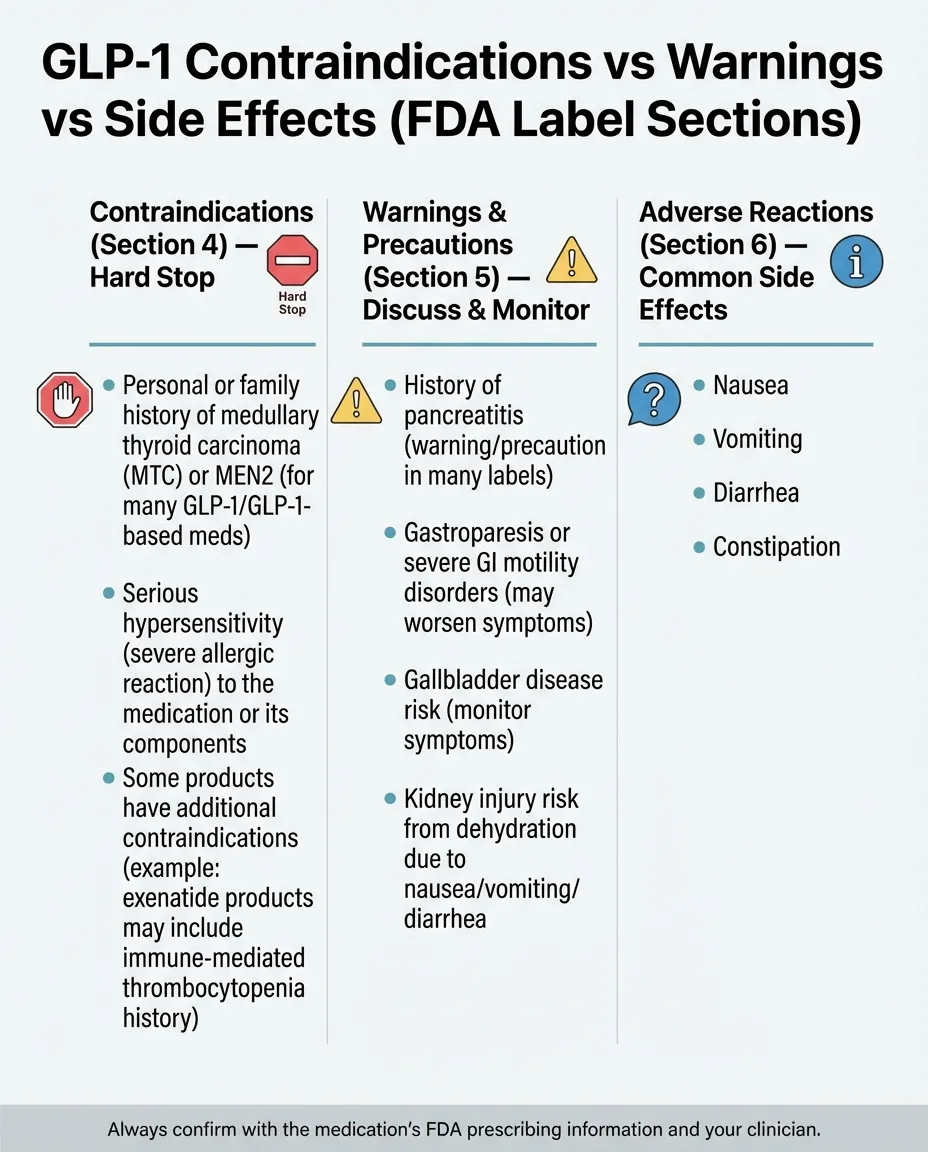
The Three Categories You Need to Know
| Category | FDA Label Section | Meaning | Example |
|---|---|---|---|
| Contraindication | Section 4 | The medication should not be used under these circumstances | MTC/MEN2 history for most GLP-1s |
| Warning / Precaution | Section 5 | Risks that require monitoring, counseling, dose adjustment, or clinical judgment—does NOT mean "don't use" | Pancreatitis warnings, gallbladder disease, GI motility problems |
| Adverse Reaction / Side Effect | Section 6 | Common or known effects that may occur during treatment—not a reason you "can't" take the medication | Nausea, diarrhea, constipation |
Why Search Results Conflict
When you search for GLP-1 contraindications, you find wildly inconsistent lists because:
- Some sites mix class warnings with drug-specific contraindications — The MTC/MEN2 boxed warning gets reported as "contraindicated if you have thyroid problems" when the actual contraindication is specific to MTC/MEN2
- Some sites use outdated labeling — FDA labels are updated regularly
- Some sites use "contraindication" loosely — They use it as a synonym for "not recommended" or "be careful," which is technically incorrect
- Some sites over-list for liability reasons — Calling everything a "contraindication" feels safer legally, but it's not accurate
Our approach: If the FDA label says it's in Section 4, we call it a contraindication. If it's in Section 5, we call it a warning/precaution. We cite specific sections and verify labels quarterly.
Which Medications Count as "GLP-1s"?
When people search "GLP-1 contraindications," they typically mean all of these:
GLP-1 Receptor Agonists (Pure GLP-1 RAs)
Semaglutide-based:
- Ozempic — Injection, once weekly or oral tablet daily, for Type 2 diabetes + CV risk reduction
- Wegovy — Injection, once weekly or oral tablet daily, for chronic weight management
- Rybelsus — Oral tablet, once daily, for Type 2 diabetes
Liraglutide-based:
- Victoza — Injection, once daily, for Type 2 diabetes
- Saxenda — Injection, once daily, for chronic weight management
Dulaglutide-based:
- Trulicity — Injection, once weekly, for Type 2 diabetes + CV risk reduction
Exenatide-based:
- Byetta — Injection, twice daily, for Type 2 diabetes
- Bydureon BCise — Injection, once weekly (extended-release), for Type 2 diabetes
Lixisenatide-based:
- Adlyxin — Injection, once daily, for Type 2 diabetes
GLP-1-Based Dual Agonists
Tirzepatide-based (GIP/GLP-1 dual agonist):
- Mounjaro — Injection, once weekly, for Type 2 diabetes
- Zepbound — Injection, once weekly, for chronic weight management
Note: Tirzepatide activates both GLP-1 and GIP receptors. It's not a "pure" GLP-1 agonist, but it appears in the same searches and shares the same MTC/MEN2 contraindication.
Combination Products (GLP-1 + Insulin)
- Soliqua — Lixisenatide + insulin glargine
- Xultophy — Liraglutide + insulin degludec
These have additional considerations because they contain insulin.
The True Contraindications: Detailed Breakdown
This section explains each actual FDA Section 4 contraindication in depth.
Contraindication #1: Personal or Family History of MTC, or Diagnosis of MEN2
Applies to: Wegovy, Ozempic, Rybelsus, Mounjaro, Zepbound, Trulicity, Victoza, Saxenda, Bydureon BCise, Xultophy
Does NOT apply to: Byetta, Adlyxin, Soliqua
This is the most misunderstood contraindication because people hear "thyroid cancer risk" and assume it includes all thyroid conditions. It doesn't.
What Is Medullary Thyroid Carcinoma (MTC)?
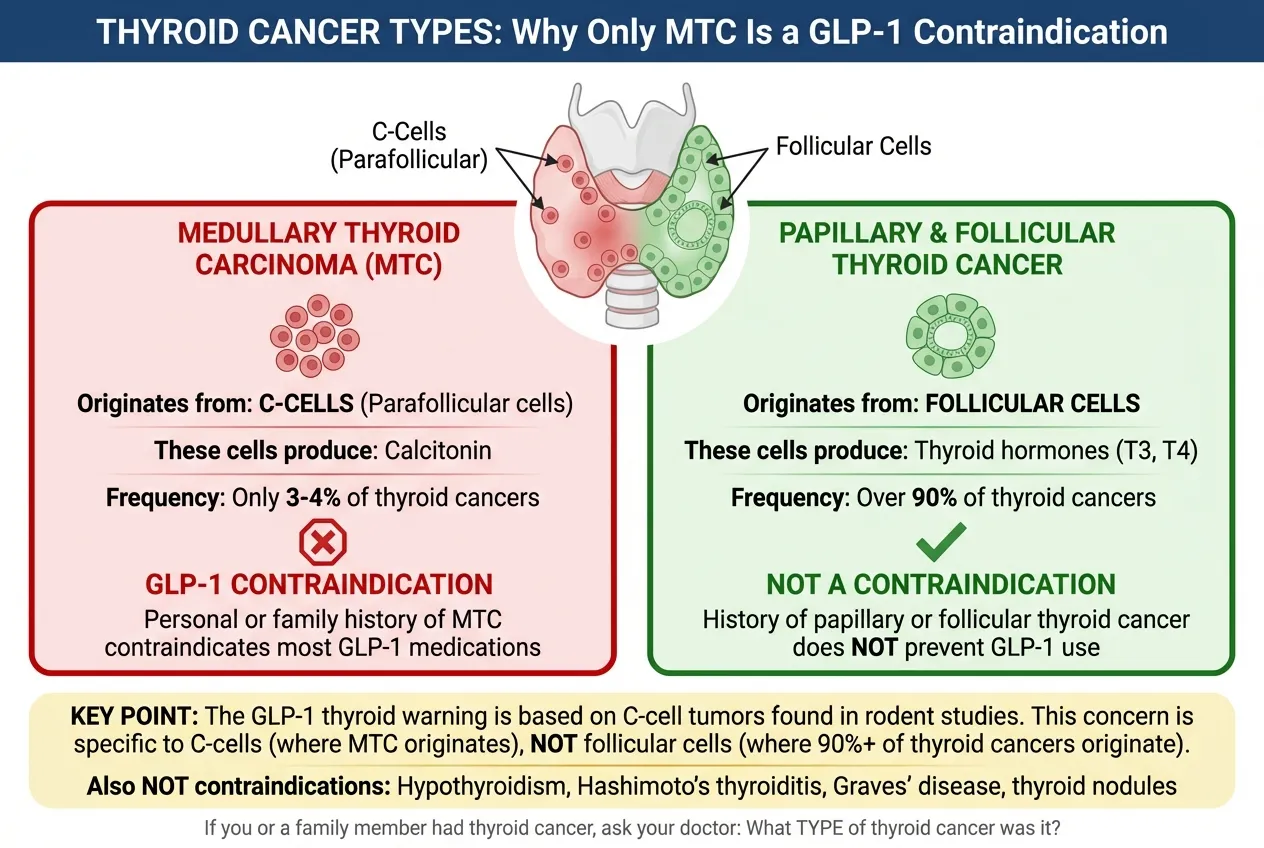
MTC is a specific, relatively rare type of thyroid cancer that arises from the thyroid's C-cells (also called parafollicular cells). These C-cells produce calcitonin, a hormone involved in calcium regulation.
MTC is biologically and clinically different from common thyroid cancers:
| Thyroid Cancer Type | Cell of Origin | % of Thyroid Cancers | GLP-1 Contraindication? |
|---|---|---|---|
| Papillary | Follicular cells | About 80% | NO |
| Follicular | Follicular cells | About 10-15% | NO |
| Medullary (MTC) | C-cells | About 1-2% (U.S. estimate; varies by region) | YES (for most GLP-1s) |
| Anaplastic | Various | About 1-2% | NO |
Critical point: If you or a family member had thyroid cancer, you MUST know the specific type. Papillary and follicular thyroid cancer are NOT the same as MTC and do NOT carry this contraindication.
What Is MEN2 (Multiple Endocrine Neoplasia Type 2)?
MEN2 is a rare inherited genetic condition (affecting roughly 1 in 30,000 people) caused by mutations in the RET gene. It dramatically increases the risk of:
- Medullary thyroid carcinoma (nearly 100% lifetime risk)
- Pheochromocytoma (adrenal gland tumors)
- Parathyroid tumors (in MEN2A subtype)
MEN2 is inherited in an autosomal dominant pattern—if a parent has it, each child has a 50% chance of inheriting it.
Why This Contraindication Exists
In preclinical (rodent) studies, GLP-1 receptor agonists caused dose-dependent thyroid C-cell tumors. The FDA requires:
- A boxed warning (the most serious type) about thyroid C-cell tumors
- A contraindication for patients already at elevated MTC/MEN2 risk
Important context:
- In rodents, thyroid C-cell tumors were seen at clinically relevant exposures; the human relevance of these findings is unknown
- Rodent thyroid C-cells show different GLP-1 receptor expression/biology than human C-cells, so rodent findings may not translate directly to human risk
- It is unknown whether GLP-1 medicines cause thyroid C-cell tumors (including MTC) in humans; reported cases cannot establish or exclude causality
- Cases of MTC have been reported during post-marketing surveillance—though the data cannot establish or exclude a causal relationship
The FDA's position: Because MTC is rare and can be life-threatening—especially when advanced/metastatic—and because human risk cannot be definitively ruled out, the precautionary approach is to contraindicate these medications in patients already at elevated MTC risk.
"My Relative Had Thyroid Cancer—But I Don't Know Which Type"
This is extremely common. Here's your action plan:
- Ask for the exact diagnosis: Was it papillary, follicular, medullary, or anaplastic?
- Ask about genetic testing: If they had RET gene testing, that's highly relevant (suggests MEN2 evaluation)
- Look for pattern clues: MEN2 often presents with multiple family members with thyroid cancer, pheochromocytoma in the family, or parathyroid problems in the family
- If you can't confirm the type: Tell your prescriber you cannot confirm. They may conclude it's likely not MTC and proceed, recommend genetic counseling/evaluation before prescribing, or consider Byetta or Adlyxin (which don't carry this contraindication)
Thyroid Conditions That Are NOT This Contraindication
These are frequently confused with MTC/MEN2 but are completely different:
- Hypothyroidism (including Hashimoto's) — NOT a contraindication
- Hyperthyroidism / Graves' disease — NOT a contraindication
- Thyroid nodules — NOT automatically a contraindication (may need evaluation)
- Papillary thyroid cancer history — NOT a contraindication
- Follicular thyroid cancer history — NOT a contraindication
- "Thyroid problems" in general — NOT a contraindication
Symptoms to Report Immediately (If You're Already on a GLP-1)
Contact your healthcare provider promptly if you develop:
- A new lump or swelling in your neck
- Persistent hoarseness that doesn't resolve
- Difficulty swallowing (dysphagia)
- Difficulty breathing (dyspnea)
Note: The FDA does NOT recommend routine calcitonin testing or thyroid ultrasound screening for patients on GLP-1 medications. Such monitoring has unclear value and may lead to unnecessary procedures.
Contraindication #2: Known Serious Hypersensitivity
Applies to: ALL GLP-1 medications
Every GLP-1 product is contraindicated if you've had a serious allergic reaction to that specific medication or its components.
What Qualifies as "Serious Hypersensitivity"?
True serious hypersensitivity includes:
- Anaphylaxis: Severe whole-body reaction with difficulty breathing, rapid pulse, blood pressure drop, possible loss of consciousness
- Angioedema: Rapid swelling of deeper skin layers, especially face, lips, tongue, or throat—can impair breathing
- Severe generalized skin reactions: Extensive rash, blistering, peeling skin
What Does NOT Count as Serious Hypersensitivity
- Nausea, vomiting, diarrhea — These are common side effects, not allergic reactions
- Injection site redness that resolves within days — Common and expected
- Mild rash that goes away on its own — Typically not serious hypersensitivity
- GI discomfort — Side effect, not allergy
Allergy to One GLP-1 Doesn't Mean Allergy to All
Different GLP-1 medications use different active molecules AND different inactive ingredients (excipients). If you had a reaction to one GLP-1:
- Identify whether it was true allergy vs. side effect
- Identify whether it was the active drug or an excipient
- A different GLP-1 may be safe — For example, if you're allergic to semaglutide, you might tolerate dulaglutide (different molecule)
Your prescriber can evaluate whether an alternative within the class is appropriate.
Contraindication #3: Exenatide-Induced Immune-Mediated Thrombocytopenia
Applies to: Byetta and Bydureon BCise (exenatide products)
Most "GLP-1 contraindications" lists online miss this entirely.
Both Byetta and Bydureon BCise FDA labeling include an additional contraindication: history of drug-induced immune-mediated thrombocytopenia from exenatide products.
What this means: If exenatide previously triggered an immune reaction that dangerously lowered your platelet count, you should not be re-exposed without specialist guidance.
If you've never heard of this: It's rare. It's only relevant if you've taken exenatide before and had a documented platelet problem.
Contraindication #4: During Hypoglycemia Episodes (Combination Products)
Applies to: Soliqua, Xultophy
Because these products contain insulin, they are contraindicated during episodes of hypoglycemia (low blood sugar).
This is not a reason most people are disqualified from GLP-1 therapy in general—but it's an important distinction for these specific combination products.
High-Impact Warnings Often Mistaken as Contraindications
These conditions appear in Section 5 (Warnings and Precautions), not Section 4 (Contraindications). They're serious and require discussion, but they're not automatic disqualifiers.
Pregnancy and Planned Pregnancy
Many people search "GLP-1 contraindications pregnancy" wanting a simple yes/no answer.
The label-accurate answer:
- GLP-1 medications are not recommended during pregnancy
- Product labeling advises discontinuation if pregnancy is recognized
- For semaglutide specifically, labeling indicates discontinuing at least 2 months before a planned pregnancy due to the long half-life (about 7 days means the drug persists for weeks)
Why 2 months? Semaglutide has a half-life of approximately one week. It takes about 5 half-lives (approximately 5 weeks) to eliminate 97% of the drug. The 2-month recommendation provides a safety margin.
If you become pregnant while taking a GLP-1:
- Stop the medication immediately
- Contact your healthcare provider promptly
- Don't panic—early exposure before you knew you were pregnant happens; your provider will guide next steps
Breastfeeding: Human data is limited. Discuss the risk/benefit with your clinician, especially if the GLP-1 is being used for diabetes management where alternatives may be limited.
History of Pancreatitis
Pancreatitis is frequently cited online as a "contraindication." In most FDA labels, it appears as a warning/precaution, not a Section 4 contraindication.
What the labels say:
- Acute pancreatitis has been reported in patients taking GLP-1 medications
- If pancreatitis is suspected, discontinue the medication and do not restart if confirmed
If you have a history of pancreatitis:
- Disclose the cause: Was it gallstones? Alcohol? High triglycerides? Unknown?
- Disclose when it happened and whether the underlying cause was addressed
- Ask about monitoring and what symptoms should trigger urgent evaluation
Many clinicians will prescribe GLP-1s to patients with remote pancreatitis history (especially if the cause was identified and resolved), while others are more cautious. This is a clinical judgment call, not an absolute contraindication.
Pancreatitis red flags requiring immediate medical attention:
- Severe upper abdominal pain (often radiating to the back)
- Pain that worsens after eating
- Persistent nausea and vomiting
- Fever
- Rapid pulse
- Abdomen tender to touch
Severe GI Disease and Gastroparesis
GLP-1 medications slow gastric emptying—that's part of how they reduce appetite. If you already have significant delayed stomach emptying (gastroparesis) or severe GI motility disorders, GLP-1 therapy can worsen symptoms substantially.
If you have:
- Diagnosed gastroparesis
- Recurrent bowel obstruction
- Severe, persistent nausea/vomiting not otherwise explained
- Severe GI motility disorders (e.g., gastroparesis or other clinically significant delayed gastric emptying)
Note: Inflammatory bowel disease (Crohn's, ulcerative colitis) is not a labeled contraindication or motility disorder, but because GLP-1s can cause GI symptoms (especially diarrhea/nausea), active IBD may warrant individualized discussion with your prescriber.
Discuss whether:
- A GLP-1 is appropriate for your situation
- Slower dose titration might help
- Alternative therapies make more sense
This is typically a clinical judgment decision—not an absolute contraindication across all labels.
Kidney Disease and Dehydration Risk
Key misconception: Most "kidney risk" from GLP-1s is not from direct kidney toxicity—it's from dehydration caused by nausea, vomiting, or diarrhea, especially early in treatment.
Practical guidance:
- If you develop persistent vomiting/diarrhea or can't keep fluids down, you're at risk of dehydration and acute kidney injury—contact your provider
- People with existing kidney disease may need closer monitoring when starting
- Most GLP-1s (semaglutide, liraglutide, dulaglutide, tirzepatide) can be used in kidney disease without dose adjustment
- Exenatide products have more renal considerations—check specific labeling
Important: Some GLP-1s may actually have kidney-protective benefits in patients with Type 2 diabetes and CKD. Kidney disease is often NOT a reason to avoid these medications—it may be a reason to consider them.
Gallbladder Disease
Weight loss itself increases gallstone risk, and GLP-1 therapies are associated with gallbladder events in clinical trials.
If you have:
- Known gallstones
- Prior gallbladder inflammation (cholecystitis)
- Right upper abdominal pain after meals
Discuss with your prescriber. It may not be a contraindication, but it changes monitoring and risk counseling.
If you've had your gallbladder removed: Gallbladder-specific events (like cholecystitis) are less applicable—but GLP-1 therapy is still associated with gallbladder/biliary-type symptoms in labeling, so report right-upper-abdominal pain, fever, or jaundice promptly.
If gallbladder symptoms start while taking a GLP-1, use the symptom-based care ladder in our what to do if gallbladder symptoms start while taking a GLP-1 guide.
Mental Health: Depression, Eating Disorders, and Mood Considerations
In January 2026, the FDA requested removal of suicidal behavior and ideation warning language from the labeling of Wegovy, Saxenda, and Zepbound, after reviews did not find evidence of increased risk. GLP-1 medications are not contraindicated solely on the basis of a history of depression or prior suicidal ideation.
If you have:
- Current severe depression or unstable psychiatric condition
- Active or past eating disorder (especially restrictive types)
These are not automatic contraindications, but they are important topics to discuss with your prescriber. The appetite suppression effects of GLP-1s can interact with eating disorder history. Many clinicians coordinate care with mental health support if treatment proceeds. Patients should still report new or worsening mood symptoms to their prescriber promptly.
For a focused review of the evidence and a printable appointment question plan, see GLP-1 with a history of eating disorders.
Surgery, Anesthesia, and Procedures: The New Critical Consideration
This topic has gained significant attention since 2023 with evolving guidance from medical societies.
Why This Matters
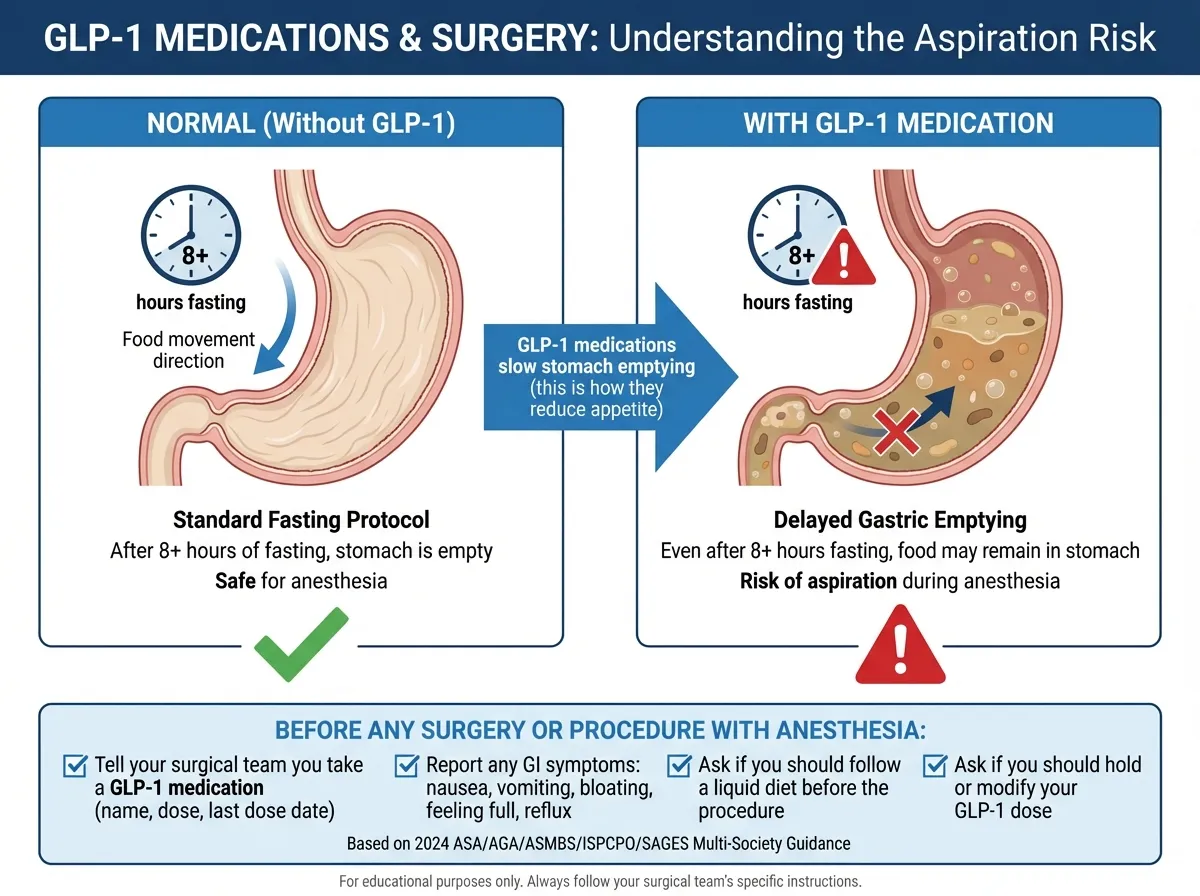
GLP-1 medications delay gastric emptying. During anesthesia or deep sedation, this can increase the risk that stomach contents remain present despite standard fasting—raising concern for aspiration (inhaling stomach contents into the lungs).
Case reports have documented:
- Patients with full stomachs despite following standard pre-procedure fasting instructions
- Retained food from 2-3 days prior to procedures
- Aspiration events during anesthesia requiring ICU care
How Guidance Has Evolved
June 2023: American Society of Anesthesiologists (ASA) issued initial consensus-based guidance
October 2024: Multi-society guidance (ASA, AGA, ASMBS, ISPCOP, SAGES) provided more nuanced, risk-based recommendations rather than a one-size-fits-all approach
Current Practical Guidance
If you're taking a GLP-1 and have any procedure requiring anesthesia or deep sedation:
Step 1: Disclose to your surgical/anesthesia team:
- Medication name
- Dose
- Dosing schedule (daily/weekly)
- Date and time of last dose
- Current GI symptoms (nausea, vomiting, bloating, feeling full, reflux, constipation)
- Currently in dose escalation phase? (started or increased dose within last 4 weeks)
- Stable on current dose for 4+ weeks?
Step 2: Ask these questions:
- "Do you want me to hold my GLP-1 medication before the procedure?"
- "Should I follow a liquid diet the day before?"
- "Do you consider me higher-risk because of my symptoms or recent dose changes?"
- "What precautions will you take regarding aspiration risk?"
- "When can I restart after the procedure?"
General principles from current guidance:
- Lower-risk patients (no GI symptoms, stable dose 4+ weeks, no other motility issues) may continue with appropriate precautions
- Higher-risk patients (GI symptoms present, in escalation phase, other motility issues) may need to hold doses, follow liquid diet, or have procedure delayed
Drug Interactions and Medication Considerations
Insulin and Sulfonylureas (Hypoglycemia Risk)
GLP-1 medications improve glucose control and can increase hypoglycemia risk when combined with:
- Insulin (all types)
- Sulfonylureas (glipizide, glyburide, glimepiride)
This is typically managed by dose adjustment and monitoring—not a contraindication.
Know the signs of hypoglycemia: shakiness, sweating, rapid heartbeat, hunger, confusion, irritability, dizziness.
Oral Contraceptives + Tirzepatide (Mounjaro/Zepbound)
This is one of the most important practical interactions that websites miss.
Tirzepatide labeling advises that oral hormonal contraceptive efficacy may be reduced during dose escalation. The FDA recommends:
- Use a backup barrier method (condoms) OR
- Switch to a non-oral contraceptive (IUD, implant, injection, patch, ring)
- This applies for 4 weeks after initiation AND 4 weeks after each dose escalation
This interaction is specific to tirzepatide—not documented to the same degree with other GLP-1s.
Oral Semaglutide (Rybelsus) + Levothyroxine
Rybelsus labeling notes that levothyroxine exposure increased by 33% when administered together in drug interaction studies.
If you take thyroid hormone replacement (Synthroid, Levoxyl, etc.):
- Tell your prescriber you take levothyroxine
- Ask if TSH monitoring should be more frequent after starting Rybelsus
- Watch for symptoms of too much thyroid hormone (rapid heartbeat, weight loss, anxiety, tremor)
- Your dose may need reduction
"Can I Take a GLP-1 If I Have...?" Condition-by-Condition Answers
This section provides quick answers to specific conditions. Each follows the format: Quick answer → Why → What to ask your doctor
Thyroid Conditions
Hypothyroidism / Hashimoto's Thyroiditis
- Quick answer: Usually YES—NOT a contraindication
- Why: These conditions affect thyroid hormone production, not C-cells. The MTC/MEN2 contraindication is specific to C-cell-related conditions.
- Ask your doctor: "Should I monitor my thyroid levels more closely after starting, especially if I take levothyroxine?"
Thyroid Nodules
- Quick answer: Usually YES, but may need evaluation first
- Why: Nodules are common (up to 50% of adults) and usually benign. The concern is ruling out undiagnosed MTC.
- Ask your doctor: "Have my thyroid nodules been evaluated? Is there any concern for medullary thyroid cancer?"
Papillary or Follicular Thyroid Cancer History
- Quick answer: YES—NOT a contraindication
- Why: These arise from follicular cells, not C-cells. They're biologically different from MTC.
- Ask your doctor: "Can you confirm my thyroid cancer was papillary/follicular and not medullary?"
Medullary Thyroid Cancer (Personal or Family History) or MEN2 (Personal Diagnosis)
- Quick answer: NO for most GLP-1s—This IS a contraindication
- Why: Personal or family history of MTC, or a diagnosis of MEN2, is the specific contraindication in FDA labeling
- Options: Byetta and Adlyxin do NOT carry this contraindication. Discuss with a specialist.
Diabetes-Related
Type 2 Diabetes
- Quick answer: YES—This is an FDA-approved indication for many GLP-1 medications (not all)
- Why: Many GLP-1s are specifically approved and widely used for Type 2 diabetes management (check the specific product's indication)
Type 1 Diabetes
- Quick answer: Generally not indicated, but sometimes used off-label
- Why: GLP-1s are not FDA-approved for Type 1 diabetes. Some specialists use them as adjuncts to insulin, but this requires careful monitoring due to DKA risk.
- Ask your specialist: "Is there a role for adding a GLP-1 to my insulin regimen?"
Digestive Conditions
Gastroparesis
- Quick answer: STRONG CAUTION—Often not appropriate
- Why: GLP-1s slow gastric emptying further, which can severely worsen gastroparesis symptoms
- Ask your doctor: "Given my gastroparesis, is a GLP-1 too risky? Are there alternatives?"
GERD / Acid Reflux
- Quick answer: Usually OK with monitoring
- Why: May worsen in some patients initially; often improves long-term with weight loss
- Ask your doctor: "How might this affect my reflux?"
History of Pancreatitis
- Quick answer: Requires discussion—not automatic disqualification
- Why: Pancreatitis is a warning/precaution, not a Section 4 contraindication. Decision depends on cause, timing, and resolution.
- Ask your doctor: "Given my pancreatitis history, what's my individual risk?"
Kidney Conditions
Mild to Moderate CKD (Stage 1-3)
- Quick answer: Usually YES—Often appropriate
- Why: Most GLP-1s don't require dose adjustment in kidney disease and may offer renal protection
Severe CKD (Stage 4-5) or Dialysis
- Quick answer: Depends on the medication
- Why: Most newer GLP-1s (semaglutide, liraglutide, dulaglutide, tirzepatide) can be used. Exenatide products have more restrictions.
- Ask your nephrologist: "Which GLP-1 is safest given my kidney function?"
Heart Conditions
Heart Failure
- Quick answer: Usually YES—May be beneficial
- Why: Several GLP-1s have demonstrated cardiovascular benefits; not contraindicated in heart failure
Mental Health
Depression / Anxiety
- Quick answer: Usually OK with monitoring
- Why: Not a contraindication; some labels recommend mood monitoring
- Ask your doctor: "Should my mood be monitored more closely?"
History of Eating Disorders
- Quick answer: Careful evaluation required
- Why: Appetite suppression effects can be problematic with restrictive eating disorder history
- Ask your doctor: "Given my history, is appetite suppression concerning? Should a therapist be involved?"
Alternatives If GLP-1 Medications Aren't Appropriate
Having a true contraindication doesn't mean no options exist.
For Type 2 Diabetes Management
| Medication Class | Examples | Key Points |
|---|---|---|
| Metformin | Glucophage | First-line therapy; weight-neutral to slight weight loss |
| SGLT-2 Inhibitors | Jardiance, Farxiga, Invokana | CV and kidney benefits; modest weight loss |
| DPP-4 Inhibitors | Januvia, Tradjenta | Weight-neutral; oral once-daily |
| Insulin | Various | May be necessary for glucose control |
For Weight Management
| Approach | Options | Key Points |
|---|---|---|
| Lifestyle Programs | Structured diet + exercise + behavioral therapy | Foundation of any weight management plan |
| Other FDA-Approved Medications | Phentermine-topiramate (Qsymia), Naltrexone-bupropion (Contrave), Orlistat | Different mechanisms and side effect profiles |
| Bariatric Surgery | Gastric bypass, sleeve gastrectomy | For qualifying candidates; excellent long-term outcomes |
Frequently Asked Questions
General Contraindication Questions
Q: What are the main GLP-1 contraindications?
A: For most GLP-1 medications, there are two main contraindication categories: (1) personal or family history of medullary thyroid carcinoma (MTC), or a diagnosis of MEN2 syndrome, and (2) known serious hypersensitivity to the medication. Exenatide products (Byetta and Bydureon BCise) have an additional contraindication for exenatide-induced immune-mediated thrombocytopenia. Combination products containing insulin (Soliqua, Xultophy) are also contraindicated during hypoglycemia episodes.
Q: Who should NOT take GLP-1 medications?
A: You should not take most GLP-1 medications if you have (1) a personal or family history of MTC, or (2) a diagnosis of MEN2, or (3) if you've had a severe allergic reaction to the specific medication. Many other conditions (pancreatitis history, kidney disease) require discussion but are not absolute contraindications. Pregnancy is different: GLP-1s are generally not recommended during pregnancy.
Q: What's the difference between a contraindication and a warning?
A: A contraindication (FDA Section 4) means the drug should not be used—it's a "hard stop." A warning/precaution (FDA Section 5) means risks exist that require monitoring, discussion, or dose adjustment, but the medication may still be appropriate. Side effects (Section 6) are things that may happen during normal use but don't prevent you from taking the medication.
Q: Why do different websites list different contraindications?
A: Websites often mix Section 4 contraindications with Section 5 warnings, use outdated labels, or use "contraindication" loosely to mean any risk. Some sites over-list for liability reasons. We cite specific FDA label sections and date-stamp our verification to maintain accuracy.
Q: Are there any GLP-1 medications that don't have the MTC/MEN2 contraindication?
A: Yes. Byetta (short-acting exenatide) and Adlyxin (lixisenatide) do NOT carry the MTC/MEN2 contraindication in their FDA labeling. This may be relevant for patients with thyroid cancer family history—though such decisions require specialist consultation.
Thyroid-Related Questions
Q: Can I take a GLP-1 if I have thyroid problems?
A: It depends on the specific condition. Hypothyroidism, Hashimoto's, hyperthyroidism, Graves' disease, thyroid nodules, and even papillary/follicular thyroid cancer are NOT contraindications. Only personal or family history of medullary thyroid carcinoma (MTC), or a diagnosis of MEN2 syndrome, are contraindicated for most GLP-1s.
Q: My mother had thyroid cancer. Can I take Ozempic?
A: You need to know the TYPE of thyroid cancer. Papillary and follicular thyroid cancer (representing over 90% of cases) are NOT the same as MTC and are NOT contraindications. Only medullary thyroid carcinoma matters for this contraindication. Ask your family member or check their medical records for the specific diagnosis.
Q: I have hypothyroidism and take Synthroid. Can I use GLP-1 medications?
A: Yes, hypothyroidism is not a contraindication. If you're considering oral semaglutide (Rybelsus) specifically, your levothyroxine absorption may increase by approximately 33%, so more frequent TSH monitoring is recommended and your dose may need adjustment.
Pregnancy and Reproductive Questions
Q: Are GLP-1 medications contraindicated in pregnancy?
A: They're not recommended during pregnancy and should be discontinued when planning pregnancy or when pregnancy is recognized. While not always listed in Section 4 as a formal "contraindication," the guidance is clear: do not use during pregnancy. Animal studies have shown fetal harm.
Q: How long before trying to conceive should I stop my GLP-1?
A: For semaglutide products (Ozempic, Wegovy, Rybelsus), FDA labeling recommends discontinuing at least 2 months before planned pregnancy due to the long half-life (about 7 days). This allows adequate time for the drug to clear your system. Discuss with your healthcare team how long you should discontinue other weekly agents like Trulicity, Zepbound or Mounjaro.
Surgery Questions
Q: Do I need to stop my GLP-1 before surgery?
A: You should always inform your surgical/anesthesia team that you take a GLP-1 medication. Current guidance (2024) is risk-based rather than a blanket "stop for one week" rule. Lower-risk patients may continue with precautions; higher-risk patients may need to hold doses or follow a liquid diet.
Q: Why does surgery matter with GLP-1 medications?
A: GLP-1s slow gastric (stomach) emptying. Even after following standard pre-procedure fasting instructions, delayed gastric emptying may leave residual stomach contents. During anesthesia, this increases aspiration risk—the chance of stomach contents entering your lungs—which can cause serious pneumonia.
Kidney-Related Questions
Q: Are GLP-1 medications contraindicated in kidney disease?
A: For most GLP-1s (semaglutide, liraglutide, dulaglutide, tirzepatide), kidney disease is NOT a contraindication. These medications don't require dose adjustment in kidney disease and may even offer kidney-protective benefits. Exenatide products have more renal restrictions.
Specific Condition Questions
Q: Can I take a GLP-1 if my gallbladder was removed?
A: Yes—prior cholecystectomy is not a contraindication, but you should still discuss your history and monitor/report biliary-type symptoms (right-upper-abdominal pain, fever, jaundice).
Q: What about fatty liver disease or MASH?
A: Metabolic-dysfunction associated steatohepatitis, sometimes referred to as fatty liver disease is NOT a contraindication. In fact, Wegovy (semaglutide) was FDA-approved for treatment of MASH in certain people (see Wegovy prescribing information for eligibility details). GLP-1s may actually help improve fatty liver disease.
Q: I have gastroparesis. Can I take a GLP-1?
A: This is generally a strong caution. GLP-1s slow gastric emptying, which would worsen gastroparesis symptoms. Most prescribers avoid GLP-1s in people with significant gastroparesis. Discuss alternatives with your healthcare team.
How This Page Was Created (Methodology)
Primary sources first: We reviewed FDA prescribing information (full package inserts) for each medication, extracting contraindications from Section 4.
Clear category separation: We distinguish between:
- Contraindications (Section 4) = "Do not use"
- Warnings/Precautions (Section 5) = "Use with caution; discuss"
- Adverse Reactions (Section 6) = "May occur during treatment"
Date-stamping: We note "Last Verified" dates for transparency and maintain an update log.
Authoritative context: For topics like MTC/MEN2 definitions and perioperative guidance, we cite medical organizations and government sources.
Update Log
| Date | Update |
|---|---|
| January 17, 2026 | Initial publication; all FDA labels verified; matrix includes product-specific contraindication differences (Byetta thrombocytopenia, combo products hypoglycemia) |
We verify FDA prescribing information quarterly and update this page when labels change.
Sources & References
FDA Prescribing Information (Primary Sources)
Semaglutide Products:
Tirzepatide Products:
Dulaglutide:
Liraglutide Products:
Exenatide Products:
Lixisenatide:
Combination Products:
Medical Organization Sources
- American Thyroid Association: Medullary Thyroid Cancer Overview
- ASA/AGA/ASMBS/ISPCOP/SAGES Multi-Society Perioperative GLP-1 Guidance (2024)
Related Reading
For more information on GLP-1 medications, see our guides on:
How we rank + verify
Last verified: March 3, 2026
What we verified: FDA prescribing information Section 4 (Contraindications) for all GLP-1 medications including Wegovy, Ozempic, Rybelsus, Mounjaro, Zepbound, Trulicity, Victoza, Saxenda, Byetta, Bydureon, Adlyxin, Soliqua, and Xultophy.
Sources: FDA prescribing information (primary labels), American Thyroid Association, ASA/AGA/ASMBS/ISPCOP/SAGES multi-society guidance
Related Articles
A comprehensive guide to GLP-1 medication side effects, how to manage them, and when to contact your doctor. Based on FDA prescribing information.
Learn how to get GLP-1 prescribed online safely. Eligibility, costs, insurance, pharmacy verification, and step-by-step guide.
GLP-1 cost breakdown for 2026. Real prices for Wegovy, Zepbound, Ozempic with insurance, cash-pay, and Medicare options. Updated January 2026.
How GLP-1 medications like Ozempic and Wegovy work for weight loss. Mechanism map, clinical trial results, side effects, and decision framework.
Ozempic face explained: causes, prevention, and treatment costs ($700-$20K+). Complete guide with before/after examples and doctor questions.
This content is educational only and does not replace professional medical advice. Always consult a qualified healthcare provider before starting any medication.