Disclosure: Some links on this site are affiliate links. If you purchase through these links, we may earn a commission at no extra cost to you. Thank you for supporting our site.·For informational purposes only—not medical advice.
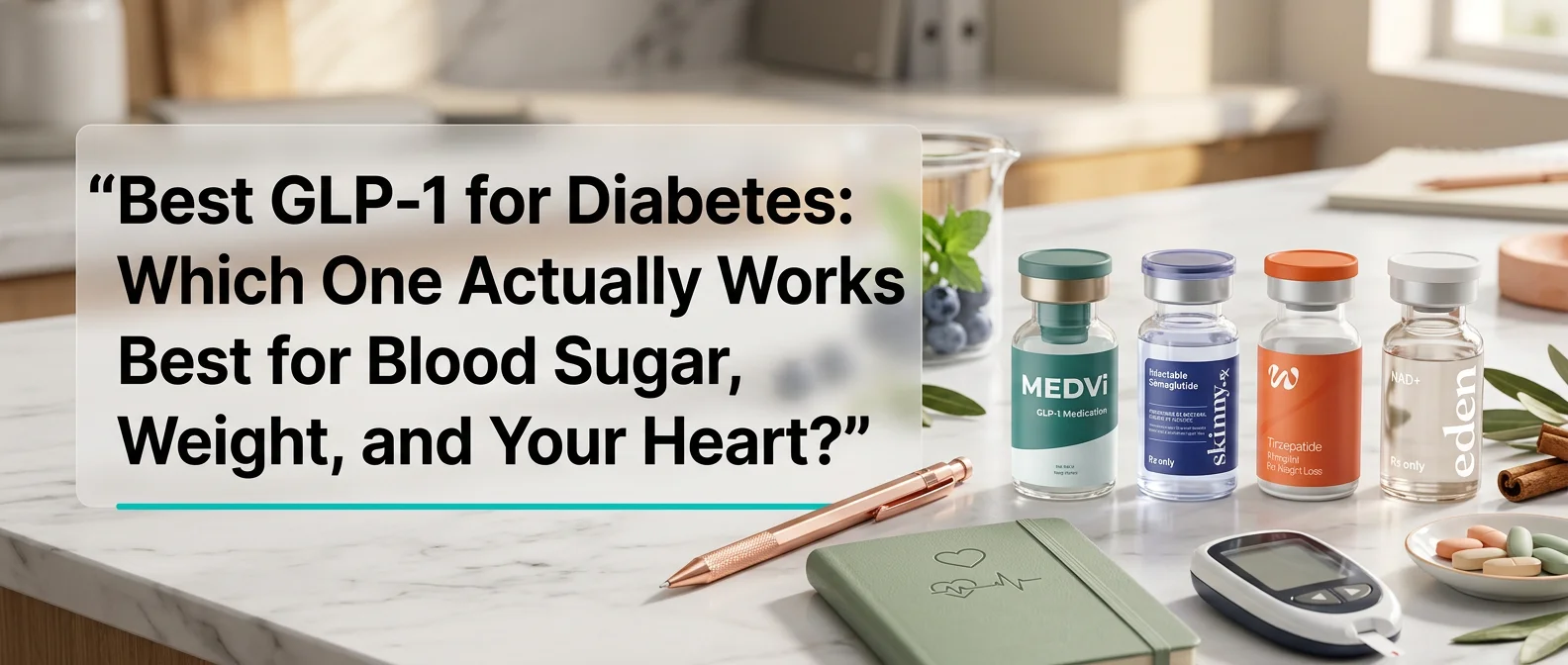
Best GLP-1 for Diabetes: Which One Actually Works Best for Blood Sugar, Weight, and Your Heart?
Bottom line: If you have type 2 diabetes and your doctor is talking about a GLP-1, you're not crazy for feeling overwhelmed. There are seven of these medications on the market, they all sound similar, and the internet can't seem to agree on which one is “best.”
So we did the work. We pulled data from every major clinical trial, cross-referenced FDA labeling, and checked the latest ADA guidelines.
For most people with type 2 diabetes, semaglutide (Ozempic) is the strongest all-around choice. It lowers A1C by up to 2.1%, has proven cardiovascular protection (SUSTAIN-6 and SELECT trials), proven kidney benefits (FLOW trial), and the longest real-world safety track record of any modern GLP-1.
If your A1C is stubbornly high and you need the biggest possible drop, tirzepatide (Mounjaro) edges ahead — it reduced A1C by up to 2.4% in head-to-head trials against Ozempic.
If cost is blocking you, that's a different problem — and the hardest one in 2026. We cover that too, including what the FDA wants you to know about compounded alternatives.
Quick Picks by Situation
Best overall for most people: Ozempic (semaglutide) — strongest combined A1C + heart + kidney evidence
Maximum A1C + weight loss: Mounjaro (tirzepatide) — up to 2.4% A1C drop, 17–25 lbs average
Heart disease / high CV risk: Ozempic — proven superiority over placebo for MACE reduction
Kidney disease: Ozempic — FLOW trial, FDA-approved kidney indication
No needles: Rybelsus (oral semaglutide) — daily pill, A1C up to 1.4%
Affordable access: Compounded via telehealth from $179/mo — See options
Affiliate Disclosure: This page contains affiliate links. If you use our links to sign up with a provider, we may earn a commission at no extra cost to you. This doesn't affect our ratings, our editorial process, or what we recommend. Full editorial policy.
Last Updated: March 5, 2026 · Sources: FDA Prescribing Information, ADA Standards of Care 2025, NEJM · Medical Disclaimer at bottom of page
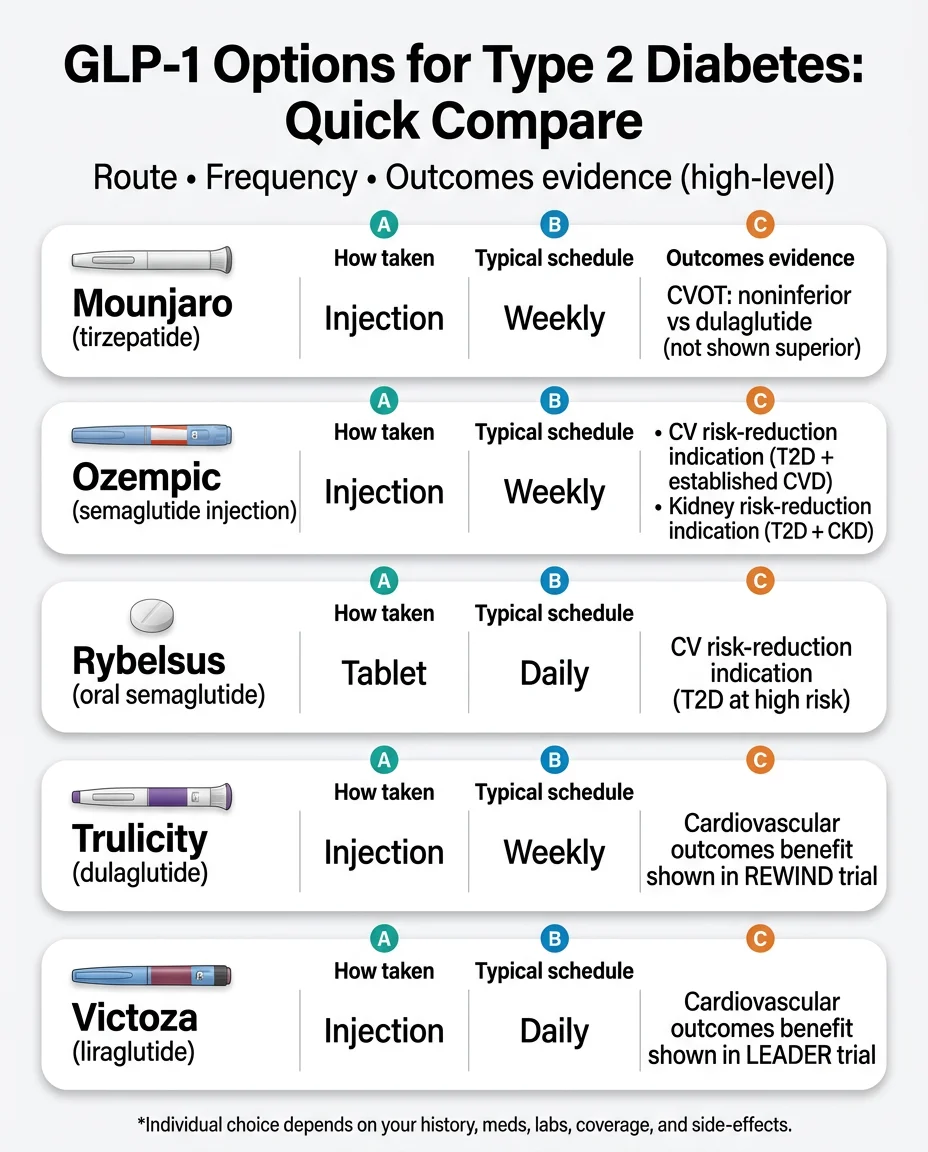
How Do GLP-1 Medications Compare for Type 2 Diabetes?
Before we break down each option, here's the side-by-side view. This table covers every GLP-1 currently FDA-approved for type 2 diabetes, ranked by A1C-lowering strength.
| Medication | Brand | A1C Reduction | Avg. Weight Loss | Heart Protection | Kidney Benefit | How | Frequency | Est. Monthly Cost |
|---|---|---|---|---|---|---|---|---|
| Tirzepatide | Mounjaro | Up to 2.4% | 17–25 lbs | Noninferior to dulaglutide (SURPASS-CVOT) | Slowed eGFR decline vs dulaglutide | Injection | Weekly | ~$1,023 |
| Semaglutide (inj.) | Ozempic | Up to 2.1% | 13 lbs | Proven (SUSTAIN-6, SELECT) | Proven (FLOW) | Injection | Weekly | ~$935 |
| Semaglutide (oral) | Rybelsus | Up to 1.4% | 8 lbs | Proven (FDA CV indication) | Class benefit | Pill | Daily | ~$935 |
| Dulaglutide | Trulicity | Up to 1.8% | 8 lbs | Proven (REWIND) | Neutral | Injection | Weekly | ~$900 |
| Liraglutide | Victoza | Up to 1.5% | 7 lbs | Proven (LEADER) | Benefit shown (LEADER) | Injection | Daily | ~$1,200 |
| Exenatide ER | Bydureon BCise | Up to 1.5% | 5 lbs | Neutral (EXSCEL) | Neutral | Injection | Weekly | ~$800 |
| Lixisenatide | Adlyxin | Up to 0.9% | 2 lbs | Neutral (ELIXA) | Neutral | Injection | Daily | ~$700 |
Data sources: FDA prescribing information for each medication; SURPASS-2 (NEJM, 2021), SURPASS-CVOT (NEJM, Dec 2025), SUSTAIN-6 (NEJM, 2016), LEADER (NEJM, 2016), REWIND (Lancet, 2019), SELECT (NEJM, 2023), FLOW (NEJM, 2024); Rybelsus sNDA approval letter (FDA, 2025). Cash prices are approximate list prices without insurance, verified March 2026. Individual results and costs vary.
A few things worth noticing. Tirzepatide and semaglutide are clearly in a different league from the older GLP-1s. The gap isn't small — it's the difference between an A1C drop of 2.4% versus 0.9%. Also notice the cardiovascular column: semaglutide has proven superiority over placebo for heart protection, while tirzepatide was shown to be noninferior to dulaglutide. That's an important distinction if you have heart disease.
“Lost 16 lbs in 10 weeks — no side effects. Down two sizes. I wish I’d started sooner.”
— Verified MEDVi patient on ConsumerAffairs ★★★★★
Which GLP-1 Is Right for YOUR Diabetes?
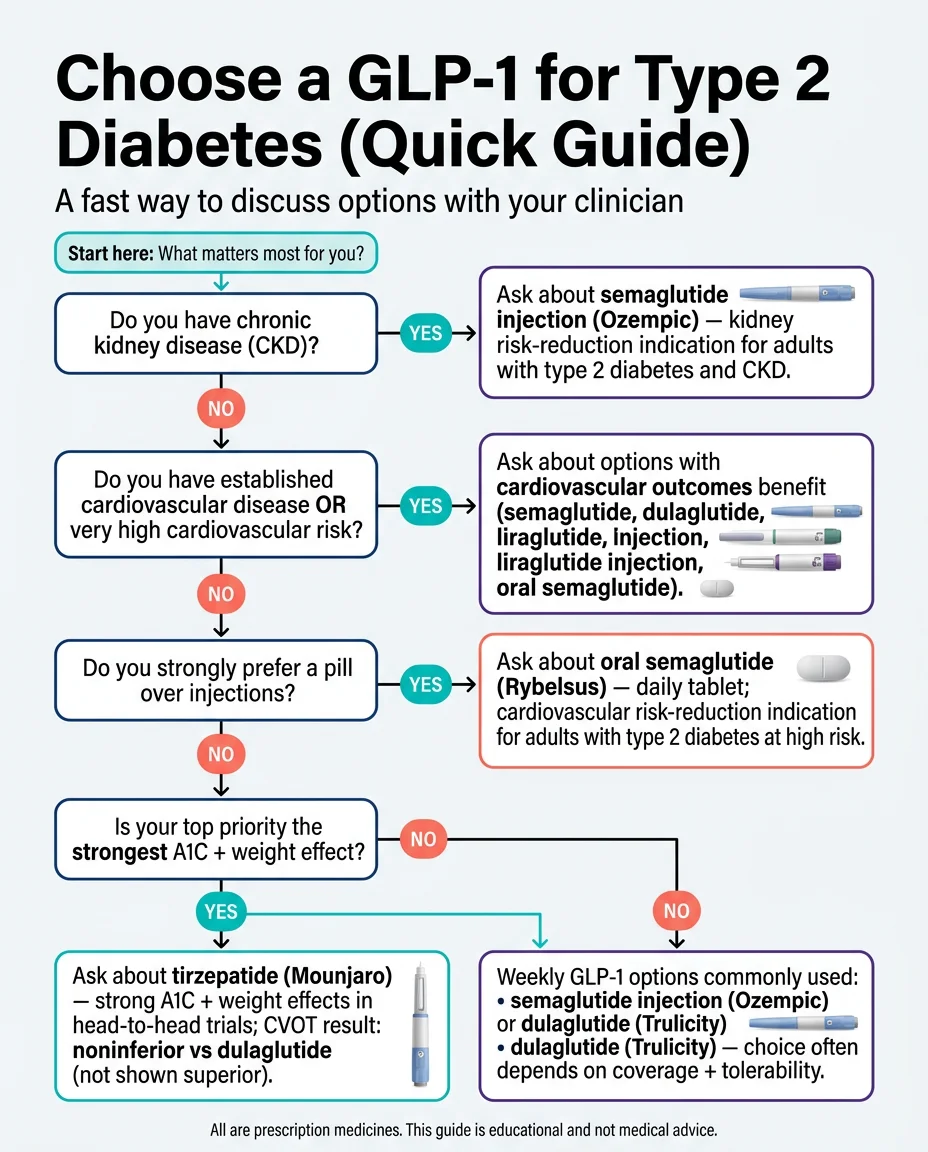
The “best” GLP-1 isn't the same for everyone. It depends on what matters most to you and your doctor. Here's how to match your situation to the right medication.
If your top priority is getting A1C down as far as possible
Pick: Mounjaro (tirzepatide)
In the SURPASS-2 trial published in the New England Journal of Medicine, tirzepatide at its highest dose lowered A1C by 2.3% — compared to 1.9% for semaglutide (Ozempic) at 1 mg. About 79% of patients on Mounjaro reached an A1C below 7%, versus 64% on Ozempic.
Mounjaro works on two hormones (GLP-1 and GIP) instead of one. That dual mechanism is likely why it outperforms on blood sugar and weight.
If you have heart disease or high cardiovascular risk
Pick: Ozempic (semaglutide)
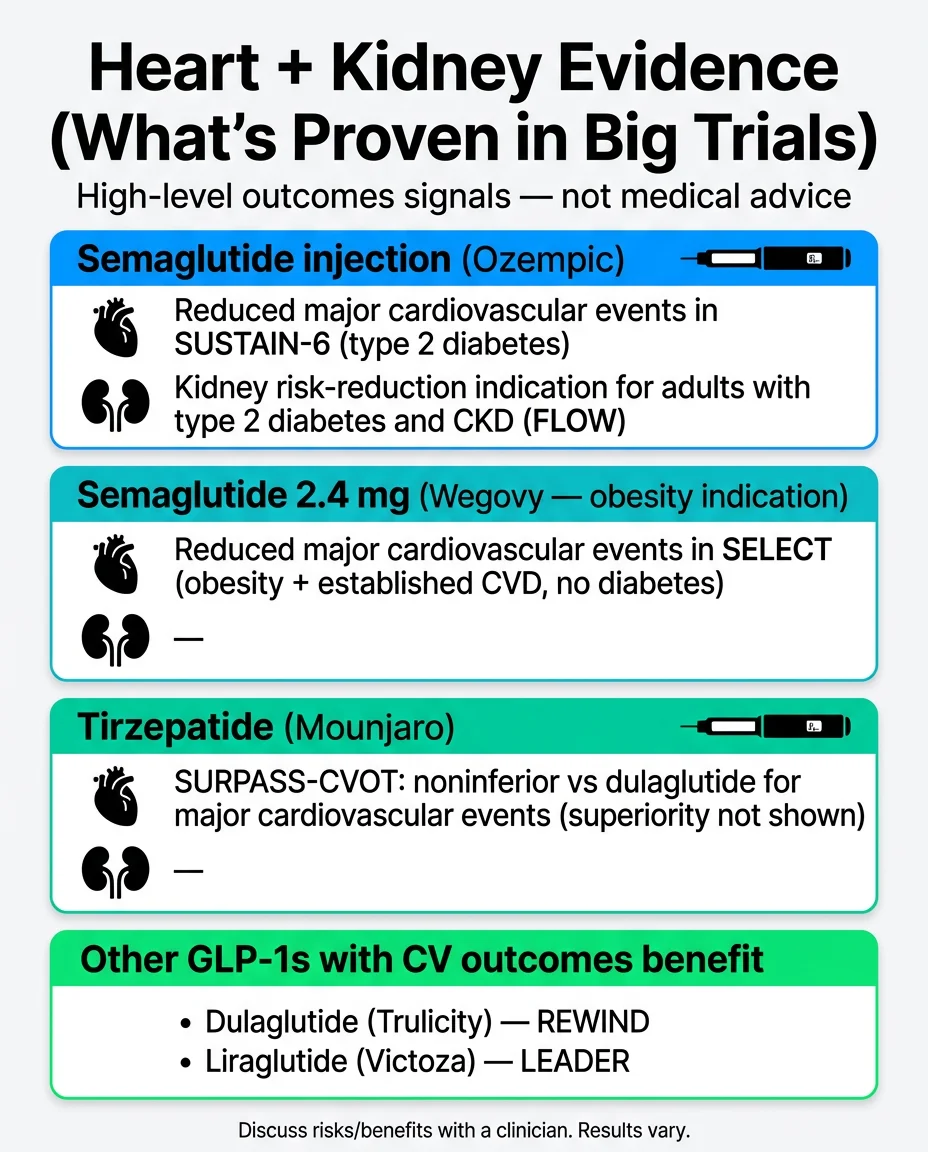
SUSTAIN-6 showed semaglutide reduced major adverse cardiovascular events (heart attack, stroke, cardiovascular death) by 26% in people with type 2 diabetes. The SELECT trial extended this to people with obesity without diabetes — a 20% reduction. No other GLP-1 has this depth of cardiovascular evidence showing superiority over placebo.
Mounjaro's SURPASS-CVOT (NEJM, Dec 2025) showed tirzepatide was noninferior to dulaglutide — reassuring, but it did not demonstrate superiority. If you've had a heart attack, stroke, or have significant cardiovascular risk, Ozempic's evidence is stronger.
If you have kidney disease alongside diabetes
Pick: Ozempic (semaglutide)
The FLOW trial demonstrated significant kidney protection in people with type 2 diabetes and chronic kidney disease. This led to an FDA-approved indication for reducing worsening kidney disease. If your doctor is monitoring your eGFR or albumin levels, this data matters.
If needles are a dealbreaker
Pick: Rybelsus (oral semaglutide)
Rybelsus is the only GLP-1 you can take as a daily pill for type 2 diabetes. It's slightly less potent than injectable Ozempic — but it's still a powerful medication. The FDA expanded its label to include cardiovascular risk reduction in high-risk T2D patients (2025).
The catch: you have to take it on an empty stomach with a small sip of water (no more than 4 ounces), then wait at least 30 minutes before eating, drinking, or taking other medications. Every single day.
If you want blood sugar control AND significant weight loss
Pick: Mounjaro (tirzepatide)
In SURPASS-2, patients on Mounjaro lost 17 to 25 lbs on average, compared to 13 lbs on Ozempic 1 mg. A separate obesity trial (SURMOUNT-5) showed tirzepatide produced 20.2% body weight reduction versus 13.7% for semaglutide over 72 weeks.
If your insurance only covers one option
Take whichever one your insurance covers. We mean this seriously.
Every GLP-1 on the market significantly outperforms older diabetes medications. The difference between Ozempic and Mounjaro is clinically meaningful in studies — but the difference between any GLP-1 and no GLP-1 is life-changing. Don't let “perfect” be the enemy of “covered.”
If you can't afford brand-name at all
Brand-name GLP-1s run $900–$1,500 per month without insurance. We cover the options — including what you need to know about compounded alternatives — in the cost section below.
Why Ozempic Is the Best Overall GLP-1 for Most People With Diabetes
We know — that verdict might surprise you if you've been reading about Mounjaro's superior numbers. But “best overall” means the strongest combination of benefits, not just the highest number on one metric.
Blood sugar control is excellent. A1C reductions of up to 2.1% at the 2 mg dose (SUSTAIN trials; FDA prescribing information).
The only GLP-1 with cardiovascular superiority over placebo in both diabetic AND non-diabetic populations. SUSTAIN-6 proved a 26% MACE reduction in people with diabetes. SELECT proved a 20% reduction in people with obesity but no diabetes.
Kidney protection is now on the label. The FLOW trial was so successful it was stopped early. The FDA updated Ozempic's labeling to include reducing the risk of worsening kidney disease.
Flexibility. Ozempic comes as a weekly injection. Semaglutide is also available as a daily pill (Rybelsus) and at a higher dose for weight management (Wegovy). If your needs change, you stay within the same medication family.
Track record. On the market since 2017. Millions of prescriptions written. The most-studied GLP-1 in the world.
The honest downside
The biggest barrier to Ozempic isn't effectiveness. It's access. Brand-name Ozempic costs roughly $935 per month without insurance coverage. Many insurance plans cover it for diabetes, but prior authorization requirements, step therapy, and high copays still block a lot of people.
That's why we've included a section on affordable alternatives below. But the FDA has raised serious concerns about compounded GLP-1 products. Navigating cost barriers requires care, not just clicking the cheapest ad you see.
Why Mounjaro May Be Better If You Need Maximum A1C and Weight Reduction
Mounjaro isn't “worse” than Ozempic. In many ways, it's the more powerful medication. The reason it's our runner-up for overall recommendation is one key distinction: while Mounjaro matched dulaglutide's heart protection in SURPASS-CVOT, it hasn't shown superiority over placebo for cardiovascular risk.
A1C: 2.0% to 2.3% depending on dose in SURPASS-2 — versus 1.9% for Ozempic at 1 mg. At every dose, Mounjaro outperformed.
Weight: 17 to 25 lbs average in SURPASS-2, compared to 13 lbs for Ozempic. In SURMOUNT-5: 20.2% vs 13.7%.
Mechanism: Dual GIP/GLP-1 receptor agonist. Works on two gut hormones instead of one — likely why it consistently outperforms.
CV data: SURPASS-CVOT showed noninferiority to dulaglutide for MACE (HR 0.92; 95.3% CI 0.83–1.01). Did not meet superiority threshold (P=0.09).
Choose Mounjaro over Ozempic if: Your A1C is above 8% and you need aggressive control, or you need substantial weight loss alongside diabetes management, or you don't have established heart disease.
Stick with Ozempic if: You've had a heart attack, stroke, or have established ASCVD, or you have chronic kidney disease (FLOW trial data).
“Lost 16 lbs in 10 weeks — no side effects. Down two sizes. I wish I’d started sooner.”
— Verified MEDVi patient on ConsumerAffairs ★★★★★
What About Trulicity, Victoza, Rybelsus, and Older GLP-1s?
Not everyone will end up on Ozempic or Mounjaro. Insurance formularies, side effect tolerability, and individual medical factors all play a role.
Trulicity (dulaglutide)
Good, not best. A1C reductions up to 1.8%. Proven cardiovascular benefit (REWIND trial — notably included many patients without established heart disease). Available at higher doses (3 mg and 4.5 mg). Often well-tolerated. If Ozempic or Mounjaro aren't covered by your plan, Trulicity is a solid alternative — not a consolation prize.
Victoza (liraglutide)
The pioneer. First GLP-1 with proven cardiovascular benefit (LEADER trial: 13% MACE reduction). Requires daily injection, which is less convenient than weekly options. Less effective for A1C and weight than semaglutide or tirzepatide. If you're currently on Victoza and it's working, that's a conversation with your doctor — not an automatic reason to switch.
Rybelsus (oral semaglutide)
The pill option. Same molecule as Ozempic, taken by mouth daily. A1C reduction up to 1.4% — lower than injectable Ozempic, partly because absorption is less efficient. But for patients who absolutely won't do injections, it keeps them on a GLP-1 instead of missing out entirely. The FDA expanded Rybelsus's label to include cardiovascular risk reduction in high-risk T2D patients (2025).
Bydureon BCise (exenatide ER) & Adlyxin (lixisenatide)
Older agents. Weaker on A1C and weight. Neutral cardiovascular outcomes. You'll mostly see these prescribed when formulary constraints force them. They still beat many older diabetes medications, but they're not first-line choices in 2026.
The most important point: If your doctor has you on any GLP-1 and your diabetes is responding well, don't switch just because another drug has better trial numbers. The best GLP-1 is the one you can access, afford, tolerate, and take consistently. Talk to your doctor before making changes.
How Do GLP-1 Medications Actually Work for Diabetes?
GLP-1 stands for glucagon-like peptide-1. It's a hormone your small intestine naturally releases after you eat. It does four things that matter for diabetes:
It tells your pancreas to release insulin — but only when blood sugar is high. Unlike insulin injections or sulfonylureas, GLP-1 medications have a much lower risk of causing dangerous low blood sugar. They work with your body's existing blood sugar levels.
It suppresses glucagon. Glucagon raises your blood sugar. When it's overactive (which happens in type 2 diabetes), your liver dumps glucose into your blood even when you don't need it. GLP-1s put the brakes on that.
It slows stomach emptying. Food leaves your stomach more gradually, preventing sharp blood sugar spikes after meals. This also contributes to feeling full longer.
It acts on your brain to reduce appetite. GLP-1 medications affect areas of the hypothalamus involved in hunger and satiety signaling. This is the weight loss mechanism.
GLP-1 medications are synthetic versions of this hormone, engineered to last much longer. The natural hormone breaks down in minutes. Medications like Ozempic last a full week.
The ADA now recommends GLP-1 receptor agonists as the preferred first injectable therapy for type 2 diabetes — before starting insulin. For most people whose blood sugar isn't controlled with metformin alone, a GLP-1 is the next step, especially if you have cardiovascular disease, kidney disease, or need to lose weight.
Who Should NOT Take a GLP-1?
GLP-1 medications aren't for everyone. You should not start a GLP-1 if you have:
Personal or family history of medullary thyroid carcinoma (MTC) or MEN 2. Hard contraindication — black box warning on every GLP-1 label.
Pancreatitis history requires individualized judgment. Acute pancreatitis has been reported. FDA labeling advises stopping if pancreatitis is suspected. If you've had it before, discuss risks and alternatives with your clinician.
Known serious hypersensitivity to the medication or its components.
Pregnancy or planning to become pregnant. Stop at least 2 months before a planned pregnancy. Not adequately studied in pregnant women.
Type 1 diabetes (as primary treatment). GLP-1s don't replace insulin for type 1 diabetes.
If you have a history of gallbladder disease, kidney problems, or diabetic retinopathy, GLP-1s aren't necessarily off-limits — but your doctor needs to know about these conditions to monitor appropriately.
What Are the Side Effects — and How Bad Are They Really?
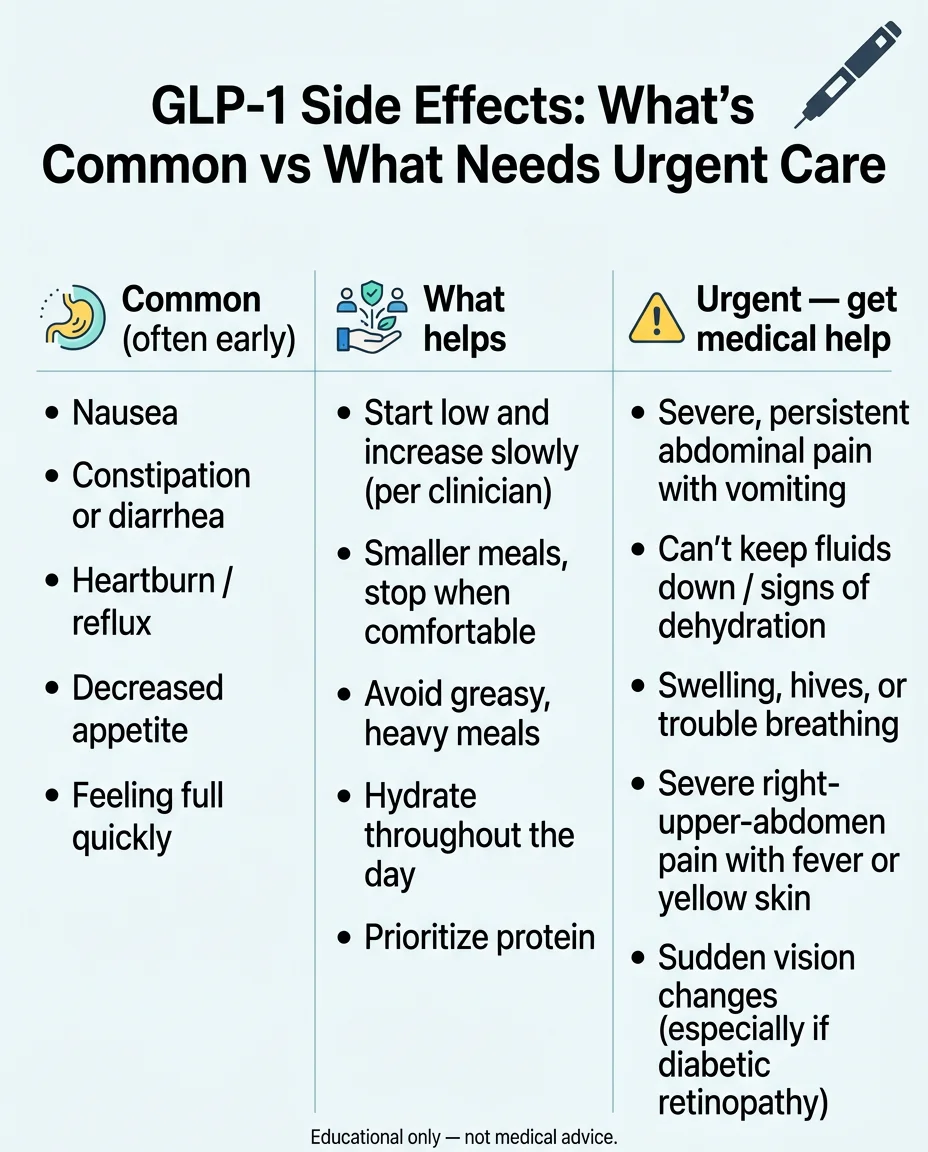
Side effects are real, and they're the most common reason people stop GLP-1s early.
What most people experience (especially at the start)
Nausea is the big one. In clinical trials, roughly 15–25% reported nausea, mostly in the first few weeks and after each dose increase. For most, it's mild to moderate and fades within 2–4 weeks.
Vomiting, diarrhea, and constipation also show up. Tirzepatide and semaglutide tend to cause more GI side effects than older GLP-1s — that's the tradeoff for higher efficacy.
Decreased appetite is technically a side effect, but for most people with T2D and overweight, it's the point. Make sure you still eat enough protein and stay hydrated.
How to minimize side effects
Start low, go slow. Every GLP-1 begins at a low dose and gradually increases. Don't rush titration.
Eat smaller, protein-rich meals. Large, fatty meals trigger the worst nausea.
Stay hydrated. Vomiting and diarrhea can lead to dehydration, which can stress your kidneys.
Serious but rare risks — know the signs
Pancreatitis: Severe, persistent abdominal pain (often radiating to the back) with vomiting. Rare, but serious. Seek immediate medical attention.
Gallbladder problems: GLP-1 medications may increase the risk of gallstones, particularly with rapid weight loss. Pain in the upper right abdomen warrants a call to your doctor.
Thyroid tumors: All GLP-1s carry a black box warning based on animal studies. Not confirmed in humans, but contraindicated if you have a personal/family history of MTC or MEN 2.
Diabetic retinopathy: In SUSTAIN-6, semaglutide was associated with a small increased risk of retinopathy complications. If you have existing diabetic eye disease, your doctor should monitor this.
Kidney injury: Not from the medication itself, but from dehydration caused by vomiting or diarrhea. Stay hydrated. If you can't keep fluids down, contact your doctor.
On mental health concerns: The FDA investigated reports of suicidal thoughts in patients taking GLP-1 medications and has not found evidence of a causal link. Monitoring continues. If you experience new or worsening depression or suicidal thoughts while on any medication, talk to a healthcare provider immediately.
How Much Do GLP-1s Cost — and What If You Can't Afford Brand-Name?
Let's talk about the elephant in the room. These medications are expensive. And for a lot of people, cost is the barrier — not willingness.
The reality of GLP-1 pricing in 2026
Brand-name Ozempic runs approximately $935 per month without insurance. Mounjaro is around $1,023. Trulicity, Victoza, Rybelsus — all in a similar range.
For type 2 diabetes specifically, insurance coverage is better than for weight loss. Most major insurance plans and Medicare Part D cover at least one GLP-1 for diabetes. But “covered” doesn't always mean “affordable.”
Path 1: Work the insurance system
Call the number on the back of your card and ask: “Is [medication] covered for type 2 diabetes? What is my copay? Is prior authorization required?”
Ask your doctor to document medical necessity — especially if you have cardiovascular disease, kidney disease, or obesity alongside diabetes.
If denied, appeal. A surprising number of prior auth denials are overturned on appeal.
Check manufacturer savings programs. Novo Nordisk and Eli Lilly both offer savings cards for eligible commercially insured patients.
Path 2: If insurance isn't an option
Some people turn to compounded versions of GLP-1 medications, available through telehealth providers at lower prices (typically $179–$399 per month). We need to be very direct about what this means in 2026, because the landscape has changed dramatically.
The Truth About Compounded GLP-1s (What the FDA Wants You to Know)
What compounded GLP-1s are
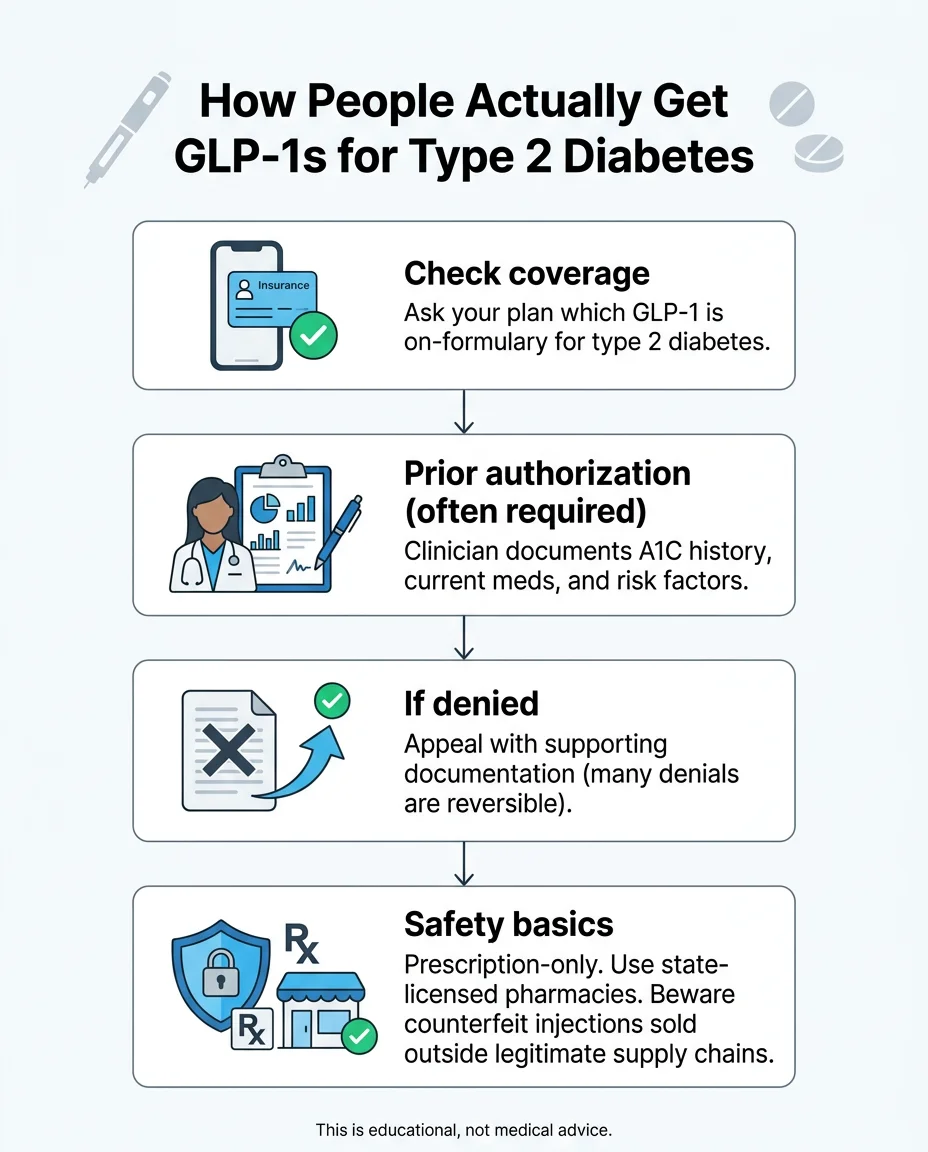
Compounded drugs are medications prepared by a pharmacy for an individual patient based on a prescription. They are not FDA-approved products. The FDA does not evaluate them for safety, effectiveness, or quality before they reach patients.
What the FDA has found
Dosing errors: Reports of adverse events — some requiring hospitalization — related to patients measuring incorrect doses of compounded injectable semaglutide.
Temperature problems: Complaints that compounded products arrived warm or with inadequate cooling, potentially compromising quality.
Fraudulent products: Compounded semaglutide and tirzepatide identified with false information on labels — including names of pharmacies that didn't actually compound the products.
Misleading marketing: In September 2025, the FDA issued 50+ warning letters to compounders. In February 2026, additional warning letters to individual telehealth companies. In March 2026, 30 more warning letters to telehealth companies for illegally marketing compounded GLP-1 products.
How to protect yourself if you go the compounded route
Verify the pharmacy is real and licensed. Check with your state board of pharmacy. The FDA's BeSafeRx campaign has resources.
Confirm the product was actually compounded by the pharmacy listed on the label.
Check the shipment when it arrives. If the package arrives warm or without adequate cold packing, do not use it.
Never use a product from a provider that doesn't require a medical evaluation.
Be skeptical of marketing claims. Any company claiming their compounded product is “the same as” FDA-approved Ozempic or Mounjaro is making a claim the FDA considers false or misleading.
If You Need Affordable GLP-1 Access: Telehealth Options We're Tracking
Safety note: If you have type 2 diabetes, the safest path is always through a provider who can monitor your A1C, kidney function, and other medications. Telehealth can be appropriate, but it should include real medical oversight — not just a quick form and a shipment.
Telehealth providers offering GLP-1 programs
Embody
Cash-pay telehealth GLP-1 program built around a low starting price: from $99 for the first month of semaglutide injection, then $299/mo ongoing (other forms run higher). Offers weekly compounded semaglutide or tirzepatide injections plus a needle-free GLP-1 gum option for needle-averse patients. No insurance required; HSA/FSA advertised as accepted. Broad U.S. availability, confirmed during intake. Embody's shipped options are compounded GLP-1 medications, not FDA-approved finished drugs.
Best for: Cash-pay patients who want the lowest first-month price or a needle-free GLP-1 gum option.
Yucca Health
A science-focused telehealth platform reporting over 20,000 patients (provider-stated). Offers personalized weight management programs with clinician-guided follow-ups every 4–6 weeks. Patient reviews highlight responsive communication and proactive dose adjustments.
Best for: People who want structured medical oversight and regular clinician contact.
TrimRX
Flat-rate pricing model: one monthly fee covers medication, consultations, labs when needed, supplies, and shipping. The price doesn't increase as your dose goes up, which is unusual in this market. Offers compounded semaglutide and tirzepatide.
Best for: People who want predictable costs with no surprise price increases.
Other providers we're monitoring
SkinnyRX
High-volume provider with a 4.8/5 Trustpilot rating from 4,800+ reviews (Trustpilot, checked March 2026). Known for fast shipping — overnight is standard. Offers both injectable and tablet forms. We're monitoring their compliance status given the FDA's recent enforcement wave.
Willow
Streamlined intake process with affordable pricing. Note: Willow Health Services was named among the 30 telehealth companies that received FDA warning letters in March 2026 regarding marketing claims for compounded GLP-1 products (source: FDA press announcement, March 2026). We recommend checking their website for updated disclosures before proceeding.
MEDVi
Previously one of the most popular compounded GLP-1 providers with 10,000+ Trustpilot reviews (checked March 2026). MEDVi received an FDA warning letter dated February 20, 2026, regarding false or misleading claims about compounded products (source: FDA.gov, warning letter #721455). We're monitoring their response. If you're considering MEDVi, verify they've addressed the FDA's concerns.
What to look for in any telehealth GLP-1 provider
A real licensed prescriber reviews your health history before any prescription
The pharmacy is state-licensed and verifiable
They don't claim their product is “the same as” FDA-approved medications
They explain that compounded products are not FDA-approved
They have a clear cancellation process
You can reach a real person for support
Real Experiences: What GLP-1s Feel Like for People With Diabetes
Clinical trials give you numbers. Real people tell you what it's actually like. Here are experiences shared publicly by patients — presented to give you a sense of what to expect, not as guarantees.
“My A1C dropped from 8.1 to 5.6.”
One patient, after nearly 20 years on metformin that had stopped working, switched to Ozempic. Nine months later: 40-lb weight loss and an A1C from the diabetic range to normal. Mild nausea at each dose increase, clearing within 1–2 weeks. (Source: Drugs.com verified patient review)
“My A1C results are great — even though I only lost 6 lbs.”
A Type 2 diabetic on Mounjaro at 12.5 mg shared that while dramatic weight loss didn't happen, blood sugar control improved significantly. “Not everyone loses 40 to 60 lbs, but I am very happy with my A1C results.” (Source: TCOYD patient discussion)
“I no longer need blood pressure medication.”
A 66-year-old patient on Mounjaro: 42 lbs lost, A1C from 5.9 to 5.4, blood pressure normalized enough to stop medication, dramatically improved energy. (Source: NSMedicalWellness.com patient story)
The honest mixed experience: Not everyone has a smooth ride. Some patients report significant nausea, vomiting, and GI symptoms that make the early weeks difficult. One patient described being “sick for 5 months” on Ozempic before switching to Mounjaro and tolerating it much better.
The pattern we see: Patients who start low, increase gradually, eat smaller meals, stay hydrated, and give their body time to adapt tend to have the best experiences.
Ozempic vs Mounjaro for Diabetes: The Direct Comparison
This is the most-searched comparison in the GLP-1 space. Here's the clear answer.
| Category | Winner | Key Data |
|---|---|---|
| A1C Reduction | Mounjaro | 2.0–2.3% vs 1.9% in SURPASS-2 |
| Weight Loss | Mounjaro | 17–25 lbs vs 13 lbs; SURMOUNT-5: 20.2% vs 13.7% |
| Heart Protection | Ozempic | 26% MACE reduction (SUSTAIN-6); 20% (SELECT) |
| Kidney Protection | Ozempic | FLOW trial → FDA-approved kidney indication |
| Cost | Similar | Both $900–$1,023/mo without insurance |
| Convenience | Tie | Both weekly injection; Ozempic also has pill option (Rybelsus) |
Our take: If you have to pick one and don't have a specific comorbidity driving the decision, either is an excellent choice. The best one is the one your insurance covers, your doctor recommends, and you tolerate well.
For a deeper dive, see our full semaglutide vs tirzepatide comparison.
Ozempic vs Wegovy and Mounjaro vs Zepbound: Clearing Up the Confusion
Semaglutide (Novo Nordisk)
Ozempic: Approved for type 2 diabetes (max 2 mg/week) + CV risk reduction in T2D
Wegovy: Approved for chronic weight management (up to 2.4 mg/week) + CV risk reduction in obesity + MASH
Rybelsus: Oral pill for T2D + CV risk reduction
Tirzepatide (Eli Lilly)
Mounjaro: Approved for type 2 diabetes
Zepbound: Approved for chronic weight management + obstructive sleep apnea
Why this matters for you: If you have type 2 diabetes AND need to lose weight, your doctor will typically prescribe Ozempic or Mounjaro (the diabetes versions). You get both benefits — blood sugar control and weight loss — under the diabetes indication, which usually has better insurance coverage.
Can You Take a GLP-1 With Metformin?
Yes — and most people do. Almost every major GLP-1 clinical trial studied these medications as add-on therapy to metformin. The ADA Standards of Care recommends this combination when metformin alone isn't achieving target A1C. The two drugs work through completely different mechanisms, so they complement each other without duplicating effects.
Are GLP-1s Covered by Insurance for Diabetes?
Type 2 diabetes coverage is generally better than weight loss coverage, but it varies widely. Most Medicare Part D plans and major commercial insurers cover at least one GLP-1 for diabetes. However:
Prior authorization is almost always required. Your doctor needs to document that metformin alone isn't sufficient.
Step therapy may apply. Some plans require you to try (and fail) a cheaper drug first.
Formulary tiers matter. Your plan may cover Trulicity at a lower copay than Ozempic, or vice versa.
Appeals work. If your first choice is denied, your doctor can file an appeal with documentation of A1C history and comorbidities.
A 2025 Kaiser Family Foundation survey found that only 19% of large employer plans covered GLP-1s for weight loss — but diabetes coverage rates are significantly higher. For help navigating prior authorization, see our guides on Mounjaro prior authorization and Wegovy prior authorization.
What Happens If You Stop Taking a GLP-1?
We'll be direct: blood sugar typically rises back toward pre-treatment levels, and weight lost is often partially regained. This isn't a failure of willpower — it's the biology of type 2 diabetes. GLP-1s manage the condition; they don't cure it.
Most patients who benefit from GLP-1s will need long-term treatment, similar to blood pressure or cholesterol medications. That's okay. This is why affordability and sustainable access matter so much.
For a deeper look, see our guide: What happens when you stop taking GLP-1.
Can GLP-1s Help With Prediabetes?
GLP-1s are not FDA-approved for prediabetes. However, semaglutide (as Wegovy) IS approved for weight management in people with a BMI of 27 or higher with at least one weight-related condition — and prediabetes qualifies. In the SELECT trial, semaglutide also reduced the incidence of new-onset type 2 diabetes by 73% in patients with obesity and prediabetes who had cardiovascular disease.
For more detail, see our dedicated guides: GLP-1 for prediabetes and best GLP-1 for prediabetes.
What About Type 1 Diabetes?
GLP-1s are not FDA-approved for type 1 diabetes. The mechanism is fundamentally different — type 1 is caused by the immune system destroying insulin-producing beta cells, not by insulin resistance. Some endocrinologists prescribe GLP-1s off-label for type 1 patients with significant insulin resistance or weight management needs, but this requires close monitoring. Do not start a GLP-1 for type 1 diabetes without an endocrinologist's direct supervision.
What's Coming Next: GLP-1 Medications in the Pipeline
The GLP-1 class is evolving fast. Here's what's on the horizon:
Orforglipron (Eli Lilly)
An oral GLP-1 pill that doesn't require empty-stomach dosing. Phase 3 complete. Showed 11.2% weight loss at 72 weeks. Could be a game-changer for convenience if approved.
Retatrutide (Eli Lilly)
A triple agonist targeting GLP-1, GIP, and glucagon receptors. Early data showed up to 28.7% body weight reduction. Phase 3 results expected 2026–2027. See our retatrutide guide.
CagriSema (Novo Nordisk)
Semaglutide combined with cagrilintide (an amylin analog). A BMJ meta-analysis found it produced the highest weight loss of any GLP-1 studied (average 14 kg). Trials ongoing.
MariTide (Amgen)
A once-monthly injection. Phase 3 trials started in 2025. Could reduce injection burden significantly.
The takeaway: Better, more convenient, and potentially cheaper options are coming. But they're not here yet. Don't wait for “the next big thing” if your diabetes needs treatment now.
5 Questions to Ask Your Doctor About GLP-1s at Your Next Appointment
If you've read this far, you're more informed than most patients walking into a doctor's office. Here's how to turn that knowledge into a productive conversation:
“Based on my A1C, weight, and heart/kidney risk, which GLP-1 do you recommend — and why?”
“Is [specific medication] on my insurance formulary? If not, can we do a prior authorization?”
“What dose will I start at, and how will we titrate up?”
“What should I do if I experience nausea or other side effects?”
“How will we monitor my progress — and how often should I get labs?”
How We Ranked GLP-1 Medications for Diabetes
Evidence hierarchy: (1) FDA-approved prescribing information, (2) major randomized CV and glycemic outcomes trials (NEJM, Lancet, Diabetes Care), (3) ADA Standards of Care in Diabetes 2026, (4) real-world observational data, (5) patient-reported experiences.
Ranking criteria: A1C reduction, cardiovascular outcomes, kidney outcomes, side effect profile, and real-world accessibility (cost and insurance coverage).
“Best” is always segmented. Our recommendation changes based on individual factors — that's why the decision framework exists.
What we don't do: We don't receive payment from pharmaceutical manufacturers. Telehealth provider recommendations include affiliate partners, but this never influences which medication we recommend.
Our conflict of interest: We earn affiliate commissions when you sign up through our links. This does NOT influence rankings — we recommend Ozempic as the best overall GLP-1 for diabetes because the evidence supports it, not because of any business relationship. Read our full editorial standards.
Frequently Asked Questions
Which GLP-1 lowers A1C the most?
Tirzepatide (Mounjaro) showed the largest A1C reduction in head-to-head trials — up to 2.4% at the highest dose. Semaglutide (Ozempic) at 2 mg lowers A1C by up to 2.1%. Both significantly outperform older GLP-1s.
Which GLP-1 has the least side effects?
Dulaglutide (Trulicity) generally has fewer GI side effects than semaglutide or tirzepatide. However, it's also less effective for A1C and weight. The highest-efficacy drugs tend to have higher initial side effect rates — that's the tradeoff.
Which GLP-1 is safest for the heart?
Semaglutide has the most cardiovascular safety data of any GLP-1. SUSTAIN-6 showed 26% reduction in major adverse cardiovascular events in people with type 2 diabetes. The SELECT trial confirmed a 20% MACE reduction in people with obesity without diabetes.
Is there a GLP-1 pill?
Yes. Rybelsus (oral semaglutide) is FDA-approved for type 2 diabetes. An oral form of Wegovy was also recently approved for weight management.
Are GLP-1s better than insulin?
For most people with type 2 diabetes, the ADA recommends GLP-1s as the preferred first injectable — ahead of insulin. GLP-1s improve A1C without causing hypoglycemia and promote weight loss rather than weight gain. Insulin remains essential for type 1 diabetes and for some type 2 patients with very high glucose levels.
How fast do GLP-1s lower blood sugar?
Blood sugar improvements can begin within days of starting treatment. However, it typically takes 2–3 months (one full A1C cycle) to see the full impact on your A1C test.
What should I eat on a GLP-1?
Focus on lean protein, vegetables, and whole grains. Eat smaller meals. Avoid large, greasy, or high-sugar meals — especially during dose escalation, when nausea is most likely. Stay well-hydrated. A registered dietitian can help you build sustainable eating habits alongside your medication.
What happens if I miss a GLP-1 dose?
Missed-dose rules differ by medication. Ozempic: take within 5 days of the missed dose, otherwise skip. Mounjaro: take within 4 days (96 hours). Trulicity: take within 3 days (72 hours). Rybelsus/Victoza (daily): skip and take the next one at the usual time. Never double-dose.
Can I use HSA or FSA to pay for GLP-1 telehealth programs?
Most telehealth GLP-1 providers accept HSA and FSA cards, including Embody, TrimRX, and others. Check with your specific provider and your HSA/FSA administrator to confirm eligibility.
Are compounded GLP-1s FDA-approved?
No. Compounded drugs are not FDA-approved and have not been evaluated by the FDA for safety, effectiveness, or quality. The FDA has raised specific concerns including dosing errors, temperature control issues, and fraudulent labeling. If you use compounded GLP-1s, verify the pharmacy is state-licensed and that the product was actually prepared by the pharmacy identified on the label.
How do I verify a GLP-1 pharmacy?
Check your state board of pharmacy's website to confirm the pharmacy is licensed. The FDA's BeSafeRx campaign has additional resources for buying prescription medications online safely. If you suspect a product may be fraudulent, contact the pharmacy directly to confirm they compounded it.
Is there an over-the-counter GLP-1?
No. All GLP-1 medications are prescription-only in the United States. Any product claiming to be an OTC GLP-1 is either not a real GLP-1 or is being sold illegally. Do not buy GLP-1 medications from unregulated sellers, beauty salons, or social media.
How do I talk to my doctor about starting a GLP-1?
Come prepared. Know your latest A1C, know your insurance formulary (call your plan ahead of time), and have a specific question: "Based on my A1C, weight, and risk factors, would a GLP-1 like Ozempic or Mounjaro be appropriate for me?" Most doctors welcome this conversation.
Can GLP-1s put type 2 diabetes into remission?
Some patients on GLP-1s achieve A1C levels below the diabetic threshold (below 6.5%). This is generally considered excellent management rather than a cure. Stopping the medication usually causes levels to rise again. However, for some patients — especially those who also lose significant weight and make lasting lifestyle changes — sustained improvements are possible.
Do GLP-1s interact with other diabetes medications?
GLP-1s are safe to take with metformin — that's the most common combination. They can also be used alongside SGLT2 inhibitors (like Jardiance or Farxiga). However, combining a GLP-1 with insulin or a sulfonylurea increases the risk of hypoglycemia. Your doctor will usually reduce the insulin or sulfonylurea dose when adding a GLP-1.
What labs should I get before starting a GLP-1?
At minimum: A1C (to establish your baseline), basic metabolic panel (kidney function), and thyroid function. If you have risk factors for pancreatitis or gallbladder disease, additional labs may be appropriate. Some telehealth providers cover the cost of lab work.
Can I drink alcohol while on a GLP-1?
There's no absolute prohibition, but be cautious. GLP-1s slow stomach emptying, which can change how your body processes alcohol. Some patients report feeling the effects faster. Alcohol can also lower blood sugar, which matters if you're taking other diabetes medications alongside your GLP-1.
How long do GLP-1 side effects last?
For most people, the worst nausea and GI symptoms occur during the first 2–4 weeks at each new dose level. By the time you've been at your maintenance dose for a month, most side effects have significantly improved or resolved. If side effects persist beyond 6–8 weeks at a stable dose, talk to your doctor.
Ready to Explore Your Options?
You've read the data. You know which GLP-1 fits your diabetes profile. Now the question is access and affordability.
If brand-name is covered by your insurance, start there. If not, a reputable telehealth provider with real medical oversight can be an appropriate alternative — with the FDA caveats we've outlined above.
Best balance of price and support: Start with MEDVi → ($179 first month, 24/7 clinician access, no contracts)
Lowest first-month price & needle-free gum option: Check Embody eligibility → (from $99 first month, then $299/mo ongoing)
All-inclusive flat-rate pricing: Start TrimRX assessment →
Structured medical oversight: See Yucca Health plans →
Every provider on our list requires a medical evaluation by a licensed clinician before prescribing. You'll fill out a health questionnaire, have a consultation, and receive a personalized treatment plan.
If you have type 2 diabetes, talk to your doctor first. A telehealth GLP-1 provider can be a valuable option for access and cost — but your primary care physician or endocrinologist should be aware of all medications you're taking, especially if you're on insulin, sulfonylureas, or have kidney disease.
“Lost 16 lbs in 10 weeks — no side effects. Down two sizes. I wish I’d started sooner.”
— Verified MEDVi patient on ConsumerAffairs ★★★★★
Sources and References
- ADA Standards of Care in Diabetes — 2026, Sections 9 (Pharmacologic Approaches to Glycemic Treatment) and 10 (Cardiovascular Disease and Risk Management). Diabetes Care, 2026.
- Frías JP, et al. Tirzepatide versus semaglutide once weekly in patients with type 2 diabetes. N Engl J Med, 2021; 385:503-515. (SURPASS-2)
- Nicholls SJ, et al. Cardiovascular outcomes with tirzepatide versus dulaglutide in type 2 diabetes. N Engl J Med, 2025; 393:2409-2420. (SURPASS-CVOT)
- Marso SP, et al. Semaglutide and cardiovascular outcomes in patients with type 2 diabetes. N Engl J Med, 2016; 375:1834-1844. (SUSTAIN-6)
- Lincoff AM, et al. Semaglutide and cardiovascular outcomes in obesity without diabetes. N Engl J Med, 2023; 389:2221-2232. (SELECT)
- Marso SP, et al. Liraglutide and cardiovascular outcomes in type 2 diabetes. N Engl J Med, 2016; 375:311-322. (LEADER)
- Gerstein HC, et al. Dulaglutide and cardiovascular outcomes in type 2 diabetes. Lancet, 2019; 394:121-130. (REWIND)
- Perkovic V, et al. Effects of semaglutide on chronic kidney disease in patients with type 2 diabetes. N Engl J Med, 2024. (FLOW)
- Aronne LJ, et al. Tirzepatide as compared with semaglutide for the treatment of obesity. N Engl J Med, 2024. (SURMOUNT-5)
- FDA Rybelsus sNDA approval letter (2025) — oral semaglutide approved for CV risk reduction in adults with T2D at high CV risk.
- Lee MMY, et al. Cardiovascular and kidney outcomes with GLP-1 RAs in type 2 diabetes. Diabetes Care, 2025; 48(5):846-859.
- Yao H, et al. Comparative effectiveness of GLP-1 receptor agonists on glycaemic control, body weight, and lipid profile for type 2 diabetes. BMJ, 2024; 384:e076410.
- FDA Prescribing Information: Ozempic, Mounjaro, Trulicity, Victoza, Rybelsus, Bydureon BCise, Adlyxin — accessed via DailyMed/FDA Access Data.
- FDA Safety Communications: Concerns with unapproved GLP-1 drugs (updated Feb 2026); FDA warning letter to MEDVi LLC (#721455, Feb 20, 2026).
- FDA Press Announcement: FDA warns 30 telehealth companies against illegal marketing of compounded GLP-1s (March 2026). Link
- FDA update on suicidal ideation evaluation: No causal link found; continued monitoring.
| Date | What Changed |
|---|---|
| March 2026 | Initial publication. Full clinical review including SURPASS-CVOT results (NEJM, Dec 2025). Pricing verification. FDA enforcement context added (30 warning letters, March 2026). Provider compliance notes updated. |
This page is reviewed when new clinical trial results, FDA actions, or ADA guideline updates are published. Last full review: March 2026.
Affiliate Disclosure
WeightLossProviderGuide.com contains affiliate links. When you click a link to a telehealth provider and enroll in a program, we may earn a commission at no additional cost to you. This relationship never influences which medications we recommend — our clinical rankings are based entirely on published clinical trial data, FDA labeling, and ADA guidelines. We recommend Ozempic as the best overall GLP-1 for diabetes because the evidence supports it, not because of any business relationship.
We are not doctors. This guide is for informational purposes only and does not constitute medical advice. GLP-1 medications are prescription drugs with real side effects and contraindications. Always consult a licensed healthcare provider before starting, stopping, or changing any medication. Compounded medications referenced on this page are not FDA-approved products. Full editorial standards.