Disclosure: Some links on this site are affiliate links. If you purchase through these links, we may earn a commission at no extra cost to you. Thank you for supporting our site.·For informational purposes only—not medical advice.
Fact-checked against primary sources: SURMOUNT-5 trial (NEJM, 2025), STEP-1 trial (NEJM, 2021), SURMOUNT-1 trial (NEJM, 2022), FDA prescribing information for Wegovy and Zepbound, MEDVi.org pricing, ConsumerAffairs, and Trustpilot verified reviews.
MEDVi Tirzepatide vs Semaglutide: Which GLP-1 Should You Choose for Weight Loss?
If you're comparing MEDVi tirzepatide vs semaglutide, here's the bottom line: start with compounded semaglutide ($179 first month) if you're new to GLP-1 therapy. Semaglutide and tirzepatide are both backed by large clinical trials using brand-name Wegovy and Zepbound — and semaglutide costs significantly less through MEDVi, with room to upgrade later if you hit a plateau. Choose tirzepatide ($349 first month) if you've already tried semaglutide without enough results, need to lose 20%+ of your body weight, or want the most powerful weight loss medication currently studied — the landmark SURMOUNT-5 trial published in the New England Journal of Medicine found tirzepatide produced 47% greater weight loss than semaglutide (20.2% vs 13.7% of body weight over 72 weeks).
*Illustration only. Comparison context for educational purposes. Actual medication packaging and appearance may vary.*
Best value for first-timers
Maximum weight loss results
5-minute online assessment. No contract. Cancel any time.
One thing to know upfront: MEDVi prescribes compounded GLP-1 medications, which are not FDA-approved products. We'll explain exactly what that means, why it matters, and how to verify the pharmacy — because that's the kind of transparency most pages ranking for this topic skip entirely.
Below, we break down everything: the clinical evidence, real monthly costs (month 1 and refills), side effects, dosing, who each medication is best for, and the 2026 FDA compounding landscape. By the time you finish reading, you won't need to search again.
| MEDVi Semaglutide (Injection) | MEDVi Tirzepatide (Injection) | |
|---|---|---|
| How it works | GLP-1 receptor agonist (one pathway) | Dual GLP-1 + GIP receptor agonist (two pathways) |
| Avg. weight loss (clinical trial) | 13.7% of body weight over 72 weeks | 20.2% of body weight over 72 weeks |
| For a 200-lb person | ~27 lbs lost | ~40 lbs lost |
| First month (MEDVi) | $179 | $349 |
| Monthly refills (MEDVi) | $299 (MEDVi states “locked” pricing) | Varies by dose — confirm before enrolling |
| Estimated year 1 cost | ~$3,468 | Varies — confirm refill pricing with MEDVi |
| Injection frequency | Once weekly | Once weekly |
| Tablet option available? | Yes — $249 first month | Yes — $279 first month |
| GI discontinuation rate (SURMOUNT-5) | 5.6% | 2.7% |
| Cardiovascular data | FDA-approved CV risk reduction (SELECT trial) | Ongoing (SURMOUNT-MMO trial) |
| Safety track record | Longer — more published long-term data | Newer — FDA weight loss approval Nov 2023 |
| Best for | First-timers, budget-conscious, moderate goals | Semaglutide non-responders, aggressive goals, T2D |
| Money-back guarantee | Yes — 5-month guarantee | Yes — 5-month guarantee |
Sources: SURMOUNT-5 trial (NEJM, May 2025, NCT05822830); MEDVi pricing verified at medvi.org, February 2026. Prices may change — always verify before enrolling.
Which Should You Choose? (The Quick Decision)
There's no universal winner. The right medication depends on three things: your weight loss goals, your budget, and your medical history.
Choose semaglutide through MEDVi if:
- You're trying GLP-1 medication for the first time — semaglutide has over a decade of safety data
- Your goal is to lose 10–15% of your body weight (~20–30 lbs for a 200-lb person)
- Budget matters — you'll save $100–$200/month compared to tirzepatide
- You want proven heart protection (Wegovy is FDA-approved for CV risk reduction via SELECT trial)
Choose tirzepatide through MEDVi if:
- You've already tried semaglutide and hit a wall — tirzepatide's dual mechanism works through an additional pathway
- You need to lose 20%+ of your body weight (31.6% of tirzepatide patients lost ≥25% vs 16.1% on semaglutide)
- You have type 2 diabetes — tirzepatide's dual-action may provide additional blood sugar benefits
- Budget isn't your top constraint and you want the strongest available tool
Talk to your doctor first (instead of MEDVi) if:
- Your insurance covers brand-name Wegovy or Zepbound with a copay under $300/month
- You have a personal or family history of medullary thyroid carcinoma or MEN2. See our GLP-1 contraindications guide.
- You have a history of pancreatitis or are pregnant/planning to become pregnant
The smart strategy many MEDVi patients use: Start with semaglutide at $179 for month one. Give it 3–4 months at maintenance dose. If your results are strong, you've saved thousands. If you plateau, switch to tirzepatide knowing you gave the more affordable option a fair shot. You lose nothing by starting lower — and MEDVi makes switching straightforward.
Your provider will help confirm which medication fits your health profile.
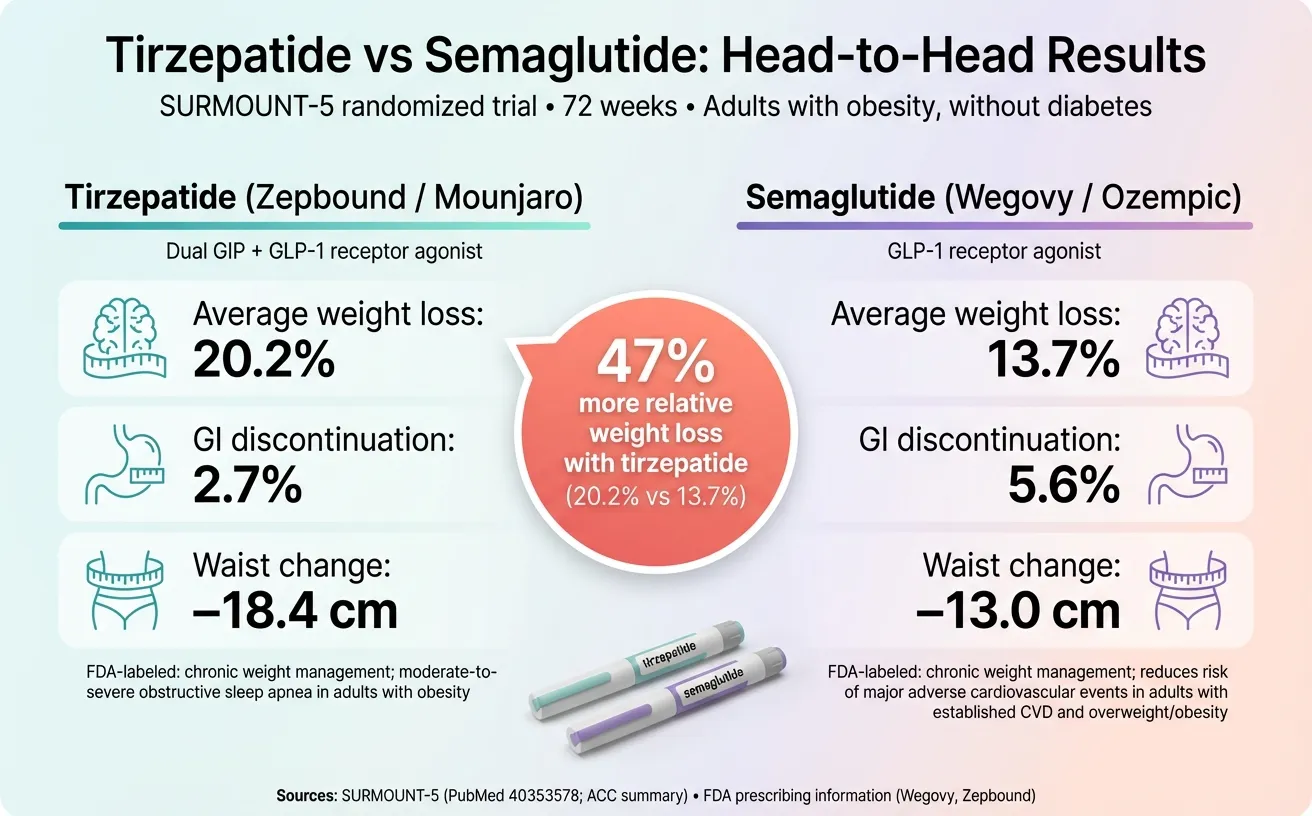
MEDVi tirzepatide vs semaglutide: verified pricing and clinical comparison for 2026.
*Illustration only. Comparison context for educational purposes. Actual medication packaging and appearance may vary.*
What Does the Research Actually Say? (The Head-to-Head Data)
This isn't about marketing claims or influencer anecdotes. There's now a gold-standard head-to-head clinical trial directly comparing these two medications. Let's look at what it found.
The SURMOUNT-5 Trial: The Definitive Comparison
Published in the New England Journal of Medicine in May 2025, SURMOUNT-5 is the first and only randomized clinical trial that directly compared tirzepatide to semaglutide for obesity. Here are the facts:
Trial design: 751 adults with obesity (BMI ≥30, or ≥27 with comorbidities) but without type 2 diabetes were randomized 1:1 across 32 sites in the U.S. and Puerto Rico. Participants received the maximum tolerated dose of either tirzepatide (10 or 15 mg) or semaglutide (1.7 or 2.4 mg) weekly for 72 weeks. Both groups received counseling on diet and physical activity.
| Outcome | Tirzepatide | Semaglutide | Difference |
|---|---|---|---|
| Average body weight lost | 20.2% | 13.7% | 6.5 percentage points (P<0.001) |
| Average weight lost (lbs) | 50.3 lbs | 33.1 lbs | 17.2 lbs more |
| Waist circumference reduction | 18.4 cm | 13.0 cm | 5.4 cm more |
| Patients losing ≥25% body weight | 31.6% | 16.1% | Nearly double |
| GI side effects causing discontinuation | 2.7% | 5.6% | Tirzepatide had fewer dropouts |
Source: Aronne LJ, et al. “Tirzepatide as Compared with Semaglutide for the Treatment of Obesity.” N Engl J Med. 2025;393(1). DOI: 10.1056/NEJMoa2416394
What this means in real terms: A 200-pound person on tirzepatide could expect to lose roughly 40 pounds over 72 weeks. On semaglutide, roughly 27 pounds. That's a meaningful difference — but it's not the whole story.
Important Context Most Pages Won't Tell You
- These results used brand-name medications (Zepbound and Wegovy), not compounded versions. MEDVi prescribes compounded tirzepatide and semaglutide, which contain the same active pharmaceutical ingredients but are manufactured by compounding pharmacies, not by Eli Lilly or Novo Nordisk. Compounded versions have not undergone FDA's review process for safety, effectiveness, and manufacturing quality. Your results may vary from these trial numbers.
- Weight loss was about 6% lower in men than women in both groups — an important finding if you're male and comparing your expectations to headline numbers.
- Both medications produced clinically significant weight loss. Semaglutide's 13.7% average is still remarkable. For perspective, the STEP-1 trial showed semaglutide produced roughly 15% weight loss versus 2.4% for placebo.
- The trial was funded by Eli Lilly (tirzepatide's manufacturer). It was open-label, meaning participants and researchers knew which drug each person received. This is standard for these comparisons but worth noting for transparency.
What About the Other Major Trials?
STEP-1 (Semaglutide): 1,961 participants lost an average of 14.9% of body weight over 68 weeks on semaglutide 2.4 mg versus 2.4% on placebo. Published in the New England Journal of Medicine, 2021.
SURMOUNT-1 (Tirzepatide): 2,539 participants lost up to 22.5% of body weight (at the 15 mg dose) over 72 weeks versus 2.4% on placebo. Published in the New England Journal of Medicine, 2022.
SELECT Trial (Semaglutide cardiovascular outcomes): 17,604 participants showed that semaglutide reduced major adverse cardiovascular events by 20% compared to placebo — the reason Wegovy now carries an FDA-approved indication for cardiovascular risk reduction.
The bottom line from the research: tirzepatide produces more weight loss. Semaglutide has more long-term safety data and proven heart benefits. Both are dramatically effective compared to anything else available.
How Do Tirzepatide and Semaglutide Actually Work?
You don't need a pharmacology degree, but understanding the basic mechanism helps explain why tirzepatide produces more weight loss — and why semaglutide might still be the better choice for certain people.
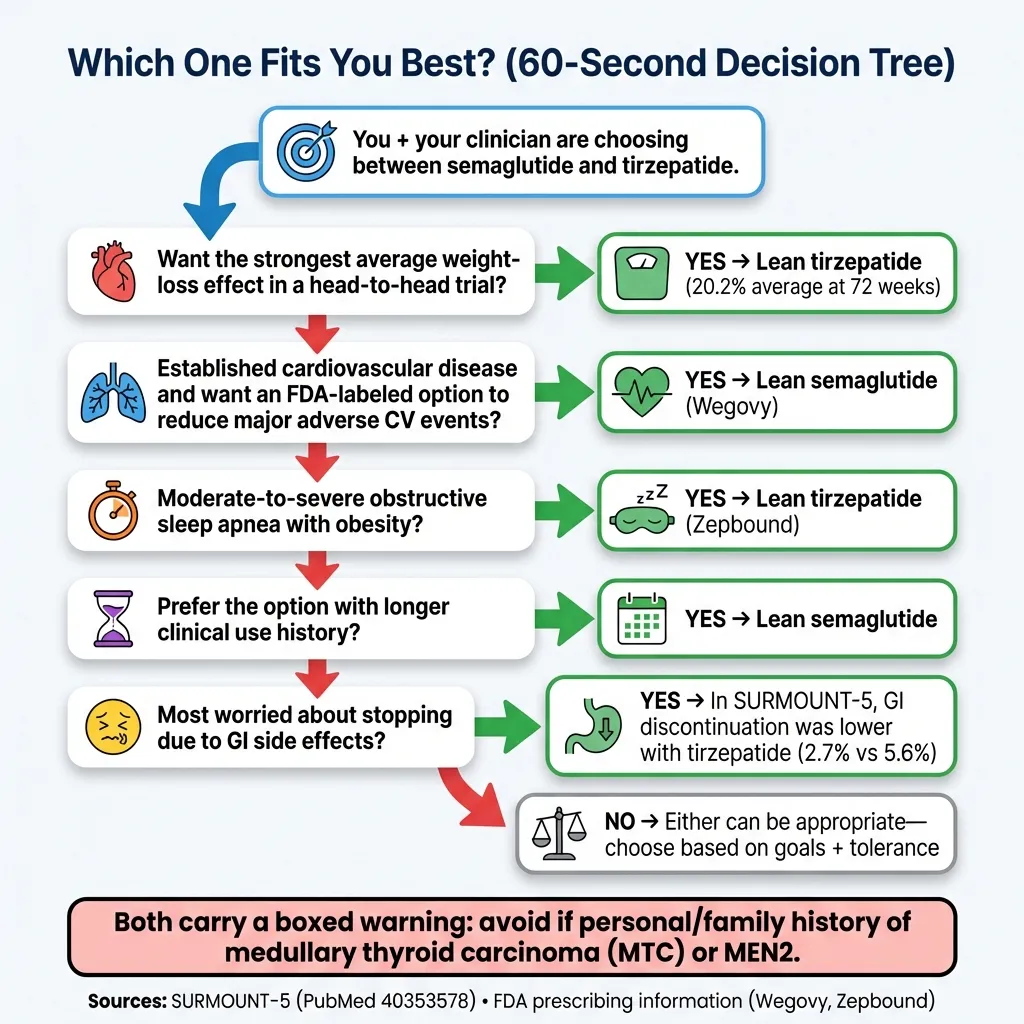
*Illustration only. Simplified mechanism comparison for educational purposes.*
Semaglutide: One Hormone, One Pathway
Semaglutide is a GLP-1 receptor agonist. It mimics a hormone your gut naturally produces called glucagon-like peptide-1 (GLP-1). When you inject semaglutide once a week, it:
- Slows gastric emptying — food sits in your stomach longer, so you feel full after smaller meals
- Reduces appetite signals in the brain — the “I need to eat” noise gets quieter
- Enhances insulin secretion (glucose-dependent) — helps regulate blood sugar
Brand names: Wegovy (weight loss), Ozempic (type 2 diabetes), Rybelsus (oral, diabetes). Same molecule, different doses and approved uses.
Tirzepatide: Two Hormones, Two Pathways
Tirzepatide is a dual GIP and GLP-1 receptor agonist. It does everything semaglutide does plus activates a second receptor — the glucose-dependent insulinotropic polypeptide (GIP) receptor. That additional pathway appears to:
- Enhance fat metabolism beyond what GLP-1 achieves alone
- Improve insulin sensitivity through a complementary mechanism
- Further suppress appetite via additional signaling
Think of it this way: semaglutide turns one dial. Tirzepatide turns two. Both get results — tirzepatide just has more levers to pull.
Brand names: Zepbound (weight loss, obstructive sleep apnea), Mounjaro (type 2 diabetes).
Why This Matters for Your Decision
The dual mechanism is why tirzepatide consistently outperforms semaglutide in trials. But “more powerful” doesn't automatically mean “better for you.” Some people respond beautifully to semaglutide and don't need the second pathway. Others need the additional push. Your body, your goals, and your budget determine which approach makes sense.
How Much Does Each Medication Cost Through MEDVi?
Cost is usually the deciding factor. Let's be completely transparent about what you'll actually pay.
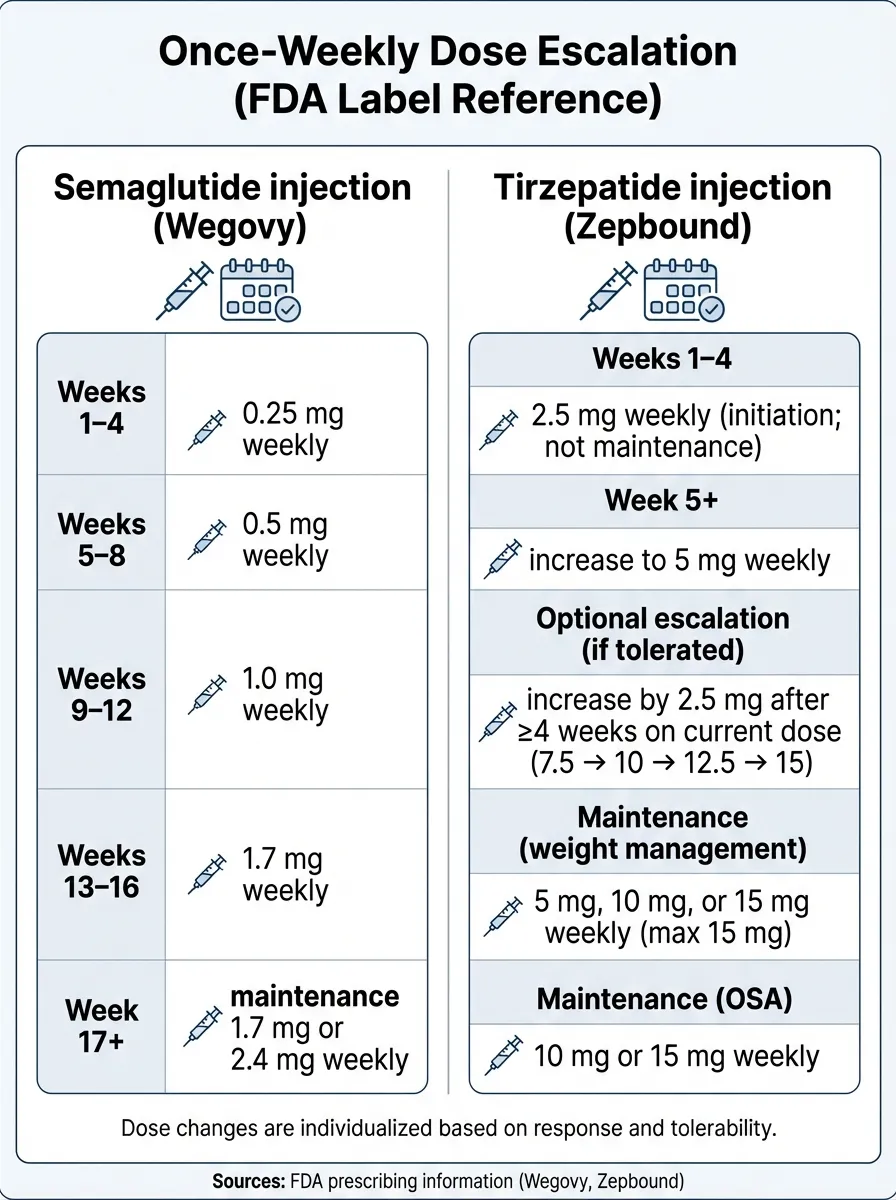
*Illustration only. Pricing context for educational purposes. Always verify current pricing at medvi.org.*
MEDVi Pricing Breakdown (Verified February 2026)
| Medication + Format | First Month | Monthly Refills | Est. Year 1 Total |
|---|---|---|---|
| Compounded Semaglutide Injection | $179 | $299 (MEDVi states “locked” pricing) | ~$3,468 |
| Compounded Semaglutide Tablets | $249 | Confirm with MEDVi | Varies |
| Compounded Tirzepatide Injection | $349 | Varies by dose — confirm before enrolling | Varies |
| Compounded Tirzepatide Tablets | $279 | Confirm with MEDVi | Varies |
| Brand Ozempic (via MEDVi) | $1,999 | $1,999 | ~$23,988 |
Source: Pricing from medvi.org, verified February 2026. Semaglutide refills are stated as “locked” at $299; tirzepatide ongoing costs may vary by dose — confirm before enrolling. First month is promotional. Always confirm current pricing before enrolling.
What's Included in Every MEDVi Plan
Your monthly fee covers:
- Licensed physician evaluation through the OpenLoop Health network
- Personalized treatment plan and metabolic analysis report
- Monthly medication supply shipped to your door
- 24/7 messaging with your care team
- Unlimited appointments and dose adjustments
- No hidden membership fees
The Real Math: Is Tirzepatide's Premium Worth It?
Tirzepatide costs more per month than semaglutide through MEDVi — the exact difference depends on your dose level and should be confirmed before enrolling. Based on third-party review sites, tirzepatide refills may run roughly $100–$200 more per month than semaglutide's $299 refill price.
Here's one way to think about the value: for a 200-pound person, tirzepatide's additional efficacy (based on SURMOUNT-5) translates to roughly 12–14 extra pounds lost over a year. That works out to approximately $100–$170 per additional pound lost.
Is that worth it? That depends entirely on you. If losing an extra 12–14 pounds changes your health trajectory — coming off a medication, resolving sleep apnea, fitting into your life differently — the premium may pay for itself. If semaglutide's results would already get you where you need to be, save the money.
How MEDVi Compares to Brand-Name Pricing
Brand-name GLP-1 pricing has changed fast. Here's what the landscape looks like now:
| Brand | List Price | Cash-Pay / Savings Program Price |
|---|---|---|
| Wegovy (semaglutide injection) | ~$1,349/month | $349/month via NovoCare Pharmacy (as of Nov 2025) |
| Wegovy pill (oral semaglutide 25mg) | ~$1,349/month | $149/month for lower doses via NovoCare |
| Zepbound (tirzepatide injection) | ~$1,086/month | Varies — Lilly offers self-pay savings programs |
| Ozempic (semaglutide, diabetes) | ~$1,028/month | $349/month via NovoCare (except 2mg dose) |
Sources: Novo Nordisk press release, Nov 2025 (NovoCare pricing); Lilly pricing page (pricinginfo.lilly.com). Cash-pay programs have eligibility requirements and may change.
What this means for the MEDVi comparison: With Wegovy now available at $349/month through NovoCare Pharmacy, the gap between FDA-approved brand-name semaglutide and MEDVi's compounded semaglutide ($299/month refills) has narrowed significantly. MEDVi is still less expensive — but by $50/month, not the hundreds it used to be.
If you can access FDA-approved Wegovy at $349/month or less, that's worth serious consideration. You get an FDA-reviewed product with guaranteed consistency. MEDVi's value proposition is strongest for tirzepatide (where brand-name Zepbound remains significantly more expensive) and for patients who want the bundled clinical support model (physician access, 24/7 messaging, dose management) included in their monthly fee.
What Happens After the Introductory Price?
This is where most review sites get vague. Here's what we know:
- MEDVi's semaglutide injection refills are listed at $299/month (MEDVi states this is “locked” pricing).
- Tirzepatide injection refill pricing is not clearly published on MEDVi's main pages — third-party reviews cite $399–$499/month depending on dose, but confirm your specific refill cost with MEDVi support before enrolling.
- Get month-2+ pricing in writing before you commit. The $349 tirzepatide intro price is at a starting dose. Your ongoing cost may differ as your provider adjusts dosing.
- There are no long-term contracts. You pay month to month.
Our recommendation: Before enrolling, confirm your expected refill pricing in writing through MEDVi's support team. Know your month 2+ cost before you commit to month 1. For more detail, see our GLP-1 cost breakdown.
Verify your exact cost before enrolling. No commitment required.
What Are the Side Effects? (Tirzepatide vs Semaglutide)
Let's address the elephant in the room. Both medications can make you feel lousy for the first couple of weeks — primarily nausea. Here's what to expect and how the two compare.
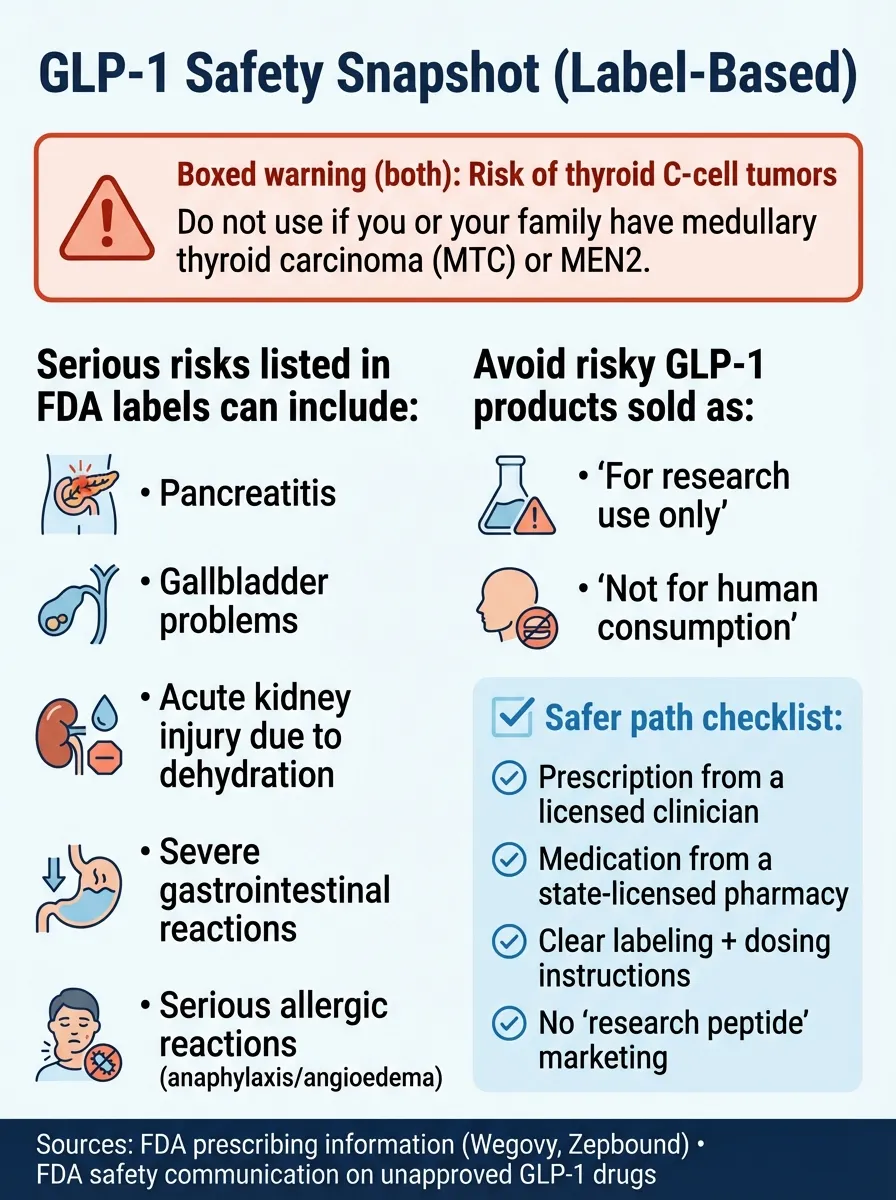
*Illustration only. Side effect information for educational purposes. Consult your provider for medical advice.*
Side Effects Both Medications Share
These are GLP-1 class effects, meaning you'll likely experience them regardless of which medication you choose:
- Nausea — the most common complaint, typically worst during weeks 1–2 and after each dose increase
- Diarrhea — usually mild and temporary
- Vomiting — less common than nausea, but possible
- Constipation — eating less means less moving through your system
- Abdominal discomfort — cramping or bloating, especially early on
- Decreased appetite — technically the therapeutic effect, but it can feel strange at first
- Injection site reactions — minor redness or itching, resolves quickly
For most people, these side effects peak during dose titration (the period when your provider gradually increases your dose) and fade within 2–4 weeks at each new level.
How SURMOUNT-5 Compared Their Safety Profiles
Here's something that surprises most people: in the head-to-head trial, tirzepatide actually had fewer patients drop out from GI side effects than semaglutide (2.7% vs 5.6%). The most common adverse events in both groups were gastrointestinal and were mostly mild-to-moderate in severity, occurring mainly during dose escalation. The overall safety profiles were comparable between the two medications.
The takeaway: neither medication is dramatically “worse” for side effects. Individual responses vary enormously — some people breeze through with minimal nausea, others have a rough first week or two regardless of which drug they're on.
Serious Risks to Know About (Both Medications)
These come directly from the FDA prescribing information for Wegovy and Zepbound and apply to anyone considering GLP-1 therapy:
- Thyroid C-cell tumors: Both medications carry a boxed warning based on rodent studies. Do NOT use if you have a personal or family history of medullary thyroid carcinoma (MTC) or Multiple Endocrine Neoplasia syndrome type 2 (MEN2).
- Acute pancreatitis: Discontinue if suspected. Symptoms include severe abdominal pain that doesn't go away.
- Gallbladder problems: Gallstones and cholecystitis have been reported. Rapid weight loss is itself a risk factor for gallstones.
- Acute kidney injury: Usually linked to dehydration from nausea/vomiting/diarrhea. Stay hydrated.
- Hypoglycemia risk: Primarily a concern if you're also taking insulin or sulfonylureas.
- Suicidal behavior and ideation: The FDA is monitoring reports. Tell your provider immediately if you experience mood changes.
Practical Tips for Managing Side Effects
These come from real MEDVi patient experiences and general clinical guidance:
- Start low, go slow. Your provider will titrate your dose gradually — this is critical for minimizing nausea.
- Drink more water than you think you need. GLP-1s slow digestion. Dehydration makes every side effect worse.
- Eat small, bland meals during the first week at each new dose. Think crackers, rice, broth, bananas.
- Add fiber intentionally. You're eating less, which means less intestinal bulk. Fiber helps keep things moving.
- Don't skip doses, but don't push through dangerous symptoms either. If vomiting is severe or persistent, contact your MEDVi provider immediately.
As one MEDVi patient put it: “I had the normal gut nausea feelings the first week. You deal with it. All side effects dissipated after 2 weeks. Be sure to drink TONS of water and lots of fiber.”
For more help managing GLP-1 side effects, try our GLP-1 SOS side effect relief tool.
Tirzepatide vs Semaglutide Dosage Chart
One of the most-searched questions — and one that's often answered poorly. Here's the clear picture.
Semaglutide (Wegovy) Dosing for Weight Loss
| Weeks | Dose | Purpose |
|---|---|---|
| Weeks 1–4 | 0.25 mg weekly | Titration |
| Weeks 5–8 | 0.5 mg weekly | Titration |
| Weeks 9–12 | 1.0 mg weekly | Titration |
| Weeks 13–16 | 1.7 mg weekly | Titration |
| Week 17+ | 2.4 mg weekly | Maintenance dose |
Tirzepatide (Zepbound) Dosing for Weight Loss
| Weeks | Dose | Purpose |
|---|---|---|
| Weeks 1–4 | 2.5 mg weekly | Titration |
| Weeks 5–8 | 5.0 mg weekly | Titration |
| Weeks 9–12 | 7.5 mg weekly | Titration (if tolerated) |
| Weeks 13–16 | 10 mg weekly | Titration (if tolerated) |
| Weeks 17–20 | 12.5 mg weekly | Titration (if tolerated) |
| Week 21+ | 5, 10, or 15 mg weekly | Maintenance dose |
Source: FDA prescribing information for Wegovy (semaglutide) and Zepbound (tirzepatide). Your MEDVi provider will determine your specific dosing schedule based on your response and tolerance.
Is There an Equivalent Dose Between the Two?
No. There is no FDA-approved milligram-to-milligram conversion between tirzepatide and semaglutide. They're different molecules acting on different receptor combinations at different potencies. Anyone who gives you a simple conversion chart is guessing.
If you're switching from one to the other through MEDVi, your provider will typically restart the titration process at a lower dose of the new medication and ramp up gradually. This minimizes side effects during the transition. For a detailed dosing reference, see our tirzepatide dosing schedule guide.
How Long Until You See Results?
Based on clinical trial data and patient reports:
- Weeks 1–4: Appetite reduction is usually noticeable within the first week. Scale changes may be minimal — your body is adjusting.
- Weeks 4–8: Most patients begin seeing consistent weight loss of 1–2 lbs per week.
- Months 3–6: This is typically where momentum builds. You've reached or are approaching maintenance dose, and the weight loss becomes more pronounced.
- Months 6–18: Continued steady loss. Peak results in most clinical trials occur around the 68–72 week mark.
Can You Switch Between Semaglutide and Tirzepatide on MEDVi?
Yes — and this flexibility is one of the genuine advantages of MEDVi's platform. You're not locked into a single medication.
Semaglutide → Tirzepatide
This is the most common switch. If you start with semaglutide and your weight loss stalls after reaching maintenance dose (typically 3–4 months in), you can request a switch to tirzepatide. Your MEDVi provider will design a new titration schedule. Expect a brief adjustment period as your body adapts to the dual-receptor mechanism.
Tirzepatide → Semaglutide
Less common, but it happens. Some patients switch to semaglutide after reaching their goal weight — using the lower-cost medication for maintenance rather than aggressive loss. Others switch if tirzepatide's side effects don't settle.
The Practical Strategy
Here's what makes financial sense for most people: start with semaglutide. Commit to 3–4 full months at therapeutic doses before evaluating. If you're losing 1–2+ lbs per week consistently, stick with it. If your loss has stalled despite good adherence and full dosing, tirzepatide is your clinically validated next step.
This isn't a “settling for less” approach — it's a “spend smart, upgrade if needed” approach. Many patients achieve excellent results on semaglutide and never need tirzepatide at all.
Brand-Name vs Compounded GLP-1: What MEDVi Users Need to Know (2026 Update)
This is the section most affiliate sites skip. We're not going to.
What “Compounded” Means
When MEDVi prescribes compounded semaglutide or tirzepatide, the medication is made by a licensed compounding pharmacy (MEDVi partners with Belmar Pharma Solutions) rather than by the original manufacturers (Novo Nordisk for semaglutide, Eli Lilly for tirzepatide). Compounded products are pharmacy-prepared formulations — they are not FDA-approved as finished drugs and should not be considered equivalent to or the same as FDA-approved brand-name products. Specifically:
- It has not been reviewed by the FDA for safety, effectiveness, or manufacturing quality
- It may differ from the brand-name product in formulation, concentration, or inactive ingredients
- It is not an FDA-approved medication
This is the honest reality. We're not going to sugarcoat it. For a deeper look at compounded medication safety, see our compounded semaglutide safety guide.
Why Compounded GLP-1s Exist
Brand-name Wegovy has a list price of roughly $1,349/month, though Novo Nordisk now offers it at $349/month for self-pay patients through NovoCare Pharmacy. Zepbound's list price is around $1,086/month, with Lilly offering self-pay savings programs as well. Even with these reductions, many Americans face insurance barriers — most plans don't cover GLP-1s for weight loss, or require extensive prior authorizations. For patients who can't access affordable brand-name coverage, compounded medications offer an alternative path.
During the 2023–2024 GLP-1 shortage, the FDA temporarily allowed compounding pharmacies to produce copies of these medications. That shortage has since been resolved — the FDA removed both semaglutide and tirzepatide from its drug shortage list — and the regulatory landscape has shifted significantly.
The 2026 FDA Landscape
Here's what's happened recently:
- December 2024: FDA determined the tirzepatide shortage was resolved.
- February–May 2025: Enforcement discretion periods for compounding pharmacies ended (503A and 503B facilities).
- May 2025: A federal court upheld FDA's determination that tirzepatide was no longer in shortage.
- September 2025: FDA issued warning letters to numerous GLP-1 compounders and manufacturers regarding claims the FDA considered false or misleading.
- February 2026: FDA announced its intention to take further enforcement action against non-FDA-approved compounded GLP-1 products.
The regulatory environment is tightening. Compounded GLP-1 medications remain available through licensed pharmacies in many states, but this landscape is evolving. MEDVi continues to operate through licensed compounding pharmacy partners.
How MEDVi Mitigates These Concerns
- MEDVi is LegitScript certified — independently monitored for compliance with applicable state and federal laws
- Their primary pharmacy partner, Belmar Pharma Solutions, is a nationally recognized, licensed compounding pharmacy
- Every prescription goes through a licensed physician via the OpenLoop Health network
- Patients get 24/7 access to clinical support for side effect management and dosing questions
Our Safe Provider Checklist
If you're considering any telehealth GLP-1 program (MEDVi or otherwise), verify these before enrolling:
- The program uses a named, licensed compounding pharmacy (not a mystery supplier)
- A licensed physician reviews your health history before prescribing
- The company provides clear cancellation and refund policies in writing
- The website doesn't use language like “research peptides” or “generic tirzepatide” (FDA considers this misleading)
- The program is LegitScript certified or equivalent
- You can reach a real clinician for questions, not just a chatbot
MEDVi checks all six boxes. That doesn't make compounded medication identical to FDA-approved products — but it does mean you're working with a program that takes compliance seriously.
Is MEDVi Legit? How the Program Actually Works
Fair question. Let's walk through what actually happens when you sign up.
Step 1: Online Health Assessment (5–10 minutes)
You complete a detailed questionnaire covering your medical history, current medications, weight loss goals, and BMI. This isn't a rubber stamp — MEDVi uses exclusionary criteria developed by their clinical partner (OpenLoop Health) to determine if GLP-1 therapy is appropriate for you. Not everyone qualifies.
Step 2: Physician Review (Usually Within 24 Hours)
A US-licensed provider reviews your assessment. If medically necessary, lab work may be requested. Some states require a video consultation due to telehealth laws.
Step 3: Prescription + Shipping (3–5 Business Days)
If approved, your provider prescribes either semaglutide or tirzepatide based on your clinical profile. You can express a preference, but the final decision is the clinician's. Medication ships from the pharmacy directly to your door in discreet packaging.
Step 4: Ongoing Support
This is where MEDVi differentiates from bare-bones telehealth operations. Your plan includes:
- 24/7 messaging with your care team
- Unlimited video appointments
- Monthly check-ins and dose adjustments
- Metabolic analysis reporting
What MEDVi Is (and What It Isn't)
Per their own terms and conditions, MEDVi is a platform that connects patients with independent healthcare providers — it doesn't itself provide medical services. The prescribing clinicians are part of the OpenLoop Health network. This is a standard telehealth structure, similar to how Hims, Ro, and other platforms operate.
MEDVi has served over 100,000 patients, holds over 9,900 reviews on Trustpilot, and maintains a ConsumerAffairs presence with detailed patient feedback. It's a real, operating telehealth program — not a fly-by-night operation. For a deeper review, see our MEDVi tirzepatide review.
What Real MEDVi Patients Say
We pulled these from verified third-party review platforms. These are real people, unedited (except for length).
“Medvi was so easy to use. Prescribed Tirzepatide with B12 mixed in, for 2 months. Went from 158 down to 138. I'm male, 5'8, and over 50. Weight came off daily. This stuff made me feel full immediately, so I ate less and just didn't feel the need to overeat. My brain said, 'Naw, we're not eating that stuff.' I had the normal gut nausea feelings the first week. All side effects dissipated after 2 weeks. Tirzepatide pretty much resets how you look at food and the amount that you consume.”
— ConsumerAffairs verified reviewer, December 2025
“My weight has been a constantly increasing problem until I found Medvi. My cholesterol and blood pressure were too high. My A1C was still in the prediabetic range. All this after undergoing gastric sleeve surgery a few years ago. I plateaued in my weight loss and was gaining my weight back. I searched and researched online for tools to help me get back on the weight loss wagon.”
— ConsumerAffairs verified reviewer, October 2025
“The doctors are accessible! So important. This doesn't feel dangerous. Online medication management can feel scary, but they are careful... order labs... and schedule face-time appointments.”
— Trustpilot reviewer
How to Read Testimonials Responsibly
These are self-reported, individual experiences — not clinical trial results. Your results will vary based on your starting weight, adherence, dosage, diet, activity level, and individual biology. MEDVi states that results are based on self-reported patient data and may be affected by individual factors. Take the positive stories as encouraging, but set your expectations based on the clinical trial data we shared earlier, not the best-case anecdotes.
Join 100,000+ patients. 5-minute assessment, no contract.
How to Cancel MEDVi (and What the Refund Policy Actually Says)
We believe a good review tells you how to leave, not just how to sign up. Here's MEDVi's cancellation and refund policy based on their published terms:
Cancellation
- MEDVi operates on a month-to-month basis with no long-term contract.
- To cancel, you must submit your request at least 72 hours before your next billing date.
- You can cancel by contacting MEDVi's support team via email or phone.
Refund Policy
- If your cancellation request is received before medication has been ordered for the current cycle, you may be eligible for a refund.
- If medication has already been ordered or shipped, refunds are generally not available for that cycle.
- MEDVi offers a weight loss guarantee: if you follow the program for at least 5 months and do not lose any weight, you may qualify for a refund minus 25% of consultation fees.
Our recommendation: Set a calendar reminder for 4 days before your billing date each month. This gives you a window to evaluate whether you want to continue and ensures you're always within the 72-hour cancellation window if needed. Nobody likes getting charged for something they meant to cancel.
Source: MEDVi refund policy page at medvi.org. Terms may change — verify current policies before enrolling.
Is Semaglutide the Same as Ozempic? (Brand Name Confusion, Cleared Up)
This question pops up constantly, and the confusion is understandable. Here's the simple breakdown:
Semaglutide is the active ingredient — the actual molecule that does the work in your body. It's sold under three different brand names, each with different FDA-approved uses:
| Brand Name | Active Ingredient | FDA-Approved For | Form |
|---|---|---|---|
| Wegovy | Semaglutide (2.4 mg) | Chronic weight management + CV risk reduction | Weekly injection + daily oral pill (approved Dec 2025) |
| Ozempic | Semaglutide (up to 2.0 mg) | Type 2 diabetes | Weekly injection |
| Rybelsus | Semaglutide (up to 14 mg) | Type 2 diabetes | Daily oral tablet |
Key point: Using Ozempic for weight loss is off-label. Ozempic is FDA-approved only for type 2 diabetes. The semaglutide product approved for weight loss is Wegovy, which is dosed higher (2.4 mg vs Ozempic's max of 2.0 mg).
Similarly, tirzepatide is the active ingredient in:
| Brand Name | Active Ingredient | FDA-Approved For | Form |
|---|---|---|---|
| Zepbound | Tirzepatide | Chronic weight management + obstructive sleep apnea | Weekly injection |
| Mounjaro | Tirzepatide | Type 2 diabetes | Weekly injection |
What MEDVi prescribes: MEDVi primarily prescribes compounded semaglutide and tirzepatide — pharmacy-prepared formulations made by licensed compounding pharmacies. These are not the brand-name products and are not FDA-approved. MEDVi can also prescribe brand-name Ozempic, but at $1,999/month, most patients opt for compounded alternatives.
Why This Matters for You
If your doctor says “you should try semaglutide” and you go to MEDVi, you're getting compounded semaglutide — a pharmacy-prepared formulation made by a licensed compounding pharmacy, at a fraction of the brand-name cost. It is a different product from Wegovy and Ozempic: not FDA-approved as a finished drug, prepared under different standards, and not reviewed by the FDA for safety, effectiveness, or quality as a finished product.
When Should You Take Semaglutide or Tirzepatide? (Timing and Practical Tips)
Injection Timing
Both medications are taken once weekly. The FDA labeling recommends:
- Pick a consistent day each week (e.g., every Monday). Consistency helps you remember and keeps drug levels stable.
- You can inject any time of day — morning, afternoon, evening. Choose whatever fits your routine.
- Injection sites: Abdomen, thigh, or upper arm. Rotate sites each week to avoid irritation.
- If you miss a dose: Take it as soon as you remember if it's within a few days of the missed dose. If your next scheduled dose is coming up soon, skip the missed one and resume your regular schedule. Never double up.
Food Timing and Nausea Management
This is where practical wisdom from real patients matters more than label language:
- Don't eat a huge meal right before or after injection. Some patients find that injecting in the evening (so any initial nausea hits while they're sleeping) works well.
- For the first week at each new dose: Stick to smaller, blander meals. Think grilled chicken and rice, not a double cheeseburger.
- Hydration is everything. GLP-1 medications slow gastric emptying, which can cause constipation and make dehydration symptoms worse. Aim for at least 64 oz of water daily.
- Protein first. Since you'll be eating less overall, make every bite count. Prioritize protein to preserve muscle mass during weight loss. Many MEDVi patients report that hitting 80–100g of protein daily helps maintain energy and results.
Tablet Timing (If You Choose the Oral Option)
MEDVi offers compounded semaglutide and tirzepatide in daily dissolvable tablet form. If you go this route:
- Take on an empty stomach
- Wait at least 30 minutes before eating or drinking anything other than a small sip of water
- Consistency matters — take it at the same time each day
One thing to know: clinical evidence generally shows injectable GLP-1s produce more weight loss than oral formulations. If maximizing results is your priority, injections are the stronger choice. If needle phobia is a genuine barrier, tablets are far better than not starting at all.
What Happens If You Stop Taking GLP-1 Medication?
This is something every patient should understand before starting.
The Clinical Reality
GLP-1 medications treat the underlying biology of obesity — they don't “cure” it. When you stop the medication, the hormonal signals that suppress appetite and regulate metabolism return to their pre-treatment state. Multiple studies have shown significant weight regain after discontinuation.
In the STEP-1 trial extension study, participants who stopped semaglutide regained roughly two-thirds of their lost weight within a year of stopping. Tirzepatide follow-up data shows similar patterns.
What This Means for Your Planning
This isn't a “take it for 6 months and you're fixed” situation. For most patients, GLP-1 therapy is a long-term (potentially lifelong) commitment — similar to how blood pressure medication manages hypertension.
Practical approaches MEDVi patients use:
- Long-term maintenance dosing: Stay on a lower maintenance dose indefinitely. This is the most evidence-supported approach for keeping weight off.
- Start with tirzepatide for aggressive loss, then switch to semaglutide for cheaper maintenance. Some patients use the more powerful (and more expensive) medication to reach their goal, then transition to semaglutide for long-term management at a lower monthly cost.
- Lifestyle foundation building during treatment. Use the appetite suppression window to build exercise habits, learn portion control, and develop a sustainable relationship with food.
- Discuss a tapering plan with your provider rather than abruptly stopping. Gradual dose reduction may ease the transition.
The honest truth: stopping GLP-1 medication without a robust maintenance strategy usually means regaining weight. That's not a failure of willpower — it's biology. Factor ongoing medication into your long-term budget planning from the beginning.
Your 5-Step Action Plan
You've done the research. Here's how to move forward without overthinking it.
Step 1: Decide your starting medication. If you're new to GLP-1 therapy and cost matters, start with semaglutide. If you've already tried semaglutide or need aggressive results, go with tirzepatide. Use our decision framework above if you're stuck.
Step 2: Verify current MEDVi pricing. Pricing changes. Before you commit, check the current numbers at medvi.org and ask about month 2+ refill costs at your specific dose level.
Step 3: Complete the MEDVi health assessment. It takes about 5–10 minutes. Be thorough and honest with your medical history — your provider needs accurate information to prescribe safely.
Step 4: Prepare for the first 2 weeks. Stock up on water, bland snacks (crackers, ginger tea, broth), and high-fiber foods. Schedule your first injection for a day when you can take it easy if nausea hits. Set a weekly calendar reminder for your injection day.
Step 5: Set a cancellation reminder. Even if you plan to continue, put a reminder 4 days before each billing date. This keeps you in control. MEDVi requires 72-hour notice to cancel before the next billing cycle.
5-minute online assessment. No contract. Quick physician review.
The Verdict: Start Here
You've read the data. You've seen the pricing. You know the trade-offs. Here's where it lands:
*Illustration only. Decision summary for educational purposes.*
MEDVi — Compounded Semaglutide
$179/first month
For most people starting GLP-1 therapy: begin with MEDVi's compounded semaglutide at $179 for month one. It's backed by strong clinical research on the FDA-approved version, dramatically more affordable, and leaves the door open to upgrade later. You don't need to spend more on day one to get transformative results. Semaglutide has helped millions of people lose significant weight — in the STEP-1 trial, participants lost nearly 15% of their body weight on average. That's 30 pounds for someone starting at 200. That's life-changing for most people, and it's the more affordable option.
MEDVi — Compounded Tirzepatide
$349/first month
For people who need maximum weight loss or have already tried semaglutide: tirzepatide through MEDVi is the strongest tool available. The SURMOUNT-5 data published in the New England Journal of Medicine speaks for itself — 20.2% average body weight loss, 47% more than semaglutide, with participants losing an average of 50.3 pounds. If your goals are aggressive, your budget supports $399–$499/month ongoing, and you want every advantage the science currently offers, this is the evidence-backed choice.
Either way, what matters most is starting. MEDVi gives you physician-guided support, medication flexibility, transparent pricing, and a money-back guarantee. The hardest part of this entire process is the decision you've probably already made — to actually do something about it. The rest is logistics.
Over 100,000 patients have started this program. Some of them were sitting exactly where you're sitting right now — reading one more comparison page, wondering if this is the right move, worrying about side effects, calculating monthly costs in their head. They started anyway. Most of them wish they'd started sooner.
Frequently Asked Questions: MEDVi Tirzepatide vs Semaglutide
Is tirzepatide better than semaglutide for weight loss?
In clinical trials, yes — tirzepatide produced 47% more relative weight loss than semaglutide (20.2% vs 13.7% over 72 weeks in SURMOUNT-5). But "better" depends on your situation. Semaglutide is cheaper, has more long-term safety data, and proven cardiovascular benefits. For many people, semaglutide is the better value.
Which is safer: tirzepatide or semaglutide?
Both have similar safety profiles based on available data. Semaglutide has been in clinical use longer and has more published long-term safety data. Both carry the same major warnings (thyroid tumors, pancreatitis, gallbladder issues). In SURMOUNT-5, safety was comparable between the two.
Is semaglutide the same as Ozempic?
Semaglutide is the active ingredient in Ozempic, Wegovy, and Rybelsus. Ozempic is approved for type 2 diabetes (not weight loss). Wegovy is approved for weight loss. Same molecule, different brand names, doses, and approved uses. Using Ozempic for weight loss is off-label.
Is tirzepatide the same as Mounjaro?
Tirzepatide is the active ingredient in both Mounjaro (approved for type 2 diabetes) and Zepbound (approved for weight loss and obstructive sleep apnea). Same molecule, different indications.
How fast does MEDVi ship medication?
Provider review is typically fast — many patients report approval within 24–48 hours, though timing varies by state and clinical needs. Medication ships directly to your door after approval. Total time from signup to receiving medication is generally 5–14 days based on patient reports.
Does MEDVi require lab work?
Not always. Lab work may be requested depending on your medical history and current health conditions (thyroid issues, liver/kidney problems, diabetes). You can also upload recent lab results if available.
Can I choose between tirzepatide and semaglutide on MEDVi?
You can express a preference during your health assessment, and your provider will evaluate whether it's clinically appropriate. The final prescribing decision is made by the licensed physician based on your medical profile.
Is compounded semaglutide the same as Wegovy?
No. Compounded semaglutide is a pharmacy-prepared formulation manufactured by a compounding pharmacy, not by Novo Nordisk. It is not FDA-approved and has not undergone FDA review for safety, effectiveness, or quality. The FDA has explicitly cautioned consumers about unapproved compounded GLP-1 products.
What if semaglutide doesn't work — can I switch to tirzepatide?
Yes. MEDVi allows medication switches. If you've been on semaglutide for 3–4 months at maintenance dose without adequate results, your provider can transition you to tirzepatide with an appropriate new titration schedule.
Can I take tirzepatide as a pill instead of an injection?
MEDVi offers compounded tirzepatide in a daily dissolvable tablet form. However, as of February 2026, there is no FDA-approved oral tirzepatide. MEDVi's tirzepatide tablets are compounded products. Clinical data suggests tablets may be somewhat less effective than injections for weight loss.
What happens if I stop taking the medication?
Weight regain is common after discontinuing GLP-1 medications. These drugs treat the underlying biology of obesity — when you stop, the hormonal signals that suppress appetite return to baseline. Many patients plan for long-term use at a maintenance dose, or work with their provider on a gradual taper with lifestyle changes in place.
Can you drink alcohol on GLP-1 medication?
There's no absolute prohibition, but alcohol can worsen nausea (especially early in treatment) and may cause blood sugar fluctuations. Most providers recommend limiting alcohol intake, particularly during dose titration. Discuss your specific situation with your MEDVi clinician.
Does MEDVi work in all 50 states?
MEDVi serves patients in 49 states. Some states have specific telehealth requirements (like mandatory video consultations). Check their website for current availability in your state.
What does MEDVi's money-back guarantee cover?
If you follow the program for at least 5 months and do not lose any weight, you may qualify for a refund minus 25% of consultation fees. Confirm the specific terms directly with MEDVi before relying on this guarantee.
How do I know if MEDVi's pharmacy is legitimate?
MEDVi's primary compounding pharmacy partner is Belmar Pharma Solutions, a well-established, licensed compounding pharmacy. MEDVi itself is LegitScript certified. You can verify LegitScript certification at legitscript.com and check Belmar's pharmacy licensure through your state's board of pharmacy.
Can I take GLP-1 medication with metformin?
Many patients take GLP-1 medications alongside metformin, especially those with type 2 diabetes. However, combining medications requires clinical oversight. Disclose all current medications during your MEDVi health assessment so your provider can evaluate potential interactions and adjust dosing appropriately.
What if I have thyroid disease — can I still use GLP-1s?
It depends on the type. Both tirzepatide and semaglutide carry a boxed warning regarding thyroid C-cell tumors. If you have a history of medullary thyroid carcinoma (MTC) or Multiple Endocrine Neoplasia type 2 (MEN2), these medications are contraindicated. For other thyroid conditions (like hypothyroidism managed with levothyroxine), your provider will evaluate on a case-by-case basis.
How long do people typically stay on GLP-1 medication?
Clinical trials run 68–72 weeks and show ongoing benefits throughout treatment. Many obesity medicine specialists now view GLP-1 therapy as long-term or even indefinite treatment, similar to how medications manage high blood pressure or high cholesterol. Weight regain is common after discontinuation.
Can I use HSA or FSA funds for MEDVi?
MEDVi accepts HSA and FSA cards for payment. However, whether your specific HSA/FSA plan covers telehealth weight loss programs or compounded medications depends on your plan's rules. Check with your HSA/FSA administrator before relying on this for payment.
What's the difference between MEDVi and Hims, Ro, or other telehealth weight loss programs?
The core model is similar — online assessment, physician review, medication shipped to your door. Key differences include pricing, pharmacy partners, available medications, support model, and refund policies. MEDVi's distinguishing features include their specific pricing structure ($179 first month for semaglutide), partnership with Belmar Pharma Solutions, LegitScript certification, 24/7 clinical support, and 5-month money-back guarantee.
How We Researched This Page
Transparency matters — especially for a YMYL (Your Money or Your Life) topic like weight loss medication. Here's exactly how we built this comparison:
- Clinical evidence: Our primary source is the SURMOUNT-5 trial published in the New England Journal of Medicine (May 2025), the only head-to-head comparison of tirzepatide vs semaglutide for obesity. We also reference the STEP-1 trial (semaglutide vs placebo, NEJM 2021), SURMOUNT-1 trial (tirzepatide vs placebo, NEJM 2022), and the SELECT cardiovascular outcomes trial for supporting context. All trial citations include DOI numbers for independent verification.
- Pricing verification: All MEDVi pricing was checked directly at medvi.org in February 2026. We reverify periodically and update this page accordingly. Brand-name pricing references are sourced from manufacturer pricing pages.
- FDA sources: Side effect profiles, boxed warnings, and contraindications come from the official FDA prescribing information for Wegovy (semaglutide) and Zepbound (tirzepatide). Compounding regulation information comes from FDA.gov press announcements and enforcement reports.
- Patient experiences: Testimonials are sourced from ConsumerAffairs and Trustpilot — third-party, verified review platforms. We do not fabricate or modify patient quotes.
- What we don't do: We're not doctors. This page is not medical advice. We don't claim to have personally tested every medication option. We don't hide our affiliate relationship with MEDVi. And we don't pretend compounded medication is identical to FDA-approved products.
Our commitment: This page is reviewed and updated monthly. If you find an error or outdated information, contact us. Getting it right matters more than getting traffic.
Sources & References
- Aronne LJ, et al. “Tirzepatide as Compared with Semaglutide for the Treatment of Obesity.” N Engl J Med. 2025;393(1). DOI: 10.1056/NEJMoa2416394. PubMed
- Wilding JPH, et al. “Once-Weekly Semaglutide in Adults with Overweight or Obesity.” N Engl J Med. 2021;384(11):989-1002. (STEP-1 trial)
- Jastreboff AM, et al. “Tirzepatide Once Weekly for the Treatment of Obesity.” N Engl J Med. 2022;387(4):327-340. (SURMOUNT-1 trial)
- FDA Prescribing Information: Wegovy (semaglutide). accessdata.fda.gov
- FDA Prescribing Information: Zepbound (tirzepatide). accessdata.fda.gov
- FDA: “FDA's Concerns with Unapproved GLP-1 Drugs Used for Weight Loss.” fda.gov
- Eli Lilly: SURMOUNT-5 Results Press Release. investor.lilly.com
- American College of Cardiology: SURMOUNT-5 Analysis. acc.org
- MEDVi Official Website. medvi.org
- MEDVi Policy Pages: Pricing, Refund, Terms. medvi.org
- ConsumerAffairs: MEDVi Reviews. consumeraffairs.com
- Trustpilot: MEDVi Reviews. trustpilot.com
Medical Disclaimer: This content is for informational purposes only and does not constitute medical advice, diagnosis, or treatment. Always consult a qualified healthcare provider before starting any medication. Individual results vary. GLP-1 medications carry serious risks including thyroid tumors, pancreatitis, and gallbladder disease. See full prescribing information for Wegovy and Zepbound at FDA.gov.
Last Updated: February 2026 | Next Scheduled Review: March 2026