GLP-1 Diet Plan: What to Eat, What to Avoid, and a Free 7-Day Meal Plan
The best GLP-1 diet plan comes down to four things: eat protein first at every meal, keep meals small and frequent, stay aggressively hydrated, and avoid the specific foods that make side effects worse. If you remember nothing else from this page, remember that.
But here's the part most guides leave out — and the reason you're probably still searching. Your doctor handed you a prescription for Ozempic, Wegovy, Mounjaro, or Zepbound, maybe said “eat healthy and exercise,” and sent you on your way. No meal plan. No protein targets. No guidance on what to do when you're so nauseous you can't look at food. And now you're staring at a fridge wondering what on earth to eat.
By the WPG Research Team | Medically reviewed by Jillian Foglesong Stabile, MD, FAAFP, DABOM
Sources: FDA prescribing information, JAMA, ACLM/ASN Joint Advisory, Cleveland Clinic, NIDDK
For informational purposes only—not medical advice.
For informational purposes only—not medical advice.
We built this guide to be the resource we wish existed when we started covering GLP-1 medications. Below you'll find a complete 7-day meal plan with estimated protein and fiber counts for every meal, a grocery list, a symptom-by-symptom food guide for nausea, constipation, and everything else, and practical protein ranges you should be aiming for (they're higher than you think). Everything is sourced from FDA prescribing information, the 2025 ACLM/ASN/OMA/TOS Joint Advisory on GLP-1 nutrition, JAMA patient guidance, and clinical dietitian recommendations.
What Is the Best GLP-1 Diet Plan?
There is no single “official” GLP-1 diet. FDA-approved weight-loss brands such as Wegovy and Zepbound are indicated for use with a reduced-calorie diet and increased physical activity. Ozempic and Mounjaro are FDA-approved for type 2 diabetes, though some people use them off-label for weight loss. But beyond “reduced calorie diet and increased physical activity,” that's about as specific as the official guidance gets (Source: FDA prescribing information for Wegovy, Zepbound).
So what does a good GLP-1 eating plan actually look like? Based on the clinical evidence, here's the framework we recommend:
The GLP-1 Eating Framework — 4 Priorities
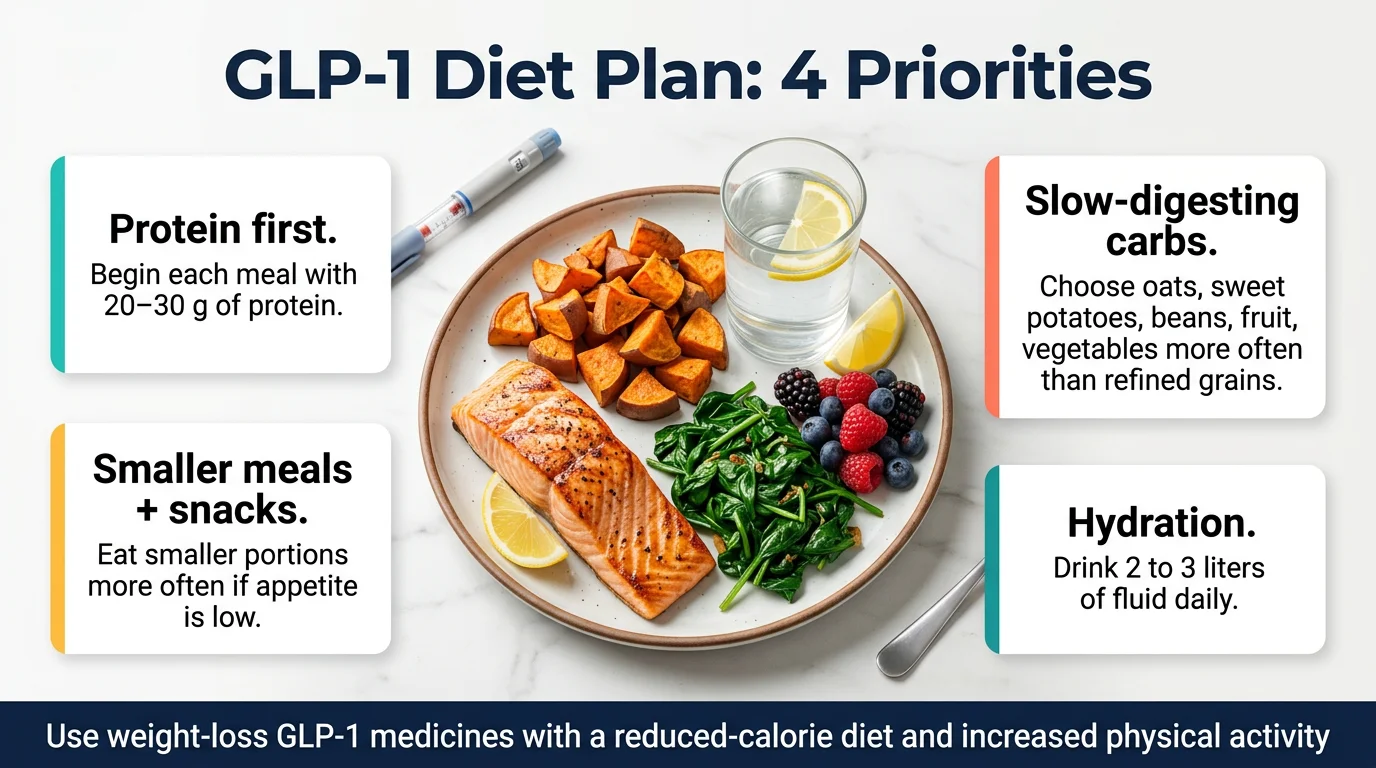
| Priority | What to Do | Why It Matters |
|---|---|---|
| 1. Protein first | Start every meal with protein. Aim for 25–35g per meal. | Preserves muscle mass during weight loss. In semaglutide studies, lean-mass loss ranged from almost 0% to 40% of total weight lost. Adequate protein and resistance training help protect against this. |
| 2. Smaller, more frequent meals | Eat every 3–4 hours. Don't skip meals even when you're not hungry. | GLP-1s slow gastric emptying — large meals sit like a brick. Smaller meals reduce nausea, bloating, and reflux. |
| 3. Hydrate aggressively | Drink 80–100 oz (2.5–3 liters) of fluid daily. | These medications suppress thirst alongside appetite. Dehydration worsens constipation and increases risk during GI side effects. |
| 4. Limit greasy trigger foods | Avoid fried, high-fat, and spicy foods — especially during dose increases. | Delayed gastric emptying + high fat = a common trigger for nausea and vomiting on GLP-1 medications. |
This framework is adapted from JAMA's patient guidance on GLP-1 nutrition (University of Wisconsin School of Medicine), which organizes the plan around four goals: Muscle, Energy, Avoid side effects, and Liquids. We've found it to be the simplest, most accurate way to think about eating on these medications.
The rest of this page fills in every detail you need to execute this framework — what to eat, what to avoid, how much protein, a full weekly plan, and what to do when side effects make eating feel impossible.
Why Does What You Eat Matter So Much on a GLP-1?
You might be thinking: if the medication suppresses my appetite and I'm eating less, doesn't that automatically mean I'm eating better? Not even close. Here's what's actually happening in your body:
You're eating dramatically less food.
GLP-1 medications reduce caloric intake by an estimated 16–39% (Source: ACLM/ASN/OMA/TOS Joint Advisory, 2025). That's a massive reduction. When your total food volume drops that much, the quality of every bite matters exponentially more.
Your digestion is slower.
These medications work partly by delaying gastric emptying — food moves through your stomach more slowly. That's what makes you feel full longer, but it also means certain foods (especially fatty, greasy, and spicy ones) sit in your stomach and cause nausea, bloating, and reflux.
You're at real risk for muscle loss.
This is the part nobody talks about enough. When you lose weight rapidly through calorie restriction, your body doesn't just burn fat — it breaks down muscle too. In semaglutide studies, lean-mass loss ranged from almost 0% to 40% of total weight lost. Protecting muscle is one reason adequate protein intake and resistance training matter while losing weight.
Nutrient deficiencies are common.
A large retrospective study of over 461,000 adults newly prescribed GLP-1 medications found that 22.4% were diagnosed with a nutritional deficiency within 12 months of starting treatment. Vitamin D deficiency was the most common (Source: ScienceDirect, 2025).
The bottom line: GLP-1 medications are powerful tools, but they're designed to work with a solid eating plan, not replace one. The FDA-approved weight-loss indications are explicit — these medications are indicated “in combination with a reduced calorie diet and increased physical activity.”
What to Eat on a GLP-1: The Protein-First Approach
The single most important thing you can do with your diet on a GLP-1 is eat protein first at every meal. Not alongside everything else. First. Before the vegetables, before the grains, before anything else touches your fork. Why? Because when your appetite is suppressed and you're eating smaller portions, you might not finish your meal. If protein is last, you'll fill up on the less critical stuff and miss the nutrient your body needs most.
1 Eat Protein First
Every meal should start with a protein source. Here are the best options, with protein content per serving:
| Food | Serving Size | Protein |
|---|---|---|
| Chicken breast (grilled/baked) | 4 oz | 35g |
| Salmon or cod | 4 oz | 24–28g |
| Ground turkey (93% lean) | 4 oz | 22g |
| Eggs | 2 large | 12g |
| Greek yogurt (plain, nonfat) | 1 cup | 15–20g |
| Cottage cheese (low-fat) | 1 cup | 28g |
| Firm tofu | ½ cup | 10g |
| Lentils (cooked) | 1 cup | 18g |
| Black beans (cooked) | 1 cup | 15g |
| Shrimp | 4 oz | 24g |
| Canned tuna (in water) | 1 can (5 oz) | 25g |
| Whey protein shake | 1 scoop | 20–30g |
This priority order — protein first, then non-starchy vegetables, then whole grains and fiber, with fruit and starch last if you're still hungry — comes from clinical eating recommendations for GLP-1 patients published by the American Osteopathic College of Occupational and Preventive Medicine and echoed by dietitians at Ohio State Wexner Medical Center and Cleveland Clinic.
2 Eat Non-Starchy Vegetables
After your protein, fill your plate with vegetables that are low in calories but high in vitamins, minerals, and fiber:
Broccoli, spinach, kale, cauliflower, bell peppers, zucchini, green beans, asparagus, Brussels sprouts, carrots, tomatoes, cucumbers, mushrooms, leafy greens of all kinds.
3 Add Fiber-Rich Whole Grains
If you're still hungry after protein and vegetables, add a serving of whole grains:
Brown rice, quinoa, oats (rolled or steel-cut), whole-grain bread, sweet potatoes, barley, whole-wheat pasta, farro.
Aim for 25–35g of fiber daily from food sources. Fiber supports digestion, feeds healthy gut bacteria, and helps keep blood sugar stable. One important note: if you're in your first few weeks on a GLP-1 or just increased your dose, introduce fiber gradually. Too much too fast can worsen bloating and gas.
4 Include Healthy Fats — but Keep Them Small
Healthy fats are essential. Your body needs them to absorb fat-soluble vitamins (A, D, E, and K), support brain function, and produce hormones. Good sources include avocado, olive oil, nuts, seeds, and fatty fish.
But — and this is a big but — fat slows digestion. Since GLP-1 medications already slow gastric emptying, large amounts of fat can sit in your stomach uncomfortably and significantly worsen nausea. Keep fat portions small. A drizzle of olive oil. A quarter of an avocado. A small handful of almonds. Not a whole avocado or a tablespoon of butter on everything.
5 Eat Fruit Last (If Still Hungry)
Berries, apples, oranges, peaches, kiwi, pears — all great choices. They provide vitamins, antioxidants, and fiber. But by the time you've eaten protein, vegetables, and grains, you may be full. That's fine. Fruit is a bonus, not a requirement.
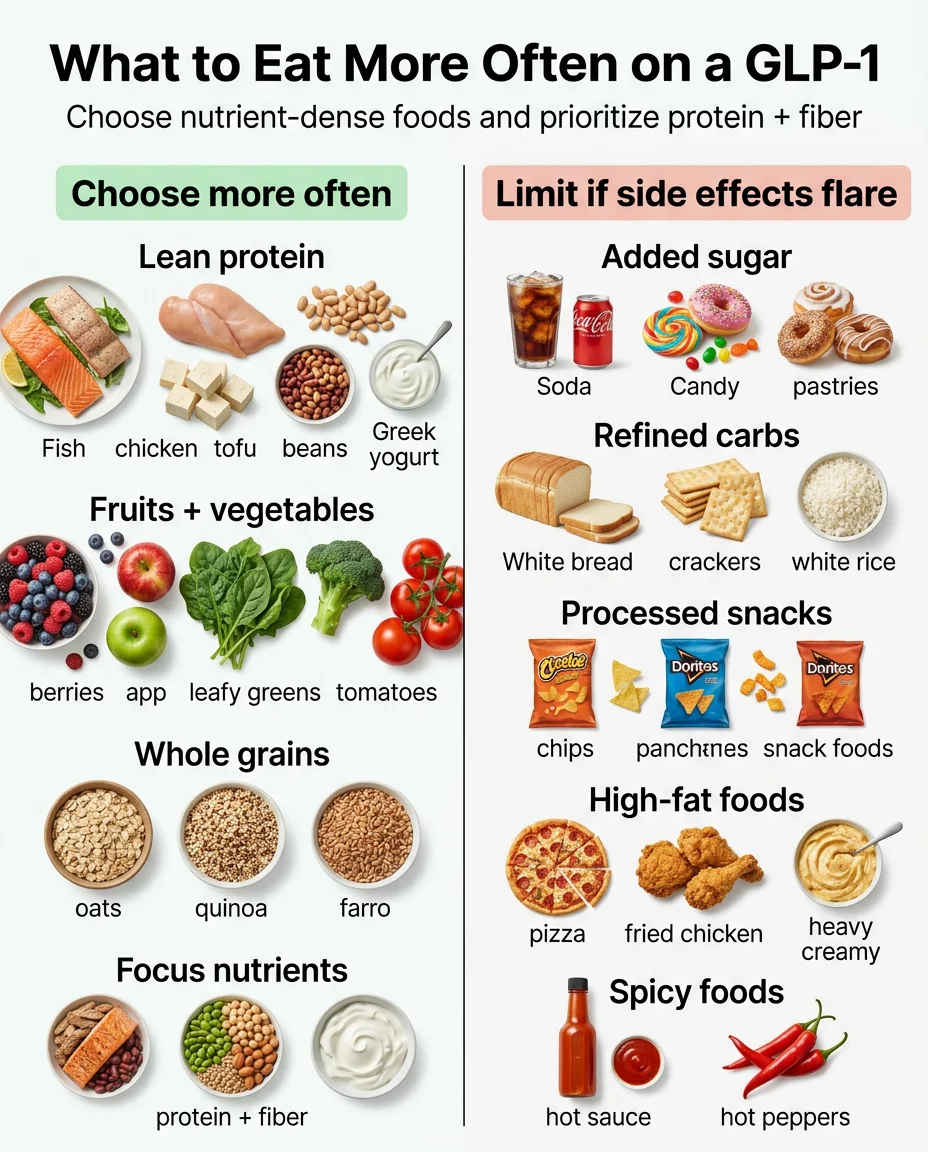
What Foods to Avoid (or Limit) on a GLP-1
No food is 100% banned. But some foods are far more likely to trigger side effects and work against your goals. Here's the honest breakdown:
| Category | Examples | Why to Limit |
|---|---|---|
| Fried and high-fat foods | French fries, fried chicken, heavy cream sauces, fast food burgers, full-fat cheese in large amounts | A common side-effect trigger. High fat + delayed gastric emptying = nausea, vomiting, bloating. |
| Sugary foods and drinks | Soda, candy, pastries, juice, sweetened coffee drinks, energy drinks | Can worsen glucose control and crowd out nutrient-dense foods when your calorie budget is already limited. |
| Refined carbs | White bread, white rice, regular pasta, crackers, chips | Low nutrient density, rapid blood sugar spike, won't keep you full. |
| Ultra-processed foods | Hot dogs, deli meats, packaged snacks, frozen meals with long ingredient lists | High sodium, low nutrients, often contain the fats and sugars that worsen symptoms. |
| Spicy foods | Hot sauce, chili peppers, spicy curries, buffalo wings | Common nausea trigger, especially in first weeks and after dose increases. |
| Carbonated drinks | Soda, sparkling water, beer | Can worsen bloating and gas when gastric emptying is already slowed. |
| Alcohol | All types | Compounds liver burden, dehydration risk, empty calories, disrupts blood sugar. If you drink, keep it minimal and never on an empty stomach. |
A note on moderation: These aren't foods you can never eat again. As your body adjusts to the medication — usually after a few months at a stable dose — many people find they can reintroduce some of these in small amounts. The key is knowing your triggers, especially during dose escalation when side effects peak.
How Much Protein Do You Actually Need on a GLP-1?
This is the question we get asked most, and it's where most generic “eat healthy” guides completely drop the ball.
The standard Recommended Daily Allowance (RDA) for protein is 0.8g per kilogram of body weight. That's designed to prevent deficiency in a sedentary person. It is not designed for someone actively losing weight on a GLP-1 medication.
The most practical starting point: aim for 20–30g of protein per meal, targeting roughly 80–120g per day. This comes from JAMA's patient guidance on GLP-1 nutrition (University of Wisconsin School of Medicine), which recommends 20–30g at each meal as a practical, achievable target.
For moderately active adults, experts generally suggest 1.0–1.5g of protein per kilogram of body weight per day. Higher targets of 1.2–1.6g/kg/day have been proposed during active weight loss by the 2025 ACLM/ASN/OMA/TOS Joint Advisory, but that advisory also notes that using actual body weight in people with obesity can significantly overestimate protein needs. Prolonged intake at or above 2.0g/kg/day is not recommended.
The bottom line: If you're new to this, start with 20–30g at every meal and work toward 80–120g per day total. If you want a more precise target, ask your clinician or a registered dietitian to help you calculate based on your goal weight and activity level — not just your current weight.
What That Looks Like in Practice
| Daily Protein Target | How to Get There |
|---|---|
| 80g/day | ~27g per meal (3 meals) |
| 100g/day | ~25g per meal + two 12g snacks |
| 120g/day | ~30g per meal + two 15g snacks |
Protein Distribution Matters
Don't save all your protein for dinner. Research shows that spreading protein across 3–4 meals (20–30g minimum per eating occasion) is better for muscle protein synthesis than eating most of it at one meal.
When You Can't Eat Enough Protein From Food
This is real. When your appetite is crushed — especially during dose increases — eating 100+ grams of protein from whole food feels impossible. That's where supplemental protein comes in:
- •Whey protein shakes — The gold standard. Rich in leucine, the amino acid most important for triggering muscle protein synthesis. One scoop in water or milk: 20–30g protein.
- •Greek yogurt — Dense, easy to eat in small amounts. One cup: 15–20g protein.
- •Cottage cheese — Doesn't sound glamorous, but it packs 28g per cup. Mix with berries.
- •Bone broth — Sipping warm bone broth is often tolerable even on the worst nausea days. 6–10g protein per cup.
- •Pre-made protein shakes — Grab-and-go options when cooking isn't happening. Look for 20g+ protein and less than 10g sugar.
How Much Water Do You Need on a GLP-1?
More than you think you need. GLP-1 medications suppress thirst along with appetite, so your body's natural “drink water” signal gets quieter. Combine that with GI side effects like diarrhea or vomiting, and dehydration becomes a real risk.
Target: 80–100 oz (2.5–3 liters) of fluid daily.
The FDA labeling for Wegovy specifically warns about dehydration risk from nausea, vomiting, and diarrhea — and recommends patients take precautions to avoid fluid depletion.
Best choices
Plain water, herbal tea (ginger tea doubles as nausea relief), water with electrolytes, bone broth.
Adequate choices
Sugar-free flavored water, water-rich foods (cucumbers, watermelon, soups, smoothies).
Limit
Caffeinated beverages (mild diuretic), carbonated drinks (bloating), alcohol (dehydrating).
Pro tip: Set a phone reminder to drink water every hour. When your thirst cues are suppressed, you need external reminders.
Signs of dehydration to watch for: dark yellow urine, dry mouth, headaches, dizziness, fatigue beyond what's expected. If you can't keep fluids down, contact your healthcare provider.
How to Handle Every GLP-1 Side Effect With Food
This might be the section you actually came here for. We get it — you can handle general diet advice, but what you really need to know is what to eat right now when you feel awful.
GLP-1 side effects are most common during the first few weeks and after dose increases. For most people, they improve as your body adjusts. But food choices can make a massive difference in the meantime.
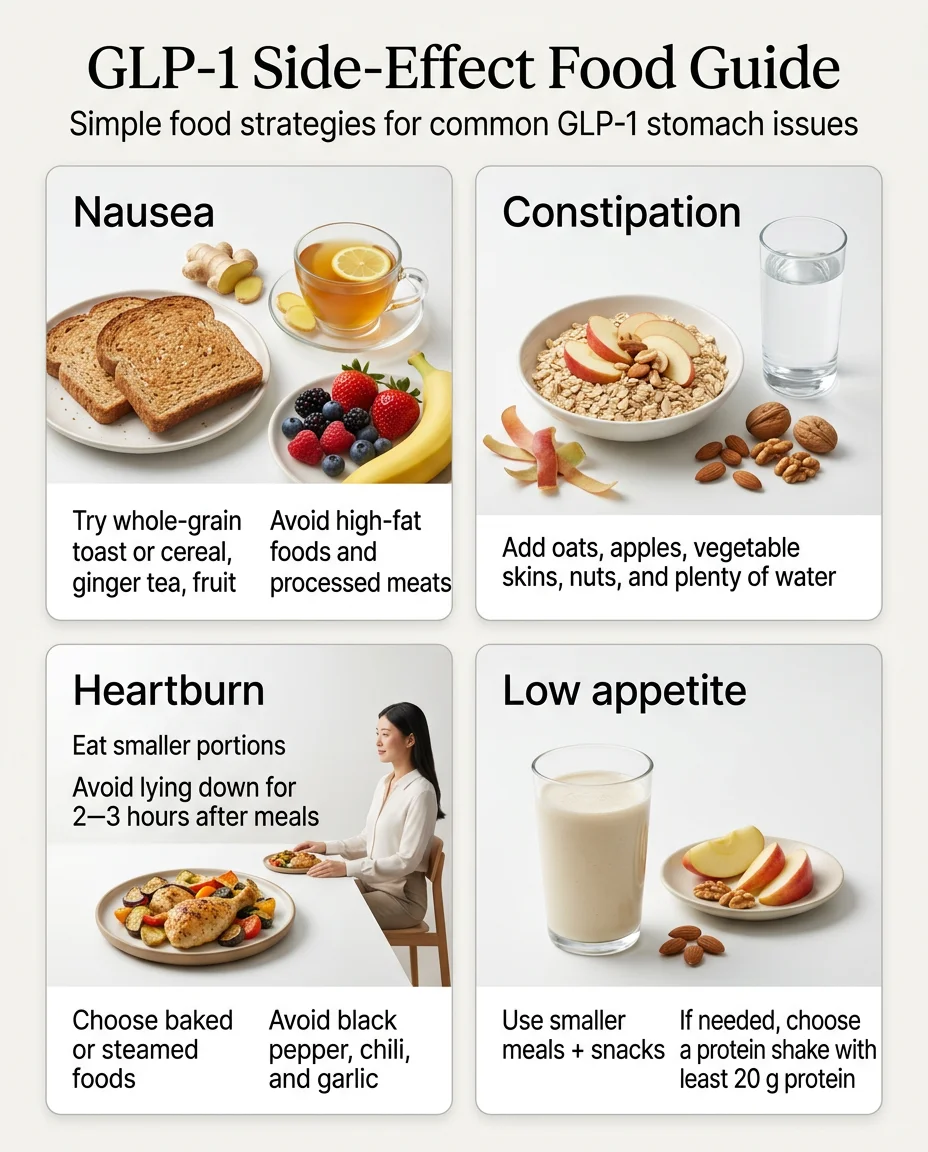
Nausea
Nausea is the most common GLP-1 side effect. It happens because food is moving through your stomach more slowly, and large or fatty meals make it worse.
What to eat:
- • Bland, low-fat foods: plain crackers, dry toast, plain rice, bananas
- • Cold or room-temperature foods (less smell = less nausea trigger)
- • Ginger — ginger tea, ginger chews, or crystallized ginger
- • Bone broth (warm, soothing, and provides protein)
- • Small amounts of lean protein: plain chicken, scrambled eggs
What to avoid today:
- • Greasy, fried, or fatty foods (a common trigger)
- • Strong-smelling foods
- • Spicy foods
- • Large meals
- • Lying down immediately after eating
Key strategy: Eat tiny amounts every 2–3 hours instead of full meals. Even 200 calories is better than nothing.
Constipation
Very common and often persistent. It's caused by slower motility, eating less total food (therefore less fiber), and not drinking enough water.
What to eat:
- • High-fiber foods (introduce gradually): oats, lentils, black beans, prunes, pears, broccoli, sweet potatoes, chia seeds
- • Plenty of water — fiber without water makes constipation worse
- • Kiwi fruit (has clinical evidence for improving bowel regularity)
- • Warm liquids in the morning (warm water with lemon, coffee, tea)
What to avoid today:
- • Excess cheese and dairy
- • Low-fiber processed foods
- • Large amounts of red meat
If food and water aren't enough: Over-the-counter options like docusate sodium (Colace) or polyethylene glycol (MiraLAX) can help. Talk to your provider before starting any laxative routinely.
Acid Reflux / Heartburn
Food sitting in your stomach longer means more acid exposure to your esophagus.
What to eat:
- • Lean proteins (baked or grilled)
- • Non-citrus fruits (bananas, melons, pears)
- • Oatmeal and whole grains
- • Ginger tea
- • Vegetables (not tomato-based)
What to avoid today:
- • Tomato sauces, citrus fruits/juices
- • Chocolate, coffee, mint
- • Spicy foods, garlic, onions
- • Fatty or fried foods
- • Alcohol
Key strategy: Eat at least 2–3 hours before lying down. Elevate the head of your bed if nighttime reflux is an issue.
Diarrhea
More common in the early weeks as your GI system adjusts.
What to eat:
- • Bananas, plain rice, applesauce, plain toast (BRAT-style)
- • Lean proteins
- • Potassium-rich foods (bananas, potatoes without skin, coconut water)
- • Electrolyte drinks (low sugar)
What to avoid today:
- • High-fiber foods temporarily
- • Dairy (if lactose-sensitive)
- • Sugar-free foods with sugar alcohols (sorbitol, xylitol)
- • Fatty foods, caffeine
Important: Diarrhea increases dehydration risk. Push fluids hard. If it's severe or persistent, contact your provider.
Bloating and Gas
Slower digestion plus fiber fermentation. Uncomfortable but usually manageable.
What to eat:
- • Cooked vegetables (easier to digest than raw)
- • Peppermint tea
- • Fermented foods: plain yogurt, kefir
- • Smaller portions at each sitting
What to avoid today:
- • Carbonated beverages
- • Large portions of raw vegetables
- • Beans and lentils (until your gut adjusts)
- • Sugar alcohols (sorbitol, mannitol, xylitol)
Key strategy: Eat slowly. Chew thoroughly. Avoid drinking through straws (swallowed air worsens bloating).
No Appetite at All / Can't Eat
This is the side effect nobody warns you about enough. Some days, especially after a dose increase, the idea of food is genuinely repulsive. But not eating leads to muscle loss, nutrient deficiency, fatigue, and feeling even worse.
What to eat:
- • Protein smoothies (blend protein powder, frozen berries, spinach, milk or yogurt)
- • Bone broth — sipping is easier than chewing
- • Greek yogurt with a drizzle of honey
- • Protein shakes (pre-made, grab-and-go)
- • A few bites of cheese and crackers
- • Half a peanut butter sandwich on whole-grain bread
The rule: On zero-appetite days, liquids are your friend. A protein smoothie can deliver 30g of protein and 300+ calories in something you sip slowly over an hour. That's infinitely better than eating nothing.
When to call your provider: If you are unable to maintain hydration or adequate nutrition for more than a couple of days, or symptoms are keeping you from eating and drinking, contact your clinician.
Hair Loss
Hair shedding has been reported with tirzepatide and is often associated with rapid-weight-loss telogen effluvium. It typically shows up a few months after the trigger and is usually temporary.
What helps:
- • Adequate protein (the single most important dietary factor)
- • Enough total calories (don't drastically under-eat)
- • A daily multivitamin
What to know: If hair shedding is significant or prolonged, ask your clinician to look for contributing issues such as iron or other nutrient deficiencies. Most hair shedding resolves within 6–12 months.
How Should Your Diet Change in the First Month (and After Dose Increases)?
Your first few weeks on a GLP-1 — and every time your dose goes up — are the roughest period for side effects. Your eating approach should adapt.
Week 1–2 (Starting or New Dose)
- • Go blander and simpler than usual
- • Stick to foods you know don't upset your stomach
- • Prioritize protein shakes and smoothies if solid food is hard
- • Avoid fatty, fried, spicy foods completely
- • Eat every 2–3 hours, even if it's just a few bites
- • Push hydration hard — at least 80 oz water daily
- • Don't try to hit perfect macros; just focus on getting protein and staying hydrated
Week 3–4 (Adjusting)
- • Gradually reintroduce more variety
- • Start adding fiber-rich foods back slowly
- • Begin working toward full protein targets
- • Expand meal size slightly if tolerated
- • Keep avoiding known trigger foods
Stable Dose (Maintenance)
- • Follow the full GLP-1 Eating Framework
- • Hit protein targets consistently (aim for 80–120g/day, or work with your provider for a personalized target)
- • Eat 3 meals + 1–2 snacks daily
- • Enjoy a wider variety of foods
- • Some people find they can tolerate moderate amounts of previously trigger foods
Free 7-Day GLP-1 Meal Plan (With Protein and Fiber for Every Meal)
This is a high-protein sample plan, not a universal calorie prescription. Calorie needs vary widely. If you need more food, scale portions up or add snacks — especially if you are larger-bodied, more active, male, or struggling to maintain intake. Each day targets roughly 90–130g of protein and includes fiber-rich foods. We've included swap options for low-appetite days and vegetarian alternatives.
Day 1 — Classic Comfort
Breakfast: Spinach and Feta Egg Scramble
Scramble 2 eggs and 2 egg whites with a handful of fresh spinach and 1 oz crumbled feta. Serve with 1 slice whole-grain toast.
Estimated: Protein ~28g · Fiber: 3g · ~320 cal
Snack: Greek Yogurt with Berries
1 cup plain nonfat Greek yogurt topped with ½ cup mixed berries and 1 tbsp chia seeds.
Estimated: Protein ~18g · Fiber: 5g · ~200 cal
Lunch: Grilled Chicken Quinoa Bowl
4 oz grilled chicken breast over ½ cup cooked quinoa with roasted broccoli, cherry tomatoes, cucumber, and a drizzle of olive oil and lemon juice.
Estimated: Protein ~40g · Fiber: 6g · ~420 cal
Snack: Cottage Cheese and Apple
½ cup low-fat cottage cheese with a small sliced apple and a sprinkle of cinnamon.
Estimated: Protein ~14g · Fiber: 3g · ~170 cal
Dinner: Baked Salmon with Roasted Vegetables
4 oz baked salmon with roasted asparagus and ½ cup brown rice. Season with garlic, dill, and lemon.
Estimated: Protein ~30g · Fiber: 4g · ~380 cal
Day 1 Estimated Totals: ~130g protein · ~21g fiber · ~1,490 cal
Low-appetite swap: Replace lunch with a protein smoothie (1 scoop whey protein, 1 cup spinach, ½ banana, 1 cup milk). Replace dinner with bone broth + 2 oz shredded chicken.
Day 2 — Mediterranean Flavors
Breakfast: Overnight Protein Oats
Combine ½ cup rolled oats, 1 scoop vanilla protein powder, 1 cup milk, 1 tbsp chia seeds, and ½ cup berries. Refrigerate overnight.
Estimated: Protein ~32g · Fiber: 8g · ~380 cal
Snack: Hard-Boiled Eggs
2 hard-boiled eggs with a pinch of everything bagel seasoning.
Estimated: Protein ~12g · Fiber: 0g · ~140 cal
Lunch: Lentil Soup with Side Salad
1.5 cups red lentil soup (homemade or low-sodium canned) with a small side salad of mixed greens, cucumber, and balsamic vinaigrette.
Estimated: Protein ~22g · Fiber: 10g · ~350 cal
Snack: String Cheese and Grapes
2 string cheese sticks with a small handful of grapes.
Estimated: Protein ~14g · Fiber: 1g · ~180 cal
Dinner: Lemon Herb Chicken with Sweet Potato
4 oz baked chicken thigh (skinless) with ½ medium baked sweet potato and steamed green beans. Season chicken with lemon, oregano, and garlic.
Estimated: Protein ~32g · Fiber: 5g · ~400 cal
Day 2 Estimated Totals: ~112g protein · ~24g fiber · ~1,450 cal
Vegetarian swap: Replace chicken with 1 cup chickpeas tossed in same seasonings and roasted.
Day 3 — Tex-Mex Inspired
Breakfast: Black Bean Egg Scramble
Scramble 2 eggs with ¼ cup black beans, diced bell pepper, and a sprinkle of cumin. Top with salsa and a small dollop of plain Greek yogurt.
Estimated: Protein ~22g · Fiber: 5g · ~280 cal
Snack: Protein Smoothie
Blend 1 scoop protein powder, 1 cup unsweetened almond milk, ½ frozen banana, 1 tbsp peanut butter, and a handful of spinach.
Estimated: Protein ~28g · Fiber: 3g · ~280 cal
Lunch: Turkey Taco Bowl
4 oz seasoned lean ground turkey over ½ cup brown rice with black beans, corn, shredded lettuce, pico de gallo, and a squeeze of lime. Skip the sour cream if nausea is an issue.
Estimated: Protein ~35g · Fiber: 7g · ~430 cal
Snack: Celery with Almond Butter
3 celery stalks with 1 tbsp almond butter.
Estimated: Protein ~3g · Fiber: 2g · ~110 cal
Dinner: Shrimp Fajitas
4 oz shrimp sautéed with bell peppers and onions in a small amount of olive oil. Serve in 1 small whole-wheat tortilla with avocado slices.
Estimated: Protein ~28g · Fiber: 5g · ~350 cal
Day 3 Estimated Totals: ~116g protein · ~22g fiber · ~1,450 cal
Day 4 — Asian Inspired
Breakfast: Tofu Veggie Scramble
Crumble ½ block firm tofu and sauté with mushrooms, spinach, and a splash of soy sauce. Serve with 1 slice whole-grain toast.
Estimated: Protein ~22g · Fiber: 4g · ~260 cal
Snack: Edamame
1 cup shelled edamame with a pinch of sea salt.
Estimated: Protein ~17g · Fiber: 8g · ~190 cal
Lunch: Chicken and Vegetable Stir-Fry
4 oz sliced chicken breast stir-fried with broccoli, snap peas, carrots, and bell pepper in low-sodium soy sauce and ginger. Serve over ½ cup brown rice.
Estimated: Protein ~38g · Fiber: 5g · ~420 cal
Snack: Cottage Cheese with Cucumber
½ cup cottage cheese with sliced cucumber and a sprinkle of dill.
Estimated: Protein ~14g · Fiber: 1g · ~120 cal
Dinner: Ginger-Soy Baked Cod
4 oz cod baked with a glaze of low-sodium soy sauce, ginger, and garlic. Serve with steamed bok choy and ½ cup quinoa.
Estimated: Protein ~32g · Fiber: 4g · ~350 cal
Day 4 Estimated Totals: ~123g protein · ~22g fiber · ~1,340 cal
Low-appetite swap: Replace lunch with miso soup with silken tofu (12g protein) and a side of edamame.
Day 5 — Classic American
Breakfast: Protein Pancakes
Mix 1 scoop protein powder, 1 mashed banana, 2 egg whites, and 2 tbsp oat flour. Cook on a lightly oiled pan. Top with a handful of blueberries.
Estimated: Protein ~30g · Fiber: 3g · ~300 cal
Snack: Turkey Roll-Ups
3 slices deli turkey breast rolled around thin cucumber slices with mustard.
Estimated: Protein ~15g · Fiber: 1g · ~90 cal
Lunch: Chicken Salad Lettuce Wraps
Mix 4 oz shredded chicken with 1 tbsp Greek yogurt (instead of mayo), diced celery, grapes, and a pinch of curry powder. Wrap in butter lettuce leaves.
Estimated: Protein ~36g · Fiber: 2g · ~280 cal
Snack: Peanut Butter Banana
½ banana with 1 tbsp natural peanut butter.
Estimated: Protein ~4g · Fiber: 2g · ~150 cal
Dinner: Turkey Meatballs with Marinara
4 oz lean turkey meatballs (homemade or store-bought) with ½ cup low-sugar marinara sauce over ½ cup whole-wheat spaghetti and a side of steamed zucchini.
Estimated: Protein ~32g · Fiber: 6g · ~420 cal
Day 5 Estimated Totals: ~117g protein · ~14g fiber · ~1,240 cal
Day 6 — Plant-Forward Day
Breakfast: Chia Pudding with Nuts
Mix 3 tbsp chia seeds with 1 cup unsweetened almond milk and 1 scoop vanilla plant protein powder. Refrigerate overnight. Top with berries and 1 tbsp chopped walnuts.
Estimated: Protein ~26g · Fiber: 12g · ~350 cal
Snack: Hummus and Veggies
¼ cup hummus with bell pepper strips, carrot sticks, and cucumber slices.
Estimated: Protein ~5g · Fiber: 4g · ~150 cal
Lunch: Chickpea and Spinach Bowl
1 cup roasted chickpeas seasoned with cumin and paprika over a bed of spinach with quinoa, diced tomatoes, red onion, and tahini dressing.
Estimated: Protein ~22g · Fiber: 12g · ~420 cal
Snack: Soy Yogurt with Seeds
1 cup soy yogurt with 1 tbsp pumpkin seeds.
Estimated: Protein ~10g · Fiber: 2g · ~160 cal
Dinner: Black Bean and Sweet Potato Tacos
Mash ½ cup black beans with cumin and lime. Serve in 2 small corn tortillas with roasted sweet potato cubes, shredded cabbage, and avocado slices.
Estimated: Protein ~16g · Fiber: 12g · ~380 cal
Day 6 Estimated Totals: ~99g protein · ~42g fiber · ~1,480 cal
Evening protein boost: 1 scoop plant protein in water (+20g protein)
Day 7 — Easy Sunday
Breakfast: Veggie and Cheese Omelet
3-egg omelet with mushrooms, diced tomato, and 1 oz shredded mozzarella. Serve with a small orange.
Estimated: Protein ~26g · Fiber: 3g · ~310 cal
Snack: Protein Shake
1 scoop whey protein blended with 1 cup milk, ½ cup frozen strawberries, and 1 tbsp flax meal.
Estimated: Protein ~32g · Fiber: 3g · ~280 cal
Lunch: Turkey Chili
1.5 cups turkey chili made with lean ground turkey, kidney beans, diced tomatoes, onion, and chili seasoning. Top with a small dollop of plain Greek yogurt.
Estimated: Protein ~35g · Fiber: 10g · ~380 cal
Snack: Apple with String Cheese
1 small apple with 1 string cheese stick.
Estimated: Protein ~7g · Fiber: 3g · ~150 cal
Dinner: Baked Chicken Thighs with Roasted Root Vegetables
4 oz baked chicken thigh (skinless) with roasted carrots, parsnips, and Brussels sprouts tossed in a little olive oil, salt, and pepper.
Estimated: Protein ~28g · Fiber: 6g · ~380 cal
Day 7 Estimated Totals: ~128g protein · ~25g fiber · ~1,500 cal
Weekly Meal Prep Tip
Sunday afternoons: batch cook 2 lbs of chicken breast, make a pot of quinoa or brown rice, hard-boil a dozen eggs, and wash/chop vegetables. Store in glass containers. This turns weeknight dinners into 10-minute assembly and makes it far easier to hit your protein targets when your appetite is low and cooking sounds exhausting.
GLP-1 Grocery List
Use this as your weekly shopping template. We've organized it by store section so you can get in and get out. Protein grams are noted for key items.
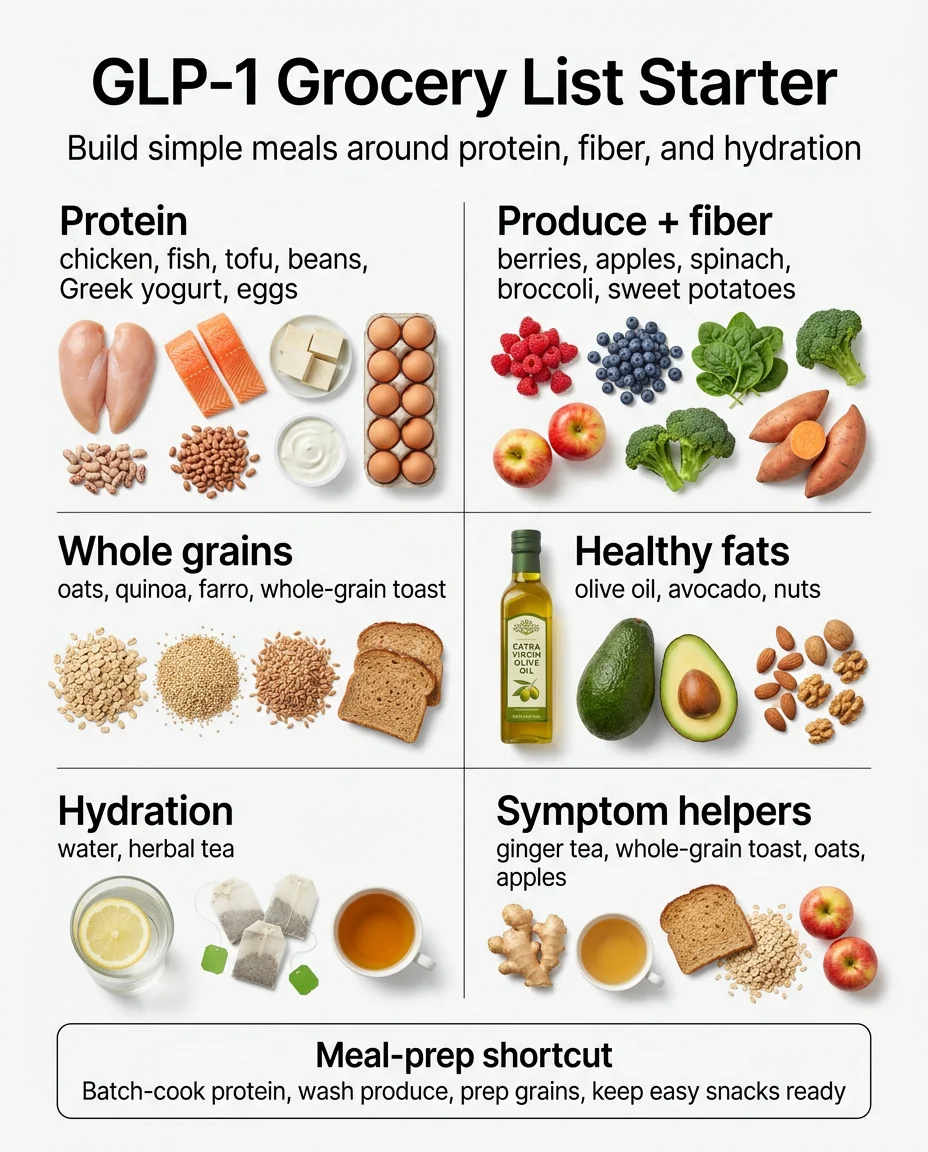
Proteins
- • Chicken breast (boneless, skinless) — 35g per 4 oz
- • Ground turkey, 93% lean — 22g per 4 oz
- • Salmon fillets (fresh or frozen) — 24g per 4 oz
- • Cod or tilapia — 24g per 4 oz
- • Shrimp (frozen is fine) — 24g per 4 oz
- • Eggs (1 dozen) — 6g each
- • Canned tuna in water — 25g per can
- • Canned chicken — 12g per ½ cup
Dairy and High-Protein
- • Greek yogurt, plain nonfat — 15–20g per cup
- • Cottage cheese, low-fat — 28g per cup
- • String cheese — 7g each
- • Milk (skim or 1%) — 8g per cup
- • Shredded mozzarella — 7g per oz
Plant Proteins
- • Firm tofu — 10g per ½ cup
- • Edamame, frozen shelled — 17g per cup
- • Lentils (dried or canned) — 18g per cup cooked
- • Black beans (canned, low-sodium) — 15g per cup
- • Chickpeas (canned, low-sodium) — 15g per cup
- • Hummus — 5g per ¼ cup
Protein Supplements
- • Whey protein powder (unflavored or vanilla) — 20–30g per scoop
- • Plant protein powder (pea or soy) — 20g per scoop
- • Pre-made protein shakes (look for: 20g+ protein, less than 10g sugar)
Vegetables (Non-Starchy)
Broccoli, spinach, kale, bell peppers (any color), cauliflower, zucchini, green beans, asparagus, Brussels sprouts, carrots, tomatoes, cucumbers, mushrooms, snap peas, bok choy, lettuce/mixed greens
Whole Grains and Starchy Vegetables
- • Brown rice
- • Quinoa
- • Rolled oats (not instant)
- • Whole-grain bread
- • Sweet potatoes
- • Whole-wheat pasta
- • Whole-wheat or corn tortillas
Fruits
- • Berries (fresh or frozen — frozen is often cheaper and just as nutritious)
- • Apples, oranges, bananas, pears, kiwi, peaches
Healthy Fats (Small Portions)
- • Avocados (buy 2–3 per week)
- • Extra virgin olive oil
- • Almonds or walnuts (small bag)
- • Natural peanut or almond butter
- • Chia seeds, flax meal
Pantry Staples
- • Bone broth (low-sodium)
- • Low-sodium chicken or vegetable broth
- • Canned diced tomatoes
- • Low-sugar marinara sauce
- • Soy sauce (low-sodium)
- • Salsa
- • Oat flour
- • Spices: cumin, chili powder, garlic powder, ginger (fresh and ground), oregano, cinnamon, dill, turmeric, paprika, black pepper, sea salt
GLP-1 Side Effect Helpers
- • Ginger tea bags or fresh ginger root
- • Crackers (whole grain, for nausea days)
- • Prunes (constipation)
- • Electrolyte packets (low sugar)
- • Peppermint tea
Eating Out and Takeout on a GLP-1: A Survival Guide
Eating at restaurants doesn't have to be a minefield. But it does require a little planning, because restaurant portions are designed for people with full appetites — and that's not you right now.
Before you go:
- • Eat a small protein-rich snack before you leave (a hard-boiled egg, a few bites of chicken, some Greek yogurt). Arriving starving leads to bad choices.
- • Look at the menu online and pick your order in advance. Decision fatigue at the table is real when nothing sounds appealing.
At the restaurant:
- • Order grilled, baked, or steamed proteins. Skip fried, breaded, and heavy cream sauces.
- • Ask for dressings and sauces on the side.
- • Don't feel pressure to finish your plate. Ask for a to-go box at the start.
- • Skip the bread basket. Your protein target matters more.
- • Water first, always.
Best restaurant orders for GLP-1 users:
- • Grilled chicken or fish with steamed vegetables
- • Salad with grilled protein (dressing on the side)
- • Broth-based soup with lean protein (chicken tortilla, lentil, minestrone)
- • A lettuce-wrapped burger (no bun, no fries)
- • Sushi — salmon or tuna rolls with brown rice (easy on the soy sauce)
- • Grilled shrimp tacos (corn tortillas, skip the sour cream)
Takeout favorites that work:
- • Chipotle-style bowls: chicken or steak, brown rice, black beans, fajita veggies, salsa (skip cheese, sour cream, and chips)
- • Poke bowls with extra protein
- • Rotisserie chicken from the grocery store with pre-cut vegetables and microwave brown rice (a 5-minute dinner)
The social pressure thing: Friends and family might comment on how little you're eating. You don't owe anyone an explanation about your medication. “I'm just not that hungry” is a perfectly complete sentence.
5 Quick GLP-1-Friendly Recipes (Under 15 Minutes)
For the days when you have some appetite but zero motivation to cook. These are fast, protein-focused, and gentle on your stomach.
1. The “I Can't Cook” Protein Bowl
5 minutes · 35g protein
Microwave ½ cup of pre-cooked brown rice (the kind that comes in pouches). Top with 1 can of drained tuna, a handful of cherry tomatoes, sliced cucumber, a drizzle of olive oil, lemon juice, salt, and pepper. Done.
2. Egg Drop Soup
10 minutes · 18g protein
Bring 2 cups of low-sodium chicken broth to a boil. Add a splash of soy sauce and a pinch of ground ginger. Slowly drizzle in 2 beaten eggs while stirring gently — they'll form silky ribbons. Toss in a handful of baby spinach. Let it wilt for 30 seconds. This is one of the gentlest, easiest things to eat on a bad nausea day.
3. Peanut Butter Protein Smoothie
3 minutes · 38g protein
Blend: 1 scoop vanilla whey protein, 1 cup milk, 1 tbsp natural peanut butter, ½ frozen banana, 1 handful of spinach (you won't taste it), a few ice cubes. This is our go-to recommendation for days when solid food isn't happening.
4. Greek Yogurt Parfait (Savory or Sweet)
5 minutes · 22g protein
Sweet version: 1 cup plain nonfat Greek yogurt + ½ cup berries + 1 tbsp chia seeds + a drizzle of honey.
Savory version: 1 cup plain nonfat Greek yogurt + diced cucumber + cherry tomatoes + a sprinkle of everything bagel seasoning + a drizzle of olive oil. Sounds weird. Tastes surprisingly good. High protein, easy to eat.
5. One-Pan Chicken and Broccoli
12 minutes · 38g protein
Cut 4 oz chicken breast into thin strips. Heat a pan with a small amount of olive oil over medium-high heat. Cook chicken 3–4 minutes per side. Add 1 cup broccoli florets and 2 tbsp water, cover, and steam for 3 minutes. Season with garlic powder, a splash of low-sodium soy sauce, and a squeeze of lemon. Serve over ½ cup brown rice if desired.
Do You Need Supplements on a GLP-1?
Not necessarily. Food first is preferred. But if you are eating very little or have risk factors, ask your clinician whether vitamin D, calcium, B12, or a multivitamin makes sense for you.
The 2025 ACLM/ASN/OMA/TOS Joint Advisory says supplements can be “proactively considered” for at-risk nutrients such as vitamin D, calcium, B12, or a daily multivitamin-mineral tablet, tailored to the person's needs. JAMA's patient guidance adds that a well-balanced, nutrient-dense diet is usually better than supplements, but certain nutrients may be worth discussing in at-risk situations.
The reason is straightforward: when your caloric intake drops significantly — below 1,200 kcal/day for women or 1,800 kcal/day for men — it becomes very difficult to get adequate vitamins and minerals from food alone.
Daily multivitamin
Think of it as nutritional insurance. Not a replacement for real food, but a safety net when you're eating less. Many dietitians working with GLP-1 patients recommend this as a baseline.
Vitamin D
The most commonly deficient nutrient in GLP-1 users. A large study found 13.6% incidence of vitamin D deficiency within 12 months of starting treatment. Ask your provider to check your levels.
Calcium
Important for bone density, especially during weight loss. Discuss with your provider, particularly if you're eating less dairy than usual.
Vitamin B12
Vegans, vegetarians, and older adults are at particular risk. Get your levels checked, especially if you're experiencing fatigue or brain fog.
Iron
Only supplement if bloodwork confirms a deficiency. Excess iron is harmful. If you're experiencing unusual fatigue, ask your provider to check your iron levels.
Protein powder
Not a “supplement” in the traditional sense, but it might be the most practically important one on this list. When appetite suppression makes it hard to eat enough protein from food, a daily protein shake can be the difference between preserving muscle and losing it.
Important: Don't self-diagnose deficiencies. Get baseline bloodwork before or soon after starting a GLP-1, and retest at 6 and 12 months. Your provider can tailor supplement recommendations to your actual levels.
Why Resistance Training Is Non-Negotiable
We almost didn't include this section in a “diet plan” guide, but it would be irresponsible not to. Diet alone is not enough to protect your muscle mass on a GLP-1.
Here's the reality: without resistance training, even perfect protein intake can't fully prevent muscle loss during significant weight loss. You need both. Protein provides the building blocks; resistance training tells your body to use them.
JAMA's GLP-1 patient guidance recommends building toward 150 minutes per week of moderate aerobic activity plus strength training 2–3 times per week. That doesn't mean you need a gym membership or heavy barbells. It means:
- • Bodyweight exercises at home (squats, push-ups, lunges, planks)
- • Resistance bands
- • Light dumbbells (even 5–10 lbs to start)
- • Walking (the most underrated exercise for GLP-1 users)
Start where you are. If you've never exercised, a 15-minute walk and 5 bodyweight squats is a legitimate starting point. The goal is consistency, not intensity.
Which Diets Should You Avoid on a GLP-1?
Not every popular eating approach works well alongside GLP-1 medications. Here's what to be careful with:
Crash diets and very low calorie plans
GLP-1 medications already reduce your intake significantly. Stacking extreme caloric restriction on top dramatically increases the risk of muscle loss, nutrient deficiency, gallstones, fatigue, and hair loss. Don't do it.
Extended fasting and OMAD (one meal a day)
When your eating window is narrow and your appetite is already suppressed, it's nearly impossible to hit adequate protein targets. Most experts recommend eating every 3–4 hours on a GLP-1, not condensing everything into one meal.
Strict keto (during side-effect-heavy periods)
Very low-carb diets can worsen constipation (already a common GLP-1 side effect) and make it harder to get enough fiber. The medication handles appetite suppression — you don't need keto's appetite-blunting effect on top of it.
Strict vegan without a plan
Absolutely possible to eat vegan on a GLP-1, but it requires deliberate protein planning. Plant proteins have lower bioavailability. B12 supplementation is essential. Best plant protein sources: tofu, tempeh, edamame, lentils, beans, seitan, pea protein powder.
The eating style most recommended by clinicians for GLP-1 users: A Mediterranean-style pattern — lean proteins, vegetables, fruits, whole grains, healthy fats, minimal processed foods. It naturally aligns with everything on this page.
Do Semaglutide and Tirzepatide Need Different Meal Plans?
Short answer: the core dietary principles are the same regardless of which GLP-1 medication you're taking.
Whether you're on semaglutide (Ozempic, Wegovy, Rybelsus), tirzepatide (Mounjaro, Zepbound), or liraglutide (Saxenda), the eating framework is identical: protein first, smaller meals, adequate hydration, limit trigger foods.
One important exception: oral semaglutide (Rybelsus / Wegovy tablets). If you're taking the pill form, the FDA requires you to take it on an empty stomach in the morning with no more than 4 oz of plain water, then wait at least 30 minutes before eating, drinking, or taking other medications. This means your breakfast timing is dictated by your pill. Plan accordingly — have your protein-rich breakfast prepped and ready to go 30 minutes after your dose.
When Should You Call Your Doctor?
Some GLP-1 side effects are normal adjustments. Others are red flags. Here's when to stop searching and call your healthcare provider:
Call your provider if:
- • You can't keep any food or fluids down for more than 24 hours
- • You're showing signs of dehydration (extreme thirst, dizziness, very dark urine, rapid heartbeat)
- • You have severe or persistent stomach pain (could indicate pancreatitis — rare but serious)
- • Nausea, vomiting, or diarrhea don't improve after a dose adjustment period
- • You are unable to maintain adequate nutrition or hydration for more than a couple of days
- • You notice signs of low blood sugar (shakiness, sweating, confusion) — especially if you're also on diabetes medications
- • You experience vision changes, severe headache, or signs of allergic reaction
- • You notice mood changes, increased anxiety, or depressive symptoms
The FDA labeling for GLP-1 medications includes warnings about pancreatitis, gallbladder problems, kidney injury from dehydration, and rare thyroid tumors. These are uncommon but real. Don't ignore persistent or severe symptoms.
How We Built This Guide
We're the research team at Weight Loss Provider Guide (WPG). We cover the GLP-1 medication space full-time — comparing providers, tracking pricing, and translating clinical research into guides real people can actually use. This guide was medically reviewed by Jillian Foglesong Stabile, MD, FAAFP, DABOM.
This guide was built from:
- • FDA prescribing information for semaglutide (Wegovy), tirzepatide (Mounjaro/Zepbound), and liraglutide (Saxenda)
- • The 2025 Joint Advisory from ACLM, ASN, OMA, and TOS on nutritional priorities during GLP-1 therapy
- • JAMA / University of Wisconsin School of Medicine patient guidance on GLP-1 nutrition
- • Cleveland Clinic, Ohio State Wexner Medical Center, and Mayo Clinic dietary recommendations for GLP-1 users
- • Published research on GLP-1 nutrient deficiencies, muscle preservation, and protein requirements during weight loss
- • NIDDK (National Institute of Diabetes and Digestive and Kidney Diseases) medication information
All protein, fiber, and hydration targets in this guide come from published clinical recommendations. The 7-day meal plan was designed to align with the practical protein ranges described above using common, affordable foods. Nutrition counts are estimates based on standard serving sizes and USDA food composition data; they have not been verified by a nutrition analysis tool. For precise numbers tailored to your needs, consult a registered dietitian.
This page is reviewed and updated when new clinical data is published or GLP-1 dietary guidelines change. If you spot an error or have a question, reach out to our team.
We are not doctors. This guide is educational content, not individualized medical advice. Always consult your healthcare provider before making changes to your diet, especially if you have diabetes, kidney disease, or other medical conditions. Full medical disclaimer
What Should You Do Next?
You've got the eating plan. Now the question is where you are in your journey:
Already on a GLP-1?
Bookmark this page. Use the 7-day meal plan and grocery list this week. Focus on hitting your protein target — that's the single highest-leverage change you can make.
Considering a GLP-1 but not sure where to start?
The medication is only part of the equation — finding the right provider at the right price matters too. We've verified pricing and policies across 15+ telehealth GLP-1 providers. See our full comparison here →
Need personalized nutrition guidance?
A registered dietitian who works with GLP-1 patients can create a plan tailored to your specific needs, medical history, and food preferences. Ask your provider for a referral.
Dealing with a specific side effect right now?
Jump back up to our side effect food guide for immediate, symptom-specific recommendations.
GLP-1 Diet Plan FAQ
Is there an official GLP-1 diet?
No. There is no FDA-mandated diet for GLP-1 medications. FDA-approved weight-loss brands like Wegovy and Zepbound are indicated for use alongside "a reduced calorie diet and increased physical activity." The best approach, based on clinical guidelines, is a protein-first eating pattern with smaller frequent meals, adequate hydration, and nutrient-dense foods.
How many calories should I eat on a GLP-1?
There's no universal number. GLP-1 medications naturally reduce intake by an estimated 16–39%. Focus on food quality and protein targets rather than calorie counting. If you're struggling to eat enough to maintain energy and nutrition, talk to your provider or a registered dietitian.
What should I eat on shot day?
Eat lighter than usual — stick to your protein-first foods but in smaller portions. Avoid fatty, greasy, or spicy foods. Stay well-hydrated. Some people feel more nauseous on injection day, especially during the first few months. Bland, easy-to-digest foods (yogurt, crackers, soup, eggs) are smart choices.
Can I drink coffee on a GLP-1?
Yes, in moderation. Black coffee or coffee with a small amount of milk is fine for most people. Avoid large sugary coffee drinks (they waste your calorie budget). Coffee can worsen reflux for some people — if that's you, switch to tea. Moderate coffee usually still counts toward fluid intake, but water remains the best choice for hydration.
Can I drink alcohol on a GLP-1?
It's not prohibited, but it's strongly recommended to limit or avoid it. Alcohol provides empty calories, increases dehydration risk, can worsen GI side effects, and disrupts blood sugar regulation. If you do drink, keep it to small amounts, avoid sugary cocktails, and never drink on an empty stomach.
Can I do keto on a GLP-1?
You can, but it's not necessary and may not be ideal. The medication already handles appetite suppression — you don't need keto for that. Strict keto can worsen constipation and makes it harder to eat enough fiber. A moderate approach with adequate protein, vegetables, and whole grains tends to work better for most GLP-1 users.
Can I skip meals or do intermittent fasting?
Generally not recommended. Your appetite is already suppressed; adding fasting on top increases the risk of inadequate protein, nutrient deficiency, and muscle loss. Most experts recommend eating every 3–4 hours, even if portions are small. The goal is consistent, protein-rich nutrition throughout the day.
Are protein shakes okay on a GLP-1?
More than okay — they're often essential. When your appetite is crushed, a protein shake can deliver 20–30g of protein in a form that's easier to consume than solid food. Whey protein is preferred for its leucine content (which supports muscle preservation). Plant-based protein (pea or soy) works well for dairy-free diets.
What if I'm vegetarian or vegan?
Both are absolutely workable. Focus on tofu, tempeh, edamame, lentils, beans, Greek yogurt (if vegetarian), and plant protein powder. You may need to eat more total protein since plant proteins have lower bioavailability. B12 supplementation is essential for vegans.
What if I'm over 60?
The core principles are the same, but protein needs may be higher. Older adults are at greater risk for age-related muscle loss (sarcopenia), and GLP-1 weight loss can accelerate it. Aim for the higher end of the protein range (1.5–1.6g/kg/day or above), and prioritize resistance training. Bone density is also a concern — discuss calcium and vitamin D with your provider.
Is there a free GLP-1 diet plan I can save?
You're looking at it. Bookmark this page or use your browser's print function to save a copy. The 7-day meal plan, grocery list, and side-effect food guide are all here and free to reference anytime.
How do I avoid muscle loss on a GLP-1?
Two things matter most: hit your protein targets (aim for 20–30g per meal, roughly 80–120g/day as a starting point) and do resistance training 2–3 times per week. These two strategies together are far more effective than either one alone.
Do I need a GLP-1 diet app or book?
Not necessarily. The information on this page covers the essentials. A food tracking app like MyFitnessPal can be helpful for monitoring protein intake specifically. Beyond that, you don't need to buy a book or subscribe to a special program — the dietary principles are well-established and free.
Can I follow a GLP-1 diet plan without the medication?
Yes. The eating principles here — prioritizing protein, eating more vegetables, choosing whole grains, limiting processed foods, staying hydrated — are good nutrition for anyone. The specific modifications (smaller meals, symptom management, extra attention to protein targets) are tailored for the appetite suppression and GI changes caused by the medication, but the foundation is sound for everyone.
When should I talk to a dietitian?
If you're struggling to eat enough, losing weight faster than expected, experiencing persistent side effects, have a complex medical history (diabetes, kidney disease, eating disorder history), or simply want a personalized plan, a registered dietitian who works with GLP-1 patients is a worthwhile investment.
This page was last reviewed: March 2026. We update this guide when new clinical nutrition guidelines for GLP-1 users are published. If you found this resource helpful, consider sharing it — there's someone in your life who's staring at their fridge right now wishing they had this page.
Related GLP-1 Guides
GLP-1 Hair Loss: Causes, Timeline & What To Do
FDA trial data on GLP-1 hair loss rates, shedding timeline, and step-by-step action plan to manage it.
GLP-1 and Anxiety: What We Know & What to Do
FDA 2026 meta-analysis findings, medication interaction warnings, brain science, and a step-by-step action plan for GLP-1-related anxiety.
GLP-1 Vision Changes: Red Flags, NAION & What to Do
Emergency symptom triage, NAION evidence table (EMA very rare, 0.29% absolute risk), 6-drug FDA label comparison, diabetic retinopathy numbers. Verified July 2026.
GLP-1 Heart Palpitations: When to Worry & What to Do
8-drug FDA label heart-rate data, red-flag emergency triage, AFib meta-analysis (24 RCTs, 40,694 participants), SELECT trial, compounded dosing errors. Verified July 2026.
GLP-1 Gas Relief: What Helps, What's Normal & Red Flags (2026)
8-drug FDA label gas rates, symptom-pattern matching (6 patterns), green/yellow/red emergency triage, Gas-X/Beano OTC table, food swap guide, surgery heads-up, compounded dosing warnings. Verified July 2026.
GLP-1 Dehydration Symptoms: 3 Warning Levels (2026)
A safety-first guide to mild dehydration symptoms, kidney warning signs, emergency red flags, medicine interactions, and what to tell your prescriber. No affiliate CTAs.