Does Willow Accept Insurance for GLP-1 Weight Loss?
By WPG Research Team · Published August 28, 2026 · Last verified: August 28, 2026
Weight Loss Provider Guide is an independent comparison resource for GLP-1 telehealth providers. We may earn a commission if you start a program through a link on this page. It does not change your price or our findings.
The short answer
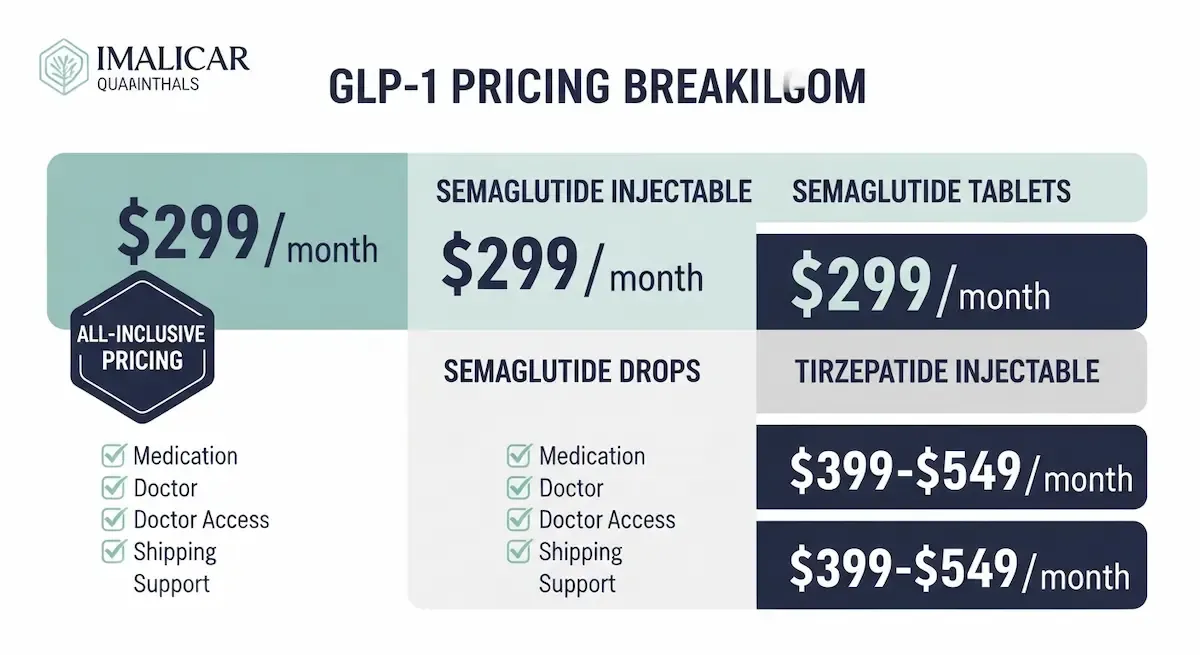
Does Willow accept insurance? No—not for direct billing. Willow does not bill your health plan, Medicare, or Medicaid. It is a cash-pay program. Its published GLP-1 prices run from $299 to $549 a month, depending on the medication, form, and dose.
Willow does accept HSA and FSA cards at checkout. That can lower your after-tax cost when the expense qualifies under your account rules. It is not insurance coverage, and it is not a Willow discount.
Four facts change what you should do next:
- If you have diabetes, Willow says it cannot enroll you.
- If you have Medicare or Medicaid, Willow's Terms say those programs do not pay for its services and tell users not to submit a claim.
- If you need a health plan to pay for the medication, Willow is the wrong route. It offers compounded medication, does not bill insurers, and says it cannot provide extra insurer paperwork beyond its HSA/FSA receipt.
- If you can pay cash or use qualified HSA/FSA funds, Willow may still fit—but you need to see the full dose-based price ladder first.
Now here is the part that changes the answer from a simple “no” to a real decision.
Willow answers the reimbursement question in three of its own documents, and the answers do not line up. Two Help Center pages say you may send receipts to an insurer for possible reimbursement. Willow's newer Terms say you agree not to submit a claim to a government program or another third-party payor. A separate Help Center page says Willow cannot give an insurer anything beyond its specialized HSA/FSA receipt.
We put all three documents side by side below so you can see the conflict before you pay.
Looking for a different Willow? This page is about Willow's GLP-1 weight-loss program at startwillow.com. It is not about Willow breast pumps, Willow Behavioral Health, or Willow Women's Health. Those are different companies with different insurance rules.
Find yourself in this table
| Your situation | Is Willow a fit? | Your best next step |
|---|---|---|
| I can pay cash | Maybe | Check your medication and dose price |
| I have HSA or FSA money | Maybe—strongest Willow payment fit | Confirm your account rules, then check eligibility |
| I need my plan to pay most of the cost | No | Check coverage for an FDA-approved medication first |
| I am on Medicare or Medicaid | No for coverage | Use a government-plan-specific route |
| I want Wegovy or Zepbound specifically | No | Use a provider that offers brand-name medication |
| I have type 2 diabetes | No—Willow says it cannot enroll you | Check your formulary and talk with an in-network prescriber |
| A $299–$549 monthly bill would break my budget | Probably not | Check insurance and FDA-approved cash prices first |
Paying cash or using an HSA/FSA card? See what Willow charges for your treatment tier.
👉 Check My Willow Eligibility and Price →
Free assessment · HSA/FSA cards accepted · Prescription only if a clinician approves you
Need your plan to pay? Skip to the route built for insurance.
What we actually verified
Everything on this page was checked on August 28, 2026 against documents that control or explain what happens to your money:
- Willow's Terms of Service, last updated August 14, 2026
- All four Willow Help Center articles in the Payment Options collection
- Willow's FAQ, including its current state and eligibility lists
- Willow's full published treatment price list—13 rows, not just the homepage's “starting at $299” claim
- Cigna's Compounded Medications policy IP0251, effective December 15, 2025
- Aetna Better Health of Virginia's compounded-drug coverage guideline
- The CMS Medicare GLP-1 Bridge rules
- IRS Publication 502, Publication 969, and the IRS wellness-expense FAQ
- The FDA's current explanation of what compounded-drug approval does—and does not—mean
- Ro's and Sesame's current insurance, prior-authorization, and program-pricing pages
Provider-stated vs. source-checked
| Question | What Willow says | What the source record supports | Verdict |
|---|---|---|---|
| Does Willow bill insurance? | It does not work directly with insurance and does not submit claims | Terms and Help Center agree on no direct billing | No direct insurance billing |
| May a patient seek reimbursement? | Two Help Center pages say possible; Terms say the user will not submit a claim | The documents conflict, and Willow has not published a page resolving the conflict | Do not count on reimbursement |
| Does Willow accept HSA/FSA cards? | Yes, at checkout or by later reimbursement from the account | FAQ and two Help Center pages agree | Yes as a payment method; tax eligibility still depends on the expense and account rules |
| What is the real GLP-1 price range? | Homepage says “starting at $299” | Help Center lists tiers from $299 to $549 | $299–$549 per month |
| Are Willow's GLP-1 products FDA-approved? | No; Willow says they are compounded and not brand-equivalent | FDA says compounded drugs are not FDA-approved or pre-reviewed for safety, effectiveness, or quality | No |
| Who cannot enroll? | Adults 18+ may apply, but Willow excludes pregnancy, breastfeeding, and diabetes | Current FAQ says the same | Diabetes is an express Willow exclusion |
What we could not verify: whether Willow intended the Terms clause to cover commercial insurers in the same way it covers Medicare and Medicaid; whether it will issue a superbill or Letter of Medical Necessity to every eligible patient; whether any specific insurer will credit a Willow payment toward a deductible; or what source ingredient and exact formula each partner pharmacy uses for every prescription.
We are not Willow patients. The portal steps below are Willow's published instructions, not our screenshots.
Does Willow accept insurance? Here is the full answer
Willow does not bill any insurance company. Its Help Center says it does not work directly with insurance, and its Terms say Willow, its medical practice, physicians, and pharmacies do not submit claims to government programs or other third-party payors.
Willow runs as a monthly cash subscription. The public FAQ says GLP-1 treatment starts at $299 and includes medication, the medical evaluation and treatment plan, physician access, care-team support, and shipping. HSA and FSA cards are accepted at checkout.
That leaves three phrases people keep mixing up.
The three-word difference that costs people money
| What you read | What it actually means |
|---|---|
| “No insurance required” | You can use the program without having a health plan |
| “Insurance accepted” | The provider or pharmacy sends a claim to your plan |
| “HSA/FSA accepted” | You pay with your own tax-advantaged funds, subject to account and tax rules |
Willow promises the first and the third. It does not promise the second.
The three-document split
Willow's public payment record says three different things:
| Willow document | Date | What it says | What that means for you |
|---|---|---|---|
| Help Center: “Is Willow covered by insurance?” | June 24, 2024 | Some private or employer plans may pay, and a patient may submit receipts for possible reimbursement | Reimbursement is presented as possible, not promised |
| Help Center: “How much do treatments cost?” | July 9, 2026 | Willow does not bill insurance directly, but receipts may be submitted for possible reimbursement | Same possible-reimbursement message in a newer article |
| Terms of Service, Section 5 | August 14, 2026 | Willow does not submit claims, and the user agrees not to submit a reimbursement claim to a government program or another third-party payor | The contract language points the other way |
Read that last row again.
The Terms are the newest document and the agreement a user accepts. The Help Center articles are easier to read, but they do not explain why their reimbursement instructions differ from the Terms.
That does not prove bad intent. It proves the documents are out of sync.
Until Willow publishes a written answer that reconciles them, the safe budget is simple: expect zero insurance reimbursement.
Can I send Willow receipts to my insurance and get paid back?
Do not build your budget around it. Two Willow Help Center pages say you may try. Willow's newer Terms say you agree not to submit the claim. A third Willow article creates another problem: Willow says it cannot provide any extra documentation or information requested by an insurer beyond its specialized HSA/FSA receipt.
Here is Willow's published statement from October 15, 2025:
“Please be aware that Willow is not able to provide any additional documentation or information requested by insurance companies beyond what is included in the specialized HSA/FSA receipts.”
Why that one sentence matters
Insurer claim rules vary. Depending on the plan and what is being claimed, an insurer may ask for some mix of:
- an itemized bill or superbill
- the treating provider's identifying information
- the dispensing pharmacy's identifying information
- a drug or product code
- the quantity and days supplied
- a diagnosis or procedure code
- proof that an out-of-network claim is allowed
A Willow HSA/FSA receipt may contain some useful details. But Willow's own page says it will not provide more if the insurer asks for it.
The Willow claim-readiness gap
| Claim item | What Willow publicly promises |
|---|---|
| Direct claim submission | No |
| Itemized HSA/FSA receipt | Yes |
| Extra insurer documents | No beyond the specialized receipt |
| Superbill | Not promised |
| Commercial-insurance reimbursement permission | Documents conflict |
| Reimbursement result | Never promised |
That table is the real answer. A receipt is available. A complete insurance-claim path is not.
The honest downside—and what the cash model buys you
Willow does not bill insurance, and its Terms tell you not to submit the claim yourself. If plan payment is non-negotiable, Willow is the wrong door. Stop trying to make a cash-pay program act like an in-network one.
The upside is speed and price clarity. Willow does not wait for your plan to approve its monthly charge. It publishes its treatment tiers, lets a clinician review your case, and tells you the subscription amount before the recurring charge.
You do not get a plan-negotiated rate. You get a cash price that can be known before the pharmacy fills the prescription.
If you need a health plan to pay, jump to the insurance-first route →.
Still with us? Then the next question is what Willow may actually charge at your dose.
👉 See Willow's Current Price for My Treatment →
Free assessment · A clinician decides whether treatment is appropriate
Why does insurance usually not cover Willow's compounded GLP-1?
The answer is narrower than “insurance never covers compounded drugs.” Some plans do cover a compounded prescription in a narrow medical case. But published plan rules are strict, plan-specific, and document-heavy. Willow then adds three practical barriers of its own: it does not bill the plan, its Terms say the user will not submit a claim, and its Help Center says it cannot supply extra insurer paperwork.
A compounded drug is prepared for a patient by a licensed pharmacy. It is not an FDA-approved finished product, and the FDA does not review that finished compound for safety, effectiveness, or quality before it is dispensed.
What two real coverage policies show
| Policy | What it says | What it does not prove |
|---|---|---|
| Cigna IP0251 | Bulk chemicals do not meet the definition of a prescription drug in Cigna standard benefit plans; the plan document controls; a compound must clear six medical-necessity criteria | It does not govern every Cigna plan or every insurer |
| Aetna Better Health of Virginia Medicaid | A compound may be covered with prior authorization only under narrow criteria, including approved ingredients/indication/route/dose and a qualifying shortage, unavailable form, intolerance, or discontinuation circumstance | It is not a national Aetna commercial policy |
The draft version of this page called these “four locks.” That was wrong. Cigna's policy lists six criteria, and the Aetna document applies only to Aetna Better Health of Virginia Medicaid.
Cigna's six-part test, in plain English
Cigna's published standard policy says all six must be met:
- The patient has failed, cannot tolerate, or cannot use all applicable FDA-approved alternatives—up to five—with documentation.
- The compound contains at least one FDA-approved prescription ingredient not excluded by the plan.
- If it copies a commercial product, there is a medically necessary difference for that patient.
- It does not use an ingredient removed from the market for safety or effectiveness.
- It uses human pharmaceutical-grade ingredients.
- The formula's use is supported by a recognized medical reference or an FDA-approved indication.
Cigna separately says its member's benefit document controls. That last sentence matters. An insurer policy is not a promise that your plan includes the benefit.
What this means for Willow
We did not find a public Willow page that identifies the source ingredient and full formula for every medication dispensed by every partner pharmacy. That means no honest reviewer can take one insurer policy and declare that every Willow prescription automatically passes—or fails—every criterion.
We do not need to guess, because the payment answer is already clear:
- Willow does not submit the claim.
- Willow's Terms tell the user not to submit it.
- Willow says it cannot provide extra insurer documents.
Even where a plan has a narrow compound benefit, Willow is not built to use it.
When can a compounded drug be covered?
Published policies show the kinds of cases that may matter:
- the commercial drug is in shortage
- the patient needs a form or strength that is not sold
- the patient cannot tolerate an inactive ingredient in the commercial product
- the commercial product was discontinued for a reason other than safety or effectiveness
- the plan's own medical-necessity and documentation rules are met
That is a patient-specific exception, not a general path for getting a cash-pay compounded GLP-1 reimbursed.
How much does Willow cost without insurance?
Willow's GLP-1 pricing starts at $299 a month, but it is not one flat price. Willow's own Help Center lists monthly tiers of $299, $399, $459, $499, $524, and $549, depending on the medication, form, and strength.
The homepage's “starting at $299” line is real. It is just the bottom of a ladder.
Willow's full published price list
| Medication and form | Published dose or tier | Per month |
|---|---|---|
| Semaglutide injection | Up to 3.5 mg | $299 |
| Semaglutide injection | 7 mg | $399 |
| Semaglutide tablet | Up to 12 mg | $299 |
| Semaglutide tablet | Above 12 mg | $399 |
| Tirzepatide injection | 2.125 / 4.25 / 6.375 mg | $399 |
| Tirzepatide injection | 8.5 / 11 mg | $499 |
| Tirzepatide injection | 13.5 mg | $524 |
| Tirzepatide injection | 17 mg | $549 |
| Tirzepatide tablet | 6 mg / 10 mg | $399 |
| Tirzepatide tablet | 20 mg | $459 |
| Semaglutide/tirzepatide combination tablet | 12 mg / 10 mg | $399 |
| Semaglutide/tirzepatide combination tablet | 24 mg / 20 mg | $459 |
| NAD+ injection | — | $199 |
Source: Willow Help Center, “How much do treatments cost?”, dated July 9, 2026. This is a published price list, not dosing advice. A clinician decides whether a medication or dose is appropriate.
Two things buried in that table
One: the $199 treatment is not a GLP-1. It is Willow's NAD+ injection. The real GLP-1 floor in the published list is $299.
Two: tirzepatide injection pricing rises by tier. Willow does not publish one all-dose price for it.
A six-month price-ladder example
To show how the dose tiers can change a budget, we calculated one month at each of the first six published tirzepatide-injection strengths. This is a price illustration, not a dosing schedule or treatment recommendation.
| Example month | Published strength used for the example | Charge |
|---|---|---|
| 1 | 2.125 mg | $399 |
| 2 | 4.25 mg | $399 |
| 3 | 6.375 mg | $399 |
| 4 | 8.5 mg | $499 |
| 5 | 11 mg | $499 |
| 6 | 13.5 mg | $524 |
| Six-month example total | $2,719 |
Six months at a flat $399 would be $2,394. This tiered example is $325 more.
That does not mean your clinician will use those strengths in that order. It means “starts at $399” is not enough information to set a six-month budget.
What a full year would cost at one published tier
| Monthly tier | 12 months at that tier |
|---|---|
| $299 | $3,588 |
| $399 | $4,788 |
| $459 | $5,508 |
| $499 | $5,988 |
| $524 | $6,288 |
| $549 | $6,588 |
These are simple multiplication examples, not quotes. Your real total can change with your prescription, dose, refill frequency, and future Willow prices. Willow's Terms say the subscription fee may rise or fall when a prescription changes, with the new amount disclosed before the charge.
What is included in Willow's price?
Willow's FAQ says the monthly program includes:
- personalized GLP-1 medication
- the medical evaluation and treatment plan
- unlimited access to the Willow physician
- 24/7 online care-team support
- shipping
That is a clean bundle for a cash-pay program.
What is not clearly included?
Willow's public price pages do not promise that outside lab work, services obtained outside the platform, or an optional add-on drug will be included. Its Terms say medical or pharmacy services not made available through Willow are charged separately.
If a clinician suggests anything outside the listed treatment, ask one question before agreeing:
“What will my next charge be with this added, and is that amount recurring?”
If you use your own pharmacy, the medication and pharmacy fulfillment stop being part of the Willow subscription. We cover that route below.
Know your likely tier now? Good. The next question is whether tax-advantaged funds can lower the after-tax cost.
👉 Start My Free Willow Assessment →
Free assessment · Ongoing medication requires a prescription · Shipping included in Willow's program
Can I pay for Willow with an HSA or FSA?
Yes, Willow accepts HSA and FSA cards at checkout. Willow also says you may pay another way, download its HSA receipt, and request reimbursement from your HSA or FSA administrator.
That is a payment path. It is not a guarantee that every item in every Willow order qualifies under every account.
The two ways to do it
Option 1—Use the HSA/FSA card at checkout. Willow says to open the Patient Portal, choose Billing, and replace the payment method with the HSA or FSA card.
Option 2—Pay normally and reimburse yourself later. Pay with another card, download the Willow HSA receipt, and send it to your account administrator under its rules.
How to get your Willow HSA receipt
Willow's October 15, 2025 Help Center instructions say:
- Log in at
app.startwillow.com/dashboard. - Open the drop-down under your name in the top-right corner and select Insurance.
- Click Download beside HSA Receipt.
- Select the year and click Download Receipt.
Small thing worth noticing: the menu is called Insurance. What it gives you is an HSA receipt. Those are not the same thing.
The IRS rule, in plain English
IRS Publication 502 draws a line between medical treatment and general wellness.
A weight-loss program fee can be a medical expense when the program treats a specific disease diagnosed by a physician, such as obesity, hypertension, or heart disease. A program used only to improve appearance, general health, or well-being does not qualify under that rule.
Prescribed drugs and medical care have their own medical-expense rules. Willow bundles medication, evaluation, and ongoing care into one charge and does not publish a line-by-line split. That makes good records more important, not less.
Keep:
- the prescription and treatment plan
- the itemized Willow receipt
- any diagnosis or medical-necessity document the clinician provides
- your account administrator's written answer if the charge is questioned
What the tax difference could look like
This is not a Willow discount. It is a simple tax illustration.
At a hypothetical 25% combined marginal income-tax rate:
| Willow charge | Hypothetical tax avoided by using qualified pre-tax funds |
|---|---|
| $299 | $74.75 |
| $399 | $99.75 |
| $499 | $124.75 |
| $549 | $137.25 |
Your real tax effect can be higher, lower, or zero. It depends on your account, contribution method, tax rate, and whether the expense qualifies.
One thing to be careful about
Willow's pricing article says all treatments are HSA/FSA eligible. That list includes NAD+, which Willow markets for energy and wellness and discloses is not FDA-approved for those uses.
A provider accepting your card does not settle the tax question. A broad wellness claim by itself also does not prove medical-expense eligibility.
If you are buying NAD+, ask your administrator before using HSA or FSA funds. Do not assume the answer is the same as it is for prescribed obesity treatment.
If your HSA or FSA card is declined
Do not keep running the card. A decline can come from merchant coding, available balance, plan controls, or missing documentation. It does not, by itself, decide whether the expense qualifies.
Do this instead:
- Download Willow's itemized HSA receipt.
- Ask the account administrator why the card was declined.
- Ask exactly what document is missing.
- Ask Willow whether it can provide that document before paying another way.
- Remember that Willow publicly says it cannot provide extra insurer documents beyond its specialized receipt.
Have HSA or FSA funds and understand the documentation rule? That is the strongest payment fit Willow offers.
👉 Check Willow Eligibility and Use My HSA/FSA Card →
Willow accepts the card; your account administrator and tax rules decide whether the expense qualifies
Will Willow payments count toward my deductible?
Do not assume they will. Willow does not submit a claim, its Terms say the user will not submit one, and we found no Willow promise that a monthly charge will count toward a deductible or out-of-pocket maximum.
A receipt proves that you paid. It does not prove:
- your plan covers the expense
- the provider or pharmacy can be processed as out of network
- the amount will be credited to your deductible or out-of-pocket maximum
Those are three separate decisions.
Three questions to ask your insurance company
Call the number on your insurance card and ask:
1. “Will my plan accept an out-of-network claim involving Willow's telehealth medical service and partner pharmacy?”
2. “Would a compounded semaglutide or tirzepatide charge ever count toward my deductible or out-of-pocket maximum under my plan?”
3. “What exact documents and codes would you need to process it?”
Write down the date, the representative's name, and the call-reference number.
Then compare the required documents with what Willow actually promises. If the plan needs anything beyond Willow's specialized HSA/FSA receipt, Willow's Help Center has already warned that it will not provide it.
One question to ask Willow
“Your Help Center says a patient may submit receipts for possible insurance reimbursement, but your Terms say I agree not to submit a claim to another third-party payor. Which instruction applies to my commercial plan, and can you provide a superbill?”
We found no public Willow answer that resolves that question. Get one in writing before spending money you expect to reach a deductible.
Does Willow accept Medicare or Medicaid?
No for billing or coverage. Willow's Terms say federal and state health-care programs, including Medicare and Medicaid, do not cover or pay for its services. The Terms also say Willow does not submit those claims and that the user will not submit one.
That does not mean every person with government coverage is medically unable to use a cash-pay service. It means you should not expect Medicare or Medicaid to pay Willow.
The Medicare exception worth knowing about
The Medicare GLP-1 Bridge is a real CMS demonstration for eligible Part D beneficiaries. It runs from July 1, 2026 through December 31, 2027.
Eligible users pay $50 per prescription for Bridge-covered GLP-1 drugs. CMS says the Bridge operates outside the normal Part D payment flow, so the Part D deductible does not apply and the $50 does not count toward true out-of-pocket, or TrOOP, costs.
The covered product list is:
- Foundayo
- Wegovy injection and tablets
- Zepbound KwikPen
Compounded medication is not part of the Bridge.
Ozempic and Mounjaro are not Bridge products. They may still be covered through ordinary Part D rules when prescribed for an FDA-approved covered use such as type 2 diabetes.
The annual price gap
Willow's lowest GLP-1 tier is $299 a month. The Bridge copay is $50.
- Willow floor for 12 months: $3,588
- Bridge copays for 12 months: $600
- Difference: $2,988
If you have Medicare and may qualify, check the Bridge before paying Willow.
→ Read our Medicare GLP-1 coverage guide
What about Medicaid?
Medicaid coverage changes by state, plan, diagnosis, and medication. There is no one national Medicaid answer that Willow can bypass. Start with your state's formulary and an in-network prescriber.
→ Read our Medicaid GLP-1 coverage guide
We are deliberately not sending Medicare or Medicaid readers to a cash-pay signup here. Government coverage needs a government-plan-specific answer.
Is Willow available in my state—and who cannot enroll?
Willow's current FAQ lists 36 states. It is not listed in 14 states or Washington, D.C. Willow also says it cannot accept people with diabetes. A clinician still makes the final eligibility decision.
Where Willow works now
Arizona, California, Colorado, Connecticut, Florida, Georgia, Hawaii, Idaho, Illinois, Indiana, Iowa, Kentucky, Maine, Maryland, Massachusetts, Michigan, Minnesota, Missouri, Montana, Nebraska, Nevada, New Hampshire, New Jersey, New York, North Carolina, Ohio, Oklahoma, Oregon, Pennsylvania, South Carolina, Tennessee, Texas, Virginia, Washington, Wisconsin, and Wyoming.
Where Willow is not currently listed
Alabama, Alaska, Arkansas, Delaware, Kansas, Louisiana, Mississippi, New Mexico, North Dakota, Rhode Island, South Dakota, Utah, Vermont, West Virginia, and Washington, D.C.
The easy state-name traps
- Wyoming is listed. Utah is not.
- Washington state is listed. Washington, D.C. is not.
State availability can change faster than almost anything else on this page. Check Willow's live FAQ again before enrolling.
Who does Willow say it cannot accept?
Willow's FAQ says the program is for adults 18 or older who are not pregnant or breastfeeding and do not have a condition that makes treatment unsafe. It specifically says:
- people with diabetes cannot enroll
- people with prediabetes may apply
- people with hypertension may apply
The diabetes rule—and the irony inside it
People with type 2 diabetes have an insurance route that a weight-loss-only patient may not have. Ozempic and Mounjaro have FDA-approved type 2 diabetes indications, so a plan may cover one under its diabetes benefit even when it excludes drugs used only for weight loss.
So if you have diabetes, Willow closes the door—and your own plan may open a better one.
That is not bad news. Check your formulary and use your coverage.
→ Read our GLP-1 prior-authorization guide
Willow covers your state, you do not have diabetes, and the cash price fits? Then check clinical eligibility.
👉 Check Willow Availability and Eligibility →
Free assessment · State availability and medical approval required
Can Willow send my prescription to my own pharmacy?
Willow's Terms say you may request it, but the cost structure changes. Your chosen pharmacy must be able to prepare the compound exactly as prescribed. You pay that pharmacy directly. Willow says its subscription will no longer include medication or pharmacy fulfillment, while a platform fee still applies.
Willow does not publish that remaining platform fee on the public page we reviewed.
Willow partner pharmacy vs. your own pharmacy
| Cost or service | Willow partner pharmacy | Your chosen pharmacy |
|---|---|---|
| Willow platform/medical service | Included in subscription | Platform fee still applies |
| Medication cost | Included in the published Willow subscription | Paid directly to your pharmacy |
| Pharmacy fulfillment | Included | Not included in Willow fee |
| Shipping | Included in Willow program | Depends on your pharmacy |
| Insurance claim | Willow does not submit one | Depends on your pharmacy and plan; no promise of compound coverage |
| Publicly stated total | $299–$549 for listed GLP-1 tiers | Unknown until Willow and the pharmacy quote both parts |
A lot of people hope the outside-pharmacy option is an insurance workaround. It is not automatically one. The plan still applies its own compounded-drug rules, and you still need a pharmacy and claim that fit those rules.
What to ask before moving the prescription
- Will Willow send this exact prescription to the pharmacy I choose?
- What Willow platform fee will remain?
- What services stop being included?
- Can the pharmacy prepare the prescription exactly as written?
- What will the pharmacy charge me?
- Will the pharmacy submit an insurance claim, and what does my plan require?
- What happens to my billing date if I move back to a Willow pharmacy?
Willow's Terms say that if you transfer back to a Willow pharmacy, the medication cost is added to the subscription at the start of the next billing cycle.
Who fills Willow prescriptions?
Willow's current Terms name five partner pharmacies:
- Red Rock Home Pharmacy—Springville, Utah
- Epiq Pharmacy, also called Epiq Scripts LLC—Richardson, Texas
- Absolute Pharmacy—Lutz, Florida
- The Pharmacy Hub—Miami, Florida
- Empower Pharmacy—Houston, Texas
That is more disclosure than a vague “licensed partner pharmacy” line. The pharmacy named on your own prescription label is the one that matters for your order.
Are Willow's medications FDA-approved?
No. Willow says its compounded semaglutide, tirzepatide, combination tablets, and NAD+ products are not approved by the FDA. It also says the FDA does not review compounded medication for safety, effectiveness, or quality and that its compounds are not brand-equivalent.
The FDA says the same core thing in its own guidance: compounded drugs are not FDA-approved, and the agency does not verify their safety, effectiveness, or quality before they are marketed. FDA also says compounded drugs should be used when a patient's medical need cannot be met by an FDA-approved drug.
Compounded is not generic
A compounded product should not be called “generic Wegovy” or “generic Zepbound.” Willow itself says its products are not brand-equivalent.
The finished compound has not gone through the FDA approval process as Wegovy, Zepbound, Ozempic, Mounjaro, or Foundayo. It may use the same named active ingredient, but that does not make the finished product the same approved drug.
What this means for the insurance question
FDA status is not the only reason insurance is difficult. The full problem is:
- The product is compounded rather than an FDA-approved brand on a normal formulary.
- Compound benefits, where they exist, are narrow and document-heavy.
- Willow does not bill the insurer.
- Willow's Terms say the user will not submit a reimbursement claim.
- Willow says it cannot provide extra insurer paperwork.
That is why the insurance door is effectively closed for this program.
What this means for you
If you searched “does Willow accept insurance” because you wanted Wegovy, Zepbound, Ozempic, Mounjaro, or Foundayo partly paid by your plan, you are looking for a different provider model.
If you understand that Willow sells compounded medication, accept that tradeoff after a clinician reviews you, and can pay the published cash price, Willow can still make sense on its own terms.
Do not blur those two decisions. They are not the same purchase.
If you need insurance to pay, where should you go instead?
Use a provider built around FDA-approved medications and prior authorization. A narrow compound benefit may exist under some plans, but Willow is not set up to use it. The practical insurance route is a brand-name prescription that can run through a pharmacy benefit.
Ro—the strongest first move when you do not know your coverage
Ro has a free GLP-1 Insurance Coverage Checker. Its insurance specialists contact your plan and send you a personalized report.
There is one limit the draft did not state clearly enough: Ro's free checker currently checks coverage for the Ozempic pen, Wegovy pen, and Zepbound pen. Ro says it cannot currently run the free check for Foundayo, the Wegovy pill, or Zepbound KwikPen, though those may still be available through Ro as cash-pay options.
If you enroll in Ro Body, its insurance concierge can handle prior-authorization work for eligible medication. It cannot force a plan to approve you.
Ro's current membership price is:
- $39 for the first month
- $149 a month after that on the monthly plan
- as low as $74 a month when an annual plan is prepaid
Medication is separate and depends on the prescription and insurance result.
👉 Check My GLP-1 Coverage with Ro →
Free coverage report · No prescription request is submitted by the checker
Sesame Care—if you want to choose your provider
Sesame lets you choose a provider and offers FDA-approved weight-loss options. Its Success by Sesame care program starts at $59 a month with an annual commitment or costs $99 month to month. Medication is separate.
Sesame does not bill health insurance for the care subscription. But Sesame says a patient's prescribed medication may be covered, and the Sesame provider will work with the insurer on prior-authorization paperwork.
That makes Sesame a good fit when provider choice matters more than having one program manage the whole process.
Compare FDA-approved options on Sesame →The honest part
Even the brand-name route can mean a prior authorization, a delay, or a denial. A concierge can organize the paperwork. It cannot change an exclusion written into your plan.
But a free coverage check is still worth doing before you agree to a $299–$549 monthly cash charge.
Which side are you on?
| If this is you | Best next move |
|---|---|
| I do not know what my plan covers | Run Ro's free check first |
| I want Wegovy, Zepbound, Ozempic, Mounjaro, or Foundayo | Use a brand-name provider and check the formulary |
| I want to choose my own telehealth provider | Compare Sesame clinicians |
| My plan excludes weight-loss drugs | Compare FDA-approved cash prices, then compare Willow if you accept compounded treatment |
| I have HSA/FSA funds and want Willow | Confirm the expense rules, then check Willow eligibility |
| I have type 2 diabetes | Start with your in-network prescriber and diabetes-drug formulary |
| I have Medicare | Check the $50 Medicare GLP-1 Bridge and other covered indications |
| I have Medicaid | Use your state formulary and an in-network prescriber |
Not sure what your plan covers? Find out before you pay full cash price.
👉 Run Ro's Free Coverage Check →
Already know insurance will not pay, understand the compounded-drug tradeoff, and can handle Willow's tiered price?
👉 Start My Free Willow Assessment →
What Willow customers say about price and support
Three recent unprompted Trustpilot reviews show both sides of the money decision: fast support, but a price that can feel high.
“They are always helpful and answer questions quickly!”
— Kelly J, August 25, 2026
“They do seem a little expensive.”
— Laura, August 15, 2026
“Very quick, professional response time.”
— Momi Hunter, August 7, 2026
These are individual service opinions from Trustpilot, captured August 28, 2026. They are not medical evidence, typical-results claims, or proof that a medication will work. Willow invites customer reviews on Trustpilot. We may earn a commission if you enroll through our links.
We kept the price complaint because it is fair. $299 to $549 a month is real money.
If that number still fits after you have seen the entire ladder, that is useful decision data. If it makes you tense, do not talk yourself past it. Check insurance and FDA-approved cash prices first.
For service, shipping, medication-form, and cancellation details, read our full Willow GLP-1 review →
How to cancel Willow without getting charged again
Willow says you may cancel anytime, but the cutoff matters. Its FAQ says to send the request at least two business days before your next processing date. If you cancel before the prescription is sent to the pharmacy, the FAQ says you will receive a full refund within 5 to 10 business days. A late request applies to the next cycle.
Three details can prevent a surprise charge:
1. Use the processing date, not the delivery date.
Your medication may spend 2 to 4 business days in pharmacy processing and another 2 to 3 days in transit. Waiting until the box arrives can put you past the next cutoff.
2. Willow's FAQ and Terms point to different cancellation routes.
The FAQ says to message the Patient Care Team. The Terms say to cancel through the account page. As a practical precaution, do both and save the timestamps.
3. Do not expect to return compounded medication.
Willow's Terms say charges are generally nonrefundable once incurred unless a more specific policy or law says otherwise, and prescription or compounded products are not returnable.
One more contract term worth knowing: Willow's Terms include binding individual arbitration and a class-action waiver. A user may opt out of arbitration by email within 30 days after first accepting the Terms.
That is not medical information. It is still part of the deal you are agreeing to.
How we checked all of this
We built this page from the documents that control billing, eligibility, and coverage—not from another affiliate review.
Our source order, strongest first
- Willow's current Terms of Service
- Willow's official Help Center, FAQ, and treatment-price pages
- Published insurer coverage policies, with the exact plan scope stated
- Government guidance from CMS, IRS, and FDA
- Official Ro and Sesame pricing and insurance pages for the alternatives
- Independent customer reviews used only for service context
What we verified
- no direct Willow insurance billing
- the conflict between two reimbursement Help Center statements and the newer Terms
- the limit on extra insurance documents
- all 13 published treatment-price rows
- the current 36-state list
- the diabetes exclusion
- HSA/FSA card acceptance and receipt-download steps
- the named five partner pharmacies
- the outside-pharmacy cost change
- the two-business-day cancellation cutoff
- the Medicare GLP-1 Bridge dates, $50 copay, and product list
- the compounded-drug FDA disclosure
- Ro's and Sesame's current insurance-support models and program fees
What we could not verify
- how Willow interprets “other third-party payor” for a commercial insurer
- whether Willow will issue every patient a superbill or Letter of Medical Necessity
- whether any specific plan will credit a Willow charge to a deductible
- whether an outside pharmacy can turn a Willow prescription into a covered claim
- the exact platform fee remaining when a patient chooses an outside pharmacy
- the source ingredient and full formulation used for every prescription from every partner pharmacy
Where a source did not answer the question, we did not fill the gap with a guess.
How we decide a fact is current
A Willow price, state, pharmacy, or policy counts as current only when it appears in a Willow-controlled page or a written Willow response. An insurer rule counts only for the product and plan scope named in the document. A customer review can show friction. It never overrides current policy.
Change log
- August 28, 2026—First verification. Confirmed the August 14 Terms, the July 9 price list, the 36-state list, five named pharmacies, HSA/FSA instructions, and the reimbursement conflict. Corrected the original draft's universal insurance claims, Cigna criterion count, Aetna policy scope, Medicare framing, tax-savings claim, unsupported search-index claims, and broken links.
Who wrote this: the WPG Research Team at Weight Loss Provider Guide, an independent comparison resource for GLP-1 telehealth providers. We make money when some readers start a program through our links. We also publish facts that may send a reader somewhere else, because the right answer matters more than forcing the wrong click.
This page is not medical, tax, legal, or insurance advice. Prices, policies, state availability, and regulations change. Verify any fact that will control your health care or money before acting.
Frequently asked questions
Does Willow require insurance?
No. Willow is a cash-pay program, so you can apply without health insurance. “No insurance required” does not mean Willow bills a plan. It means you do not need a plan to use the service.
Does Willow take Blue Cross Blue Shield, Aetna, Cigna, or UnitedHealthcare?
Not for direct billing. Willow says it does not work directly with insurance and does not submit claims to third-party payors. Do not expect Willow to bill any commercial carrier.
Can I submit a Willow receipt to my insurance?
Willow's Help Center says you may submit a receipt for possible reimbursement. Its newer Terms say you agree not to submit a reimbursement claim to another third-party payor. Willow also says it cannot provide documents beyond its specialized HSA/FSA receipt. Get written clarification before attempting a claim.
Can Willow give me a superbill?
Willow does not publicly promise one. Its Help Center says it cannot provide extra information requested by insurers beyond the specialized HSA/FSA receipt. Ask before enrolling if a superbill is required.
Can I use an HSA or FSA for Willow?
Willow accepts HSA and FSA cards at checkout and lets users download an HSA receipt. Whether the charge qualifies depends on the medical purpose, documentation, account rules, and tax rules. Keep records tying treatment to a physician-diagnosed condition.
Will Willow count toward my deductible?
Do not assume it will. No claim is submitted by Willow, the Terms tell the user not to submit one, and Willow does not promise deductible credit. Ask your insurer in writing.
Does Willow accept Medicare?
No for billing or coverage. Willow's Terms say Medicare does not pay for its services. Eligible Part D beneficiaries should check the $50 Medicare GLP-1 Bridge and ordinary Part D coverage for other FDA-approved indications.
Does Willow accept Medicaid?
No for billing or coverage. Start with your state Medicaid formulary and an in-network prescriber because Medicaid rules vary by state and plan.
How much is Willow without insurance?
Willow's published GLP-1 prices run from $299 to $549 a month. The exact tier depends on medication, form, and dose.
Does Willow's price go up as my dose goes up?
It can. Published tirzepatide-injection tiers rise from $399 to $549. Semaglutide injection is listed at $299 up to 3.5 mg and $399 at 7 mg. Willow's Terms also say a prescription change can change the recurring fee.
Does Willow offer Wegovy, Ozempic, Zepbound, Mounjaro, or Foundayo?
No. Willow's published program offers compounded semaglutide, compounded tirzepatide, compounded combination tablets, and NAD+. Those are not the same as FDA-approved brand-name products.
What pharmacy does Willow use?
Willow's Terms name Red Rock Home Pharmacy, Epiq Pharmacy, Absolute Pharmacy, The Pharmacy Hub, and Empower Pharmacy. Check the label on your own prescription to see which pharmacy filled it.
Can Willow use my local pharmacy?
You may request another pharmacy, but Willow says a platform fee remains, medication and pharmacy fulfillment are no longer included, and you pay the chosen pharmacy directly. The pharmacy must be able to prepare the exact prescription.
Can I use Willow if I have type 2 diabetes?
No. Willow's current FAQ says it cannot accept people with diabetes. Prediabetes and hypertension are welcome to apply. If you have type 2 diabetes, check whether your plan covers an FDA-approved diabetes medication through your own prescriber.
What states is Willow available in?
Willow lists 36 states as of August 28, 2026. It is not listed in Alabama, Alaska, Arkansas, Delaware, Kansas, Louisiana, Mississippi, New Mexico, North Dakota, Rhode Island, South Dakota, Utah, Vermont, West Virginia, or Washington, D.C.
Is insurance always cheaper than Willow?
No. It depends on your deductible, copay, formulary, employer exclusions, prior authorization, and the full program fee. Compare a full-year total. Also compare current FDA-approved cash prices before choosing compounded treatment.
How late can I cancel Willow?
Submit the request at least two business days before the next processing date. Willow's FAQ says a cancellation before the prescription is sent to the pharmacy qualifies for a full refund within 5 to 10 business days.
Still deciding?
You have now seen Willow's payment rules, the full 13-row price list, the contract conflict, the HSA/FSA path, the government-plan route, and the insurance-first alternative.
If Willow fits, it fits. If it does not, the right next step is a different door—not another week of searching for a reimbursement promise Willow has not made.
Still not sure which GLP-1 path fits you? Take our free 60-second matching quiz.
👉 Get My Personalized GLP-1 Action Plan →
Compares cash-pay, HSA/FSA, insurance-first, and Medicare paths
Sources
All provider prices, policies, and availability were last checked August 28, 2026.
- Willow Terms of Service—last updated August 14, 2026
- Willow FAQ
- Willow Help Center: “Is Willow covered by insurance?”—June 24, 2024
- Willow Help Center: “How much do treatments cost?”—July 9, 2026
- Willow Help Center: “How to submit receipts to HSA/FSA or insurance provider”—October 15, 2025
- Willow Help Center: “How do I use my FSA card?”—October 15, 2025
- Cigna Drug Coverage Policy IP0251: Compounded Medications—effective December 15, 2025
- Aetna Better Health of Virginia Medicaid: Compounded Drug Products
- IRS Publication 502: Medical and Dental Expenses
- IRS: Medical expenses related to nutrition, wellness, and general health
- IRS Publication 969: Health Savings Accounts and Other Tax-Favored Health Plans
- CMS: Medicare GLP-1 Bridge
- CMS: Medicare GLP-1 Bridge information for providers
- FDA: Compounding and the FDA—Questions and Answers
- Ro: GLP-1 Insurance Coverage Checker
- Ro: Weight-loss program pricing
- Sesame: Online weight-loss program
- Trustpilot: Willow customer reviews
Related Articles
Does Shed Accept CareCredit? GLP-1 Payment Options
Does Shed accept CareCredit? Not the standard card. See what Shed does take — HSA/FSA, cards, even Affirm/Klarna — plus the Rewards Mastercard catch.
Does SHED Accept HSA/FSA? Verified Yes + What You Need
Yes—SHED accepts HSA/FSA cards at checkout for GLP-1 prescriptions. Here's what qualifies, what needs a receipt, and the 2-month catch to know.
Does SHED Accept Klarna? Yes—Here's the Catch (2026)
Yes—SHED accepts Klarna for multi-month plans. But canceling SHED won't stop your Klarna payments. See the real costs and refund rules first.
Does SkinnyRx Accept Affirm? 5 Checks First
Yes—SkinnyRx accepts Affirm. See verified pricing, financing math, refund timing, and FDA warning-letter context before you finance.
Does SkinnyRx Accept HSA/FSA? 2026 Verified Guide
Yes—SkinnyRx accepts HSA/FSA cards at checkout. Verified 2026 prices, IRS rules, LMN guide, state limits, and what to confirm before you swipe.
Does TrimRx Accept Affirm? APR, Refunds & 5 Checks [2026]
Yes—TrimRx takes Affirm (plus Klarna & Afterpay). See the real APR math, the refund catch, and the 5 things to screenshot before you finance.