Disclosure: Some links on this site are affiliate links. If you purchase through these links, we may earn a commission at no extra cost to you. Thank you for supporting our site.·For informational purposes only—not medical advice.
Fact-checked against primary sources: FDA.gov, provider terms of service, Trustpilot, ConsumerAffairs, Forbes Health. All medical claims reference FDA prescribing information and published clinical trial data.
MEDVi vs Remedy Meds: Which GLP-1 Program Should You Choose? (2026)
Our verdict: MEDVi is the better starting point for most people.
Lowest first month ($179 semaglutide), no membership fee, oral dissolvable tablets available, and competitive six-month total cost. Pick Remedy Meds if you want flat pricing at every dose ($299/$399 — does not increase with dosage) and unlimited video calls. Skip both if your insurance covers brand-name Wegovy or Zepbound.
| MEDVi | Remedy Meds | |
|---|---|---|
| Semaglutide | $179 first mo → $299 refills | $299/mo flat |
| Tirzepatide | $349 first mo → $399–$499 refills | $399/mo flat |
| Oral tablets? | Yes | Injections only |
| Video calls | On request | Unlimited scheduled |
| Best for | Lowest entry cost; tablet option | Predictable pricing; provider access |
MEDVi vs Remedy Meds: verified pricing and policy comparison for 2026.
*Illustration only. Actual medication packaging and appearance may vary by pharmacy and formulation.*
You're comparing MEDVi vs Remedy Meds because you've already done the hard part — you decided GLP-1 medication is worth trying. Now you're stuck between two providers that look almost identical on the surface, both claiming to be “#1 on Forbes,” both showing similar pricing ballparks, both promising convenient telehealth access. And the more you read their websites, the harder it gets to tell them apart.
We reviewed each provider's pricing pages, terms of service, refund policies, and third-party sources — including FDA safety communications, guidance, and warning letters, Forbes Health, Trustpilot, and ConsumerAffairs — as of February 2026. This guide covers real costs at every dose, cancellation fine print, pharmacy sourcing, FDA regulatory context, and the honest tradeoffs neither provider's marketing will tell you. For more provider comparisons, see our MEDVi vs Hers and MEDVi vs Ro guides.
One thing to know upfront: MEDVi's best price is the introductory offer. Semaglutide refills lock at $299/month, and tirzepatide can reach $399–$499 depending on dose. That's still well within the typical telehealth GLP-1 range — but you should know month-two pricing before you start, not after. We break the full math down below.
MEDVi vs Remedy Meds at a Glance
We verified every data point below directly from each provider's website, terms of service, and publicly available policy documents. Where we couldn't independently confirm something, we say so.
| Category | MEDVi | Remedy Meds |
|---|---|---|
| Best for | Lowest starting cost; oral tablet option; budget-conscious beginners | Flat dose-agnostic pricing; unlimited video calls; simplicity |
| Semaglutide (monthly) | $179 first month → $299 refills | $299/mo flat, all doses |
| Tirzepatide (monthly) | $349 first month → $399–$499 refills | $399/mo flat, all doses |
| Oral tablets available? | Yes (semaglutide & tirzepatide) | Injections only |
| Membership fee | None | None |
| Clinician access | Unlimited messaging; consultations on request | Unlimited messaging + scheduled video calls |
| Labs included? | Yes, when medically necessary — Quest Diagnostics | Yes, included in program |
| Shipping | Included (some reviewers report 7–14 days initially) | Free shipping advertised; Terms state shipping/handling may be added at checkout |
| Cold-chain packaging | Yes | Yes |
| Cancellation window | 72 hours before billing date | 48 hours before renewal date |
| Refund policy | Refund only before medication is ordered for that cycle | Non-refundable once payment processes; refund if clinician determines ineligibility |
| Weight loss guarantee | 5-month program: refund minus 25% consultation fee | Weight Loss Warranty: ≥10% body weight in 4 months or money back (eligibility requirements apply; verify conditions before enrolling) |
| State availability | Select states (confirm during eligibility check) | All 50 states + DC |
| HSA/FSA accepted | Yes | Yes |
| Pharmacy partners | Belmar Pharma Solutions, Beluga Health (via OpenLoop Health) | Licensed U.S. compounding pharmacies (names not published) |
| LegitScript certified | Yes | Not independently confirmed |
| Trustpilot rating | 4.4/5 (9,700+ reviews) | 4.6/5 (10,000+ reviews) |
| Billing cycle | Monthly | Every 28 days |
Sources: MEDVi.org, RemedyMeds.com (terms of service), Forbes Health, ConsumerAffairs, FDA.gov, Trustpilot. All verified February 2026.
Which One Should You Pick? (Find Yourself Here)
Every person reading this has a slightly different situation. Rather than telling you what's “best” in the abstract, here's how to match your priorities to the right provider.
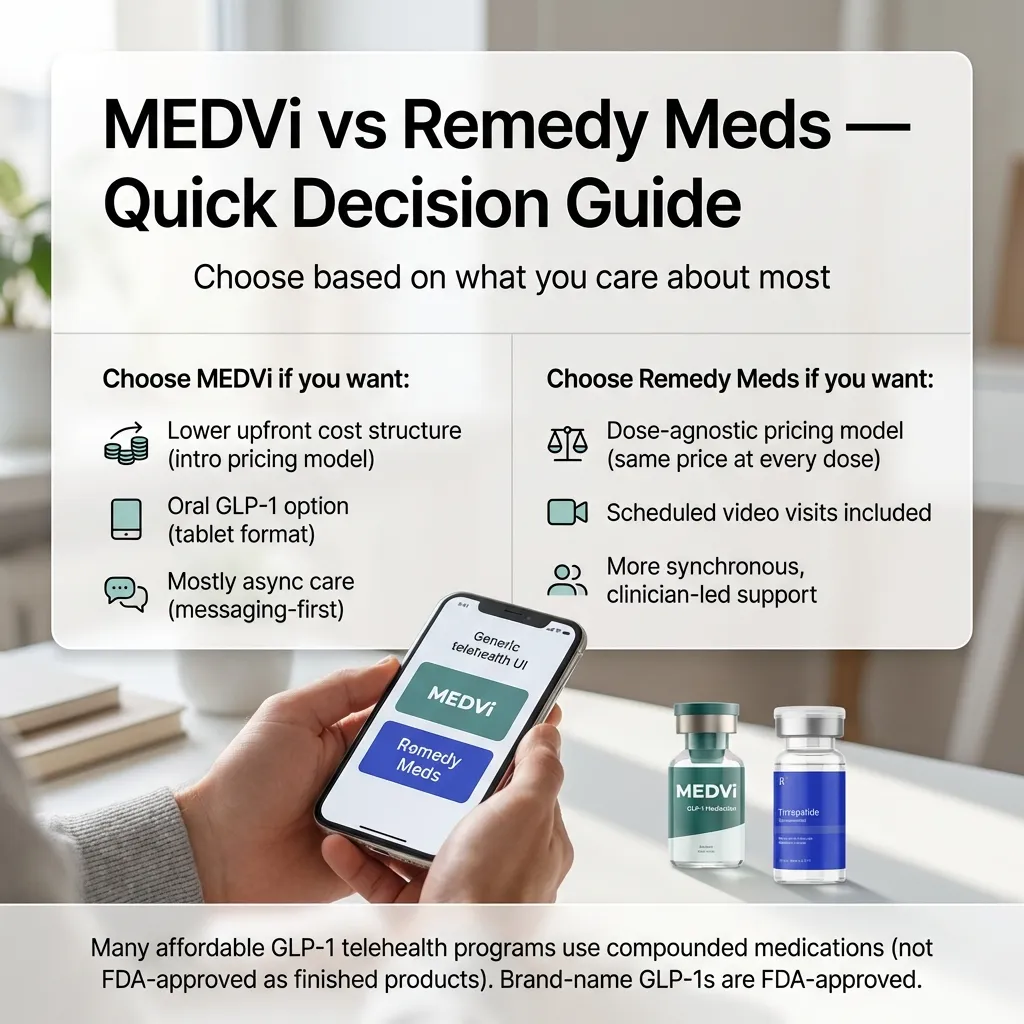
Decision guide: match your priorities to the right provider.
If you want the lowest possible entry price → MEDVi
MEDVi's $179 first month for compounded semaglutide injections is the cheapest way to test GLP-1 therapy from either provider. You get physician review, a personalized plan, medication, and shipping included. If the medication doesn't agree with you or the program isn't what you expected, you've risked less upfront. This is why we recommend MEDVi as the default starting point for most people — it lowers the barrier to getting started. For more options, see our cheapest GLP-1 without insurance guide.
If you want predictable pricing at every dose level → Remedy Meds
Remedy Meds charges $299 for semaglutide and $399 for tirzepatide, period. Whether you're on a starting dose or a maintenance dose six months from now, the price doesn't change. If you budget tightly and hate pricing surprises, that consistency has real value — especially for tirzepatide, where MEDVi's higher doses can reach $499/month.
If you're nervous about injections → MEDVi
MEDVi offers both injectable and daily oral dissolvable tablets for semaglutide and tirzepatide. Remedy Meds is injection-only. If needles are a dealbreaker for you, MEDVi is really your only option between these two. Read our detailed review: MEDVi Pills Reviews.
If you want regular video calls with a doctor → Remedy Meds
Remedy Meds includes unlimited scheduled video consultations with licensed providers. MEDVi's model relies primarily on unlimited messaging with consultations available on request. If face-to-face (even virtual) interaction with your prescriber matters to you, Remedy has the edge here.
If you're extremely risk-averse about medication sourcing → Neither (consider brand-name first)
Both MEDVi and Remedy Meds primarily prescribe compounded GLP-1 medications. Compounded meds are prepared by licensed U.S. pharmacies, but they are not FDA-approved as finished products. If that distinction matters deeply to you, look into whether your insurance covers brand-name Wegovy or Zepbound first, or ask your primary care doctor about manufacturer savings programs. Learn more: Is Compounded Semaglutide Safe?
If you need HSA or FSA eligibility → Either one works
Both providers accept HSA and FSA cards. Just confirm with your specific plan administrator that GLP-1 weight management qualifies, since HSA/FSA rules can vary by employer. See our guide: How to Get GLP-1 Without Insurance.
If you've used GLP-1s before and need a higher starting dose → Ask both providers directly
If you're transferring from another program and want to avoid restarting at a low dose, contact both providers before enrolling. MEDVi allows patients to discuss dosing with their provider, and dose adjustments are part of both programs. But since pricing at higher doses differs significantly (especially for tirzepatide), get month-two pricing in writing before you commit.
How Much Does MEDVi Actually Cost? (The Real Numbers)
MEDVi markets itself as “starting at $179/month,” and that's true — for your first month of compounded semaglutide injections. But the price you pay on month one isn't the price you'll pay going forward, and understanding the full picture matters.
| Medication & Format | First Month | Ongoing Refills |
|---|---|---|
| Compounded semaglutide injections | $179 | $299/mo |
| Compounded semaglutide dissolvable tablets | $249 | Reported at $369/mo (verify at checkout) |
| Compounded tirzepatide injections | $349 | $399–$499/mo (varies by dose) |
| Compounded tirzepatide dissolvable tablets | $279 | Reported at $399/mo (verify at checkout) |
| Brand-name Ozempic (limited availability) | $1,999/mo | $1,999/mo |
Semaglutide injection and tirzepatide first-month pricing from MEDVi.org. Tablet refill pricing and tirzepatide refill range reported by third-party reviewers. Brand-name pricing is provider-stated. All verified February 2026.
What's included in the monthly cost
Every MEDVi plan includes: licensed physician evaluation (through the OpenLoop Health provider network), a personalized treatment plan, metabolic analysis reporting, one-on-one provider guidance via unlimited messaging, your monthly medication supply, and standard shipping. Labs through Quest Diagnostics are included when your provider determines they're medically necessary. There are no separate consultation fees, no membership fees, and no hidden charges for shipping or supplies. For more details, read our MEDVi Tirzepatide Reviews.
The honest math over six months
This is the part most comparison sites skip. Here's what semaglutide injections actually cost over a six-month treatment period:
MEDVi: $179 (month 1) + $299 × 5 (months 2–6) = $1,674 total
Remedy Meds (monthly billing): $299 × 6 = $1,794 total
For semaglutide, MEDVi is $120 cheaper over six months, even after the price increases on month two.
For tirzepatide, the math shifts:
MEDVi (if refills stay at $399): $349 + $399 × 5 = $2,344 total
MEDVi (if refills hit $499): $349 + $499 × 5 = $2,844 total
Remedy Meds: $399 × 6 = $2,394 total
At the lower refill tier, MEDVi is about $50 cheaper over six months. At the higher tier, Remedy Meds wins by about $450 over six months.
MEDVi's weight loss guarantee
MEDVi offers a money-back guarantee: if you follow the program for at least five months and haven't lost weight, you may qualify for a refund minus a 25% doctor consultation fee. The specific conditions should be confirmed in writing before you rely on it — “follow the program” language always has fine print, so ask exactly what qualifies.
The bottom line on MEDVi pricing: The intro price is real, and for semaglutide specifically, the six-month total cost is competitive with or cheaper than Remedy Meds. The key is knowing that refills are higher and planning for that from day one.
How Much Does Remedy Meds Cost? (Full Pricing)
Remedy Meds takes a different approach to pricing: flat rates and dose-agnostic billing. Promotions may be available — Forbes Health has listed discount codes in the past — but the base pricing is straightforward.
| Medication | Cost per 28-Day Cycle |
|---|---|
| Compounded semaglutide | $299/mo |
| Compounded tirzepatide | $399/mo |
| Brand-name Ozempic (limited availability) | ~$1,299/mo |
| Brand-name Zepbound (limited availability) | ~$1,399/mo |
Prices from RemedyMeds.com and Forbes Health, verified February 2026. Brand-name availability is limited and subject to change.
What “flat pricing at every dose” really means
This is Remedy's biggest selling point, and it's genuinely useful. Many GLP-1 programs advertise a low starting price but charge more as your dose increases — which is exactly what happens over the first few months of treatment as your provider titrates you up. With Remedy Meds, whether you're on 0.25mg or the maximum therapeutic dose, you pay the same amount. For tirzepatide patients who end up at higher doses, this can save real money compared to dose-based pricing models. For a broader pricing comparison, see best GLP-1 online programs.
Billing cycle: every 28 days, not “monthly”
One detail worth flagging: Remedy Meds bills every 28 days, not every calendar month. Over a year, that means you'll pay for approximately 13 billing cycles instead of 12 — roughly one extra payment compared to a standard monthly billing program. That's an extra $299 (semaglutide) or $399 (tirzepatide) per year that most people don't think about when comparing monthly prices.
Remedy's annual semaglutide cost: ~$3,887 (13 cycles × $299)
MEDVi's annual semaglutide cost: ~$3,468 ($179 + 11 × $299)
That's a $419 difference over twelve months, favoring MEDVi — largely because of the 28-day billing cycle.
Remedy's Weight Loss Satisfaction Guarantee
Remedy Meds advertises a Weight Loss Warranty: lose at least 10% of your body weight in four months, or your money back. However, Remedy's Terms of Service state that payments are non-refundable once processed — so the guarantee terms and the ToS appear to be in tension. Before counting on this guarantee, get the exact refund conditions in writing from their support team before you enroll.
Cancel and refund reality
Remedy's terms state that the Program Membership Fee is non-refundable once paid. To avoid your next charge, you need to cancel at least 48 hours before your renewal date. Some customers on ConsumerAffairs have reported friction with the cancellation process, so our advice is to cancel through the portal and follow up with an email for your records.
What Do You Actually Get With Each Program?
Price only tells part of the story. Here's what you're paying for.
Clinician access and medical oversight
MEDVi operates through the OpenLoop Health provider network. Licensed physicians review your health questionnaire and determine if GLP-1 treatment is appropriate for you. You don't need a video consultation to get prescribed — the standard process is an asynchronous review of your intake form. But you can request a consultation at no extra charge, and you have unlimited messaging access to your provider for questions about side effects, dosing, or concerns.
What this means in practice: you fill out a detailed health questionnaire, a licensed physician reviews it (usually within 1–3 days based on reviewer reports), and if they determine GLP-1 treatment is appropriate, your prescription is sent to the pharmacy. The process is designed for speed and convenience — which is a strength if you want to get started efficiently, and a potential concern if you prefer more hands-on clinical interaction upfront. If that's you, request the optional video consultation before committing.
Remedy Meds includes unlimited scheduled video calls with licensed healthcare providers as part of its program. This is a meaningful differentiator. You can actually sit down (virtually) with your provider, discuss your progress, ask questions face-to-face, and adjust your plan in real time. For people who feel more comfortable with a traditional doctor-patient dynamic — especially for something as medically significant as GLP-1 therapy — this matters.
The video call model also helps with accountability. When you know you'll be checking in with a real person who remembers your case, you're more likely to stay consistent with dosing, report side effects early, and stick with the program through the initial adjustment period (which is when most people are tempted to quit).
Refill process and shipping
MEDVi ships medication from partner pharmacies (primarily Belmar Pharma Solutions and Beluga Health) with cold packs to maintain temperature. Multiple Trustpilot reviewers mention that the process from intake quiz to medication delivery can take 7–14 days initially, with ongoing refills arriving more predictably. This is the main area where MEDVi gets criticism — some patients want faster turnaround.
Remedy Meds emphasizes that refills ship before you run out, with a goal of uninterrupted treatment. Medications ship as a four-week supply matching the 28-day billing cycle.
Lab work
MEDVi partners with Quest Diagnostics and includes lab work when your provider determines it's medically necessary — at no additional cost.
Remedy Meds also includes labs in the program cost. Forbes Health's tester noted that labs were conducted at no additional charge — a solid inclusion that some competitors charge separately for.
Coaching and lifestyle support
Neither MEDVi nor Remedy Meds is a full lifestyle or behavioral coaching program. MEDVi provides a personalized plan and provider guidance, but day-to-day habits are up to you. Remedy Meds offers a community Facebook group where members share experiences, tips, and support — which can be a surprisingly valuable resource for accountability. But neither program replaces a dedicated nutritionist or personal trainer. For side effect management tips, see our GLP-1 SOS guide.
How the process actually works (both providers)
If you've never used a telehealth GLP-1 program, here's what to expect — the flow is similar for both MEDVi and Remedy Meds:
Step 1: Online intake quiz (5–10 minutes)
You'll answer questions about your health history, current medications, weight loss goals, height, weight, and BMI. Both providers use this to screen for basic eligibility before you talk to anyone.
Step 2: Provider review
A licensed physician reviews your intake form. With MEDVi, this is typically asynchronous (the doctor reviews your file and makes a determination). With Remedy Meds, you'll schedule a video call with a provider. In both cases, the provider determines whether GLP-1 therapy is medically appropriate for you. If you're not eligible, you won't be charged for medication.
Step 3: Prescription and pharmacy
If approved, your provider writes a prescription and sends it to the partner compounding pharmacy. The pharmacy compounds your specific medication and dose.
Step 4: Medication shipped to your door
Your medication arrives with cold packs, syringes (if injectable), dosing instructions, and your prescription label. MEDVi first shipments can take 7–14 days; Remedy Meds aims for faster initial delivery.
Step 5: Ongoing treatment
You self-administer your medication (weekly injection or daily tablet). Your dose may be titrated up over the first few months as your body adjusts. You message your provider with questions or side effects. Refills ship automatically based on your billing cycle.
Step 6: Dose adjustments and check-ins
Both programs adjust dosing based on your response. Remedy Meds includes regular video check-ins. MEDVi relies on messaging with optional consultations. If your current medication isn't producing results, your provider can discuss switching (e.g., semaglutide to tirzepatide). Learn more about the difference: Semaglutide vs Tirzepatide.
The entire experience is designed to be manageable from home — no clinic visits, no pharmacy lines, no insurance paperwork. That convenience is the core value proposition of telehealth GLP-1 programs.
What Medications Do MEDVi and Remedy Meds Actually Offer?
This matters more than most people realize. Not all GLP-1 programs offer the same options, and the distinction between compounded and brand-name medications is critical.
MEDVi's medication options
MEDVi offers the widest variety between these two providers:
- Compounded semaglutide — available as weekly injections or daily dissolvable tablets
- Compounded tirzepatide — available as weekly injections or daily dissolvable tablets
- Compounded liraglutide — daily injection (an older but proven GLP-1 option)
- Brand-name Ozempic — listed at $1,999/month with limited availability (provider-stated)
The oral dissolvable tablet option is a genuine differentiator. If you can't or won't do injections, MEDVi is one of the few telehealth platforms offering GLP-1 tablets. Read more: MEDVi Pills Reviews.
Remedy Meds' medication options
- Compounded semaglutide — weekly injections at $299/month
- Compounded tirzepatide — weekly injections at $399/month
- Brand-name Ozempic and Zepbound — listed on their site but with limited availability and significantly higher prices
Remedy Meds is injection-only for compounded medications. No tablet or oral options.
The critical distinction: compounded vs. brand-name
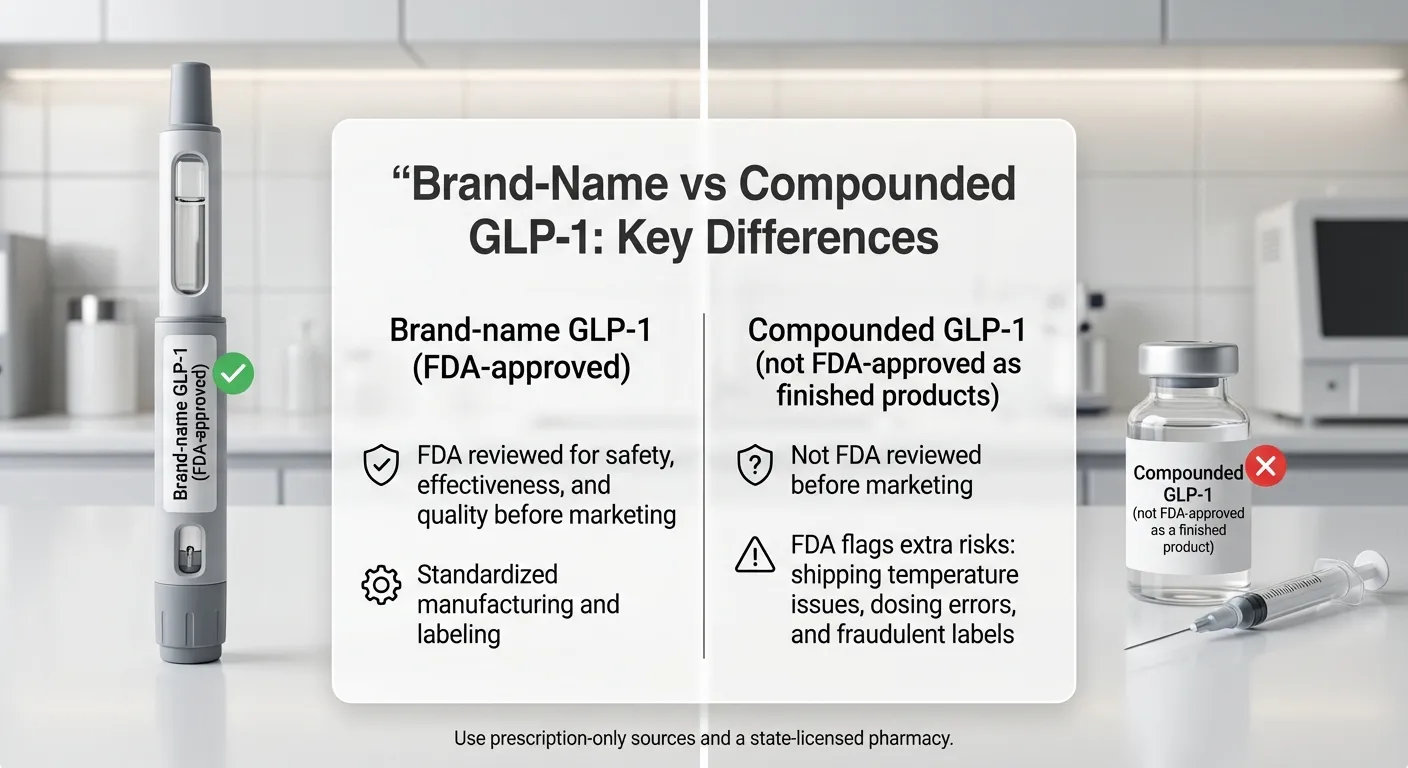
Brand-name drugs are FDA-approved; compounded products are not FDA-approved as finished products.
*Illustration only. Actual medication packaging and appearance may vary by pharmacy and formulation.*
Both providers primarily prescribe compounded GLP-1 medications. This is the most important thing to understand about any affordable telehealth GLP-1 program:
Brand-name medications (Wegovy, Ozempic, Zepbound, Mounjaro) are manufactured by Novo Nordisk or Eli Lilly, FDA-approved, and subject to rigorous quality standards. They cost $1,000+ per month without insurance.
Compounded medications are prepared by licensed U.S. compounding pharmacies and are not FDA-approved as finished products — meaning the FDA has not evaluated these specific formulations for safety, effectiveness, or quality before they reach you. Compounding pharmacies are regulated by state Boards of Pharmacy, but the oversight is different from what brand-name drugs undergo. Learn more: Is Compounded Semaglutide Safe? and Best Compounded Semaglutide providers.
Important FDA note on active ingredients: The FDA has warned that some products marketed as “compounded semaglutide” may contain salt forms (such as semaglutide sodium or semaglutide acetate) that are different active ingredients than those used in FDA-approved products. If you receive compounded semaglutide, your label should list “semaglutide” as the active ingredient — not a salt variant. Ask your provider to confirm which form their pharmacy compounds.
This tradeoff is what makes $179–$399/month pricing possible instead of $1,000+. Most patients accept it, and large numbers of patients are currently using compounded GLP-1s through licensed telehealth programs. But you should go in understanding exactly what you're getting.
Why this isn't as scary as it sounds: Compounding pharmacies have been preparing customized medications in the United States for decades — it's not a new or unregulated practice. The growth in compounded GLP-1s specifically is driven by the massive gap between demand and what insurance will cover. When a medication costs $1,000+ per month at full retail and your insurance won't help, a compounded version at $179–$399 from a licensed pharmacy with a licensed prescriber is a reasonable medical decision for many people. The key is choosing a provider that uses reputable, identifiable pharmacies (which is one reason we lean toward MEDVi — they name theirs publicly).
Is Remedy Meds Legitimate?
This is one of the most-searched questions about Remedy Meds, and it deserves a direct, fact-based answer.
Yes, Remedy Meds is a legitimate telehealth company. They operate in all 50 states plus DC, employ licensed healthcare providers who write real prescriptions, use licensed U.S. compounding pharmacies, and have served a large patient base. They have a 4.6-star rating on Trustpilot with over 10,000 reviews and are listed on ConsumerAffairs with detailed customer feedback — both positive and critical.
The FDA warning letter: what actually happened
On September 9, 2025, the FDA issued a warning letter to Remedy Meds regarding the marketing language on their website. The specific concern was about misbranding — claims that their compounded products were equivalent to FDA-approved drugs, which the FDA considered false or misleading because compounded drugs are not FDA-approved and shouldn't be equated with approved products.
Here's the important context: Remedy Meds was not singled out. On that same day, multiple companies received similar warning letters — including Hims & Hers — as part of a broader FDA enforcement action targeting misleading direct-to-consumer advertising of compounded GLP-1 medications. See our MEDVi vs Hers comparison for more on that topic.
What the warning letter does NOT mean
- It does not mean Remedy Meds' medications are unsafe or ineffective
- It does not mean their compounding pharmacies are unlicensed
- It is not a product recall
What it DOES mean
It means the FDA wants clear communication that compounded drugs are different from FDA-approved products — in terms of oversight, testing, and quality assurance. The FDA also cautions that some compounded products may contain salt forms of semaglutide that are chemically different from the active ingredient in approved drugs. This is a marketing compliance and ingredient-identity issue, not a patient safety emergency — but it underscores the importance of verifying exactly what's in your medication.
Your takeaway: The warning letter is a data point, not a disqualifier. The bigger question is whether you're comfortable with the concept of compounded medications generally — and that question applies to every affordable GLP-1 provider, including MEDVi.
Is MEDVi Legitimate?
Yes. MEDVi is a legitimate, LegitScript-certified telehealth platform. They partner with licensed providers through the OpenLoop Health network and use licensed U.S. compounding pharmacies (Belmar Pharma Solutions and Beluga Health are publicly identified partners). They have a 4.4-star Trustpilot rating with over 9,700 reviews.
A few things to understand about MEDVi's structure
MEDVi's terms of service state that the company itself does not provide healthcare services directly — it's a platform that connects you with independent, licensed healthcare providers. This is a standard telehealth model (used by Ro, Hims, and others), but it means your medical relationship is technically with the prescribing provider, not with MEDVi.
State availability
MEDVi services are available in select states only, and they do not publish a public list of which states are covered. You'll find out whether your state is eligible during the intake quiz. This is an area where Remedy Meds has a transparency advantage — they clearly state coverage in all 50 states plus DC. If state availability is a concern, we recommend simply starting MEDVi's free eligibility quiz to find out immediately.
Refund and cancellation
MEDVi's refund policy is clear but strict: you can receive a refund only if your medication has not yet been ordered for that billing cycle, or if a provider determines you're ineligible after consultation. Once medication is ordered, the payment is non-refundable. To cancel and avoid future charges, you need to do so at least 72 hours before your next billing date.
Are Compounded GLP-1s FDA-Approved?
No. Let's be precise about what that means.
The brand-name medications semaglutide and tirzepatide are FDA-approved when manufactured by Novo Nordisk (Wegovy, Ozempic) and Eli Lilly (Zepbound, Mounjaro) respectively. Those specific products have gone through rigorous FDA review.
The compounded versions prescribed by MEDVi, Remedy Meds, and virtually every other affordable telehealth GLP-1 provider have not gone through that same FDA review. The FDA states: “compounded drugs are not FDA approved. This means the agency does not review compounded drugs for safety, effectiveness or quality before they are marketed.”
Compounded medications are legal and regulated. Compounding pharmacies are licensed by state Boards of Pharmacy and must follow specific standards. The FDA's position is that compounded drugs should be used “only when a patient's medical needs cannot be met by an FDA-approved drug.”
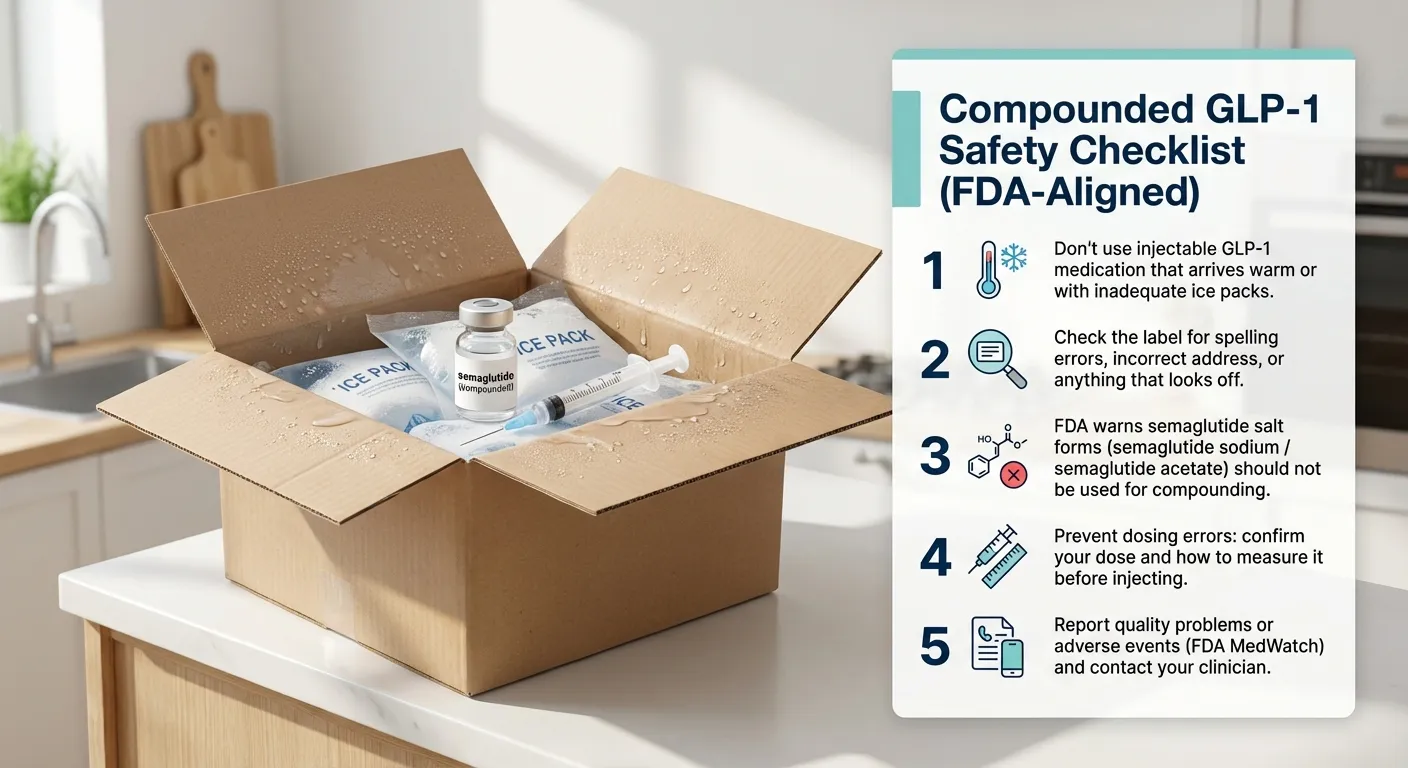
Key FDA warnings about compounded GLP-1 medications.
What the FDA specifically warns about with compounded GLP-1s
The FDA has issued detailed public guidance about the risks of compounded GLP-1 medications. These aren't theoretical — they're based on actual adverse event reports:
Temperature and shipping problems
The FDA has received complaints that compounded GLP-1 drugs “have arrived warm or with inadequate ice packs.” The agency recommends patients not use any injectable GLP-1 drug that arrives warm, as this can affect quality. Both MEDVi and Remedy Meds ship with cold packs, but outside temperatures and shipping delays can compromise the cold chain. Always check your package when it arrives.
Dosing errors
The FDA has received reports of adverse events — some requiring hospitalization — linked to overdoses from dosing errors with compounded semaglutide injections. Errors have resulted from patients measuring incorrect doses and health care providers miscalculating dosing. The agency encourages providers and compounders to supply the appropriate syringe size and counsel patients on proper measurement.
Fraudulent labels
The FDA is aware of fraudulent compounded semaglutide and tirzepatide products where “the compounding pharmacies identified on the labels of the products do not exist” or “did not compound these products.” This is rare, but it's why we recommend verifying your pharmacy independently.
Salt form concerns
The FDA has warned that some products marketed as compounded semaglutide may contain salt forms (semaglutide sodium, semaglutide acetate) that are different active ingredients than those in FDA-approved drugs. Your label should list “semaglutide” — not a salt variant.
The FDA's general position: The agency states compounded drugs should be used “only when a patient's medical needs cannot be met by an FDA-approved drug.” In practice, for most people without insurance coverage, the $1,000+/month price of brand-name GLP-1s effectively means their need can't be met affordably by the approved version. This is the reality that drives the entire compounded GLP-1 industry.
How to protect yourself
You don't need to avoid compounded GLP-1s entirely — but you should take basic precautions to protect yourself. Taking five minutes of due diligence when your medication arrives can prevent the rare-but-real problems the FDA has flagged:
- Use a provider with named, verifiable pharmacy partners. MEDVi has an edge here — Belmar Pharma Solutions and Beluga Health are publicly identified and independently verifiable. Remedy Meds uses licensed pharmacies but doesn't publish names upfront.
- Inspect every shipment. Open the box and check: Are the cold packs still cold? Is the vial sealed, intact, and free of particles? Is there a clear label with the pharmacy name, medication name, dose, and your name?
- Verify the pharmacy on your label. Go to your state's Board of Pharmacy website and search for the pharmacy name. A legitimate pharmacy will show up as currently licensed.
- Confirm the active ingredient listed. Your label should say “semaglutide” or “tirzepatide” — not semaglutide sodium, semaglutide acetate, or any other salt form.
- Report anything suspicious. Contact your provider immediately, and if warranted, file a report with the FDA's MedWatch program.
- Keep your prescribing provider informed about any side effects — even mild ones. Early communication helps your provider adjust your dose appropriately.
What Pharmacy Does Each Provider Use? (And How to Verify Yours)
MEDVi's pharmacy partners
MEDVi has publicly identified pharmacy partners: Belmar Pharma Solutions and Beluga Health, both licensed U.S. compounding pharmacies. Providers operate through the OpenLoop Health clinician network. This level of transparency is helpful — you can independently verify that these pharmacies are licensed and operating.
Remedy Meds' pharmacy partners
Remedy Meds uses licensed U.S. compounding pharmacies but does not publicly name its specific pharmacy partners. This is common in telehealth, but it means you need to do verification work yourself once your medication arrives.
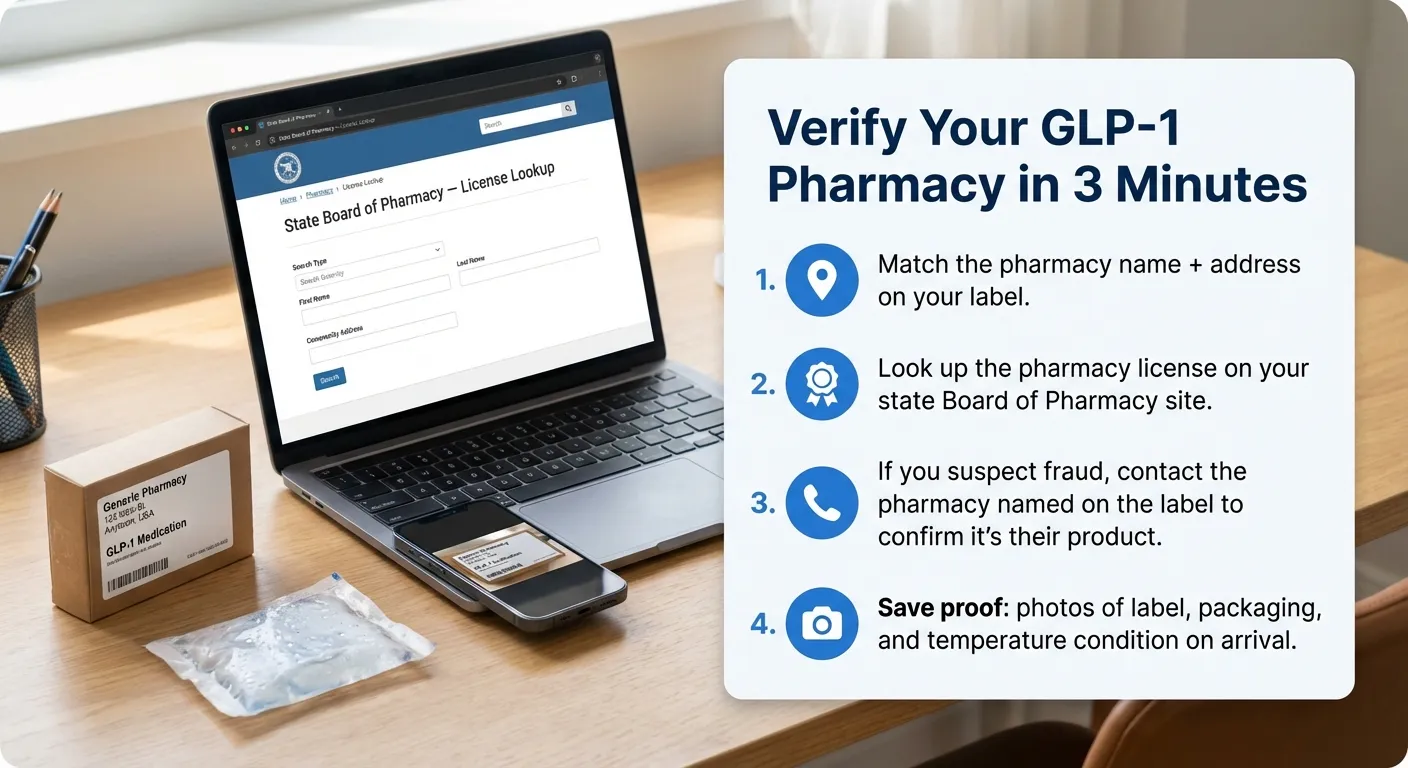
Use this checklist to verify any compounding pharmacy.
Pharmacy verification checklist (use this regardless of provider)
When your medication arrives, check these five things:
- Confirm the pharmacy name and address on the label — search for it online. Is it a real, licensed pharmacy?
- Verify the pharmacy's state license through your state's Board of Pharmacy website
- Check for 503A or 503B registration if applicable (503B pharmacies are FDA-registered outsourcing facilities with additional oversight)
- Inspect the packaging: Shipped with cold packs? Vial sealed and intact? Liquid clear?
- Compare the label to your prescription: Does the medication name, dose, concentration, and form match?
If anything looks off, contact your provider before using the medication. This is basic diligence that the FDA itself recommends.
How Do Cancellations and Refunds Actually Work?
Cancellation and refund policies are where the fine print matters most.
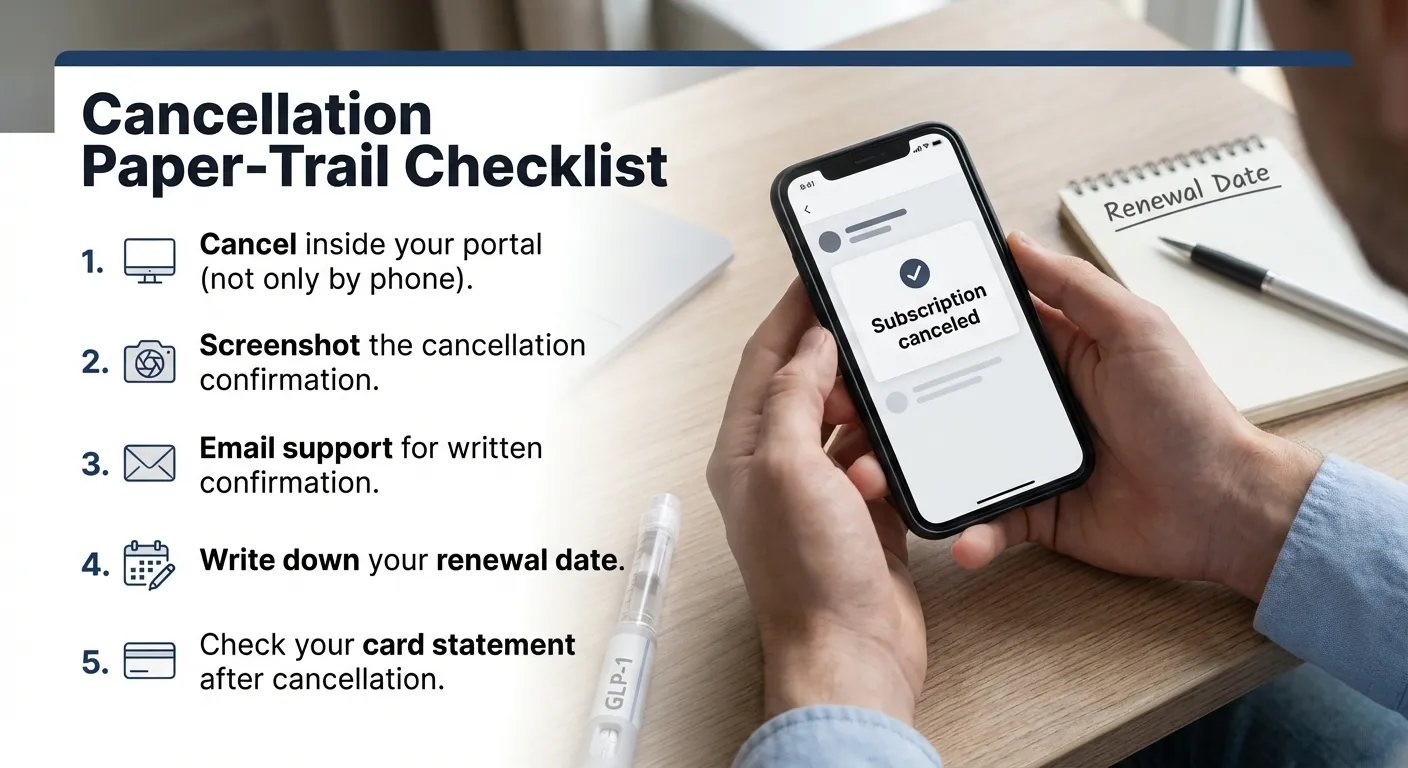
Side-by-side cancellation policy comparison.
Side-by-side policy comparison
| Policy | MEDVi | Remedy Meds |
|---|---|---|
| Cancel window | 72 hours before billing | 48 hours before renewal |
| Refund after payment | Only before med is ordered | Non-refundable once paid |
| Ineligibility refund | Yes | Yes |
| Weight loss guarantee | 5 months, minus 25% fee | ≥10% weight loss in 4 months (verify conditions before enrolling) |
MEDVi: how to cancel
Contact MEDVi at least 72 hours before your next billing date. Refunds are only available if your medication has not yet been ordered for that cycle. Screenshot your cancellation confirmation — always.
Remedy Meds: how to cancel
Cancel through the portal at least 48 hours before your renewal date. Follow up with an email to support for documentation. Once a payment processes, it's non-refundable. Some ConsumerAffairs reviewers have reported confusion about whether their cancellation was processed — having a paper trail prevents that.
Do MEDVi and Remedy Meds Accept Insurance, HSA, or FSA?
Insurance: Neither provider accepts insurance directly. Both are cash-pay. MEDVi notes that if you're prescribed brand-name Ozempic, you may be able to submit a claim to your insurance for reimbursement, but this depends on your plan. For cost-saving strategies, see How to Get GLP-1 Without Insurance.
HSA/FSA: Both providers accept Health Savings Account and Flexible Spending Account payments. MEDVi advertises “HSA/FSA approved” on their site. Remedy Meds accepts HSA and FSA cards at checkout.
Important distinction: “HSA/FSA eligible” means the provider accepts these payment methods. It doesn't guarantee your specific plan administrator will approve GLP-1 weight management as a qualified expense. Most do — but check with your plan before assuming.
Are MEDVi and Remedy Meds the Same Company?
Not exactly, but there is a connection worth knowing about.
MEDVi and Remedy Meds are separate brands with different websites, pricing structures, and operational models. However, in October 2025, Health-E Commerce (the parent company behind FSA Store and HSA Store) announced a telehealth expansion that included both MEDVi and Remedy Meds as weight loss options. This suggests a distribution or marketing partnership.
They have different pricing, different provider networks, different policies, and different program structures. But the fact that they appear on the same lists and marketplaces together explains why so many people end up comparing them head-to-head.
What Do Real Customers Say? (Review Patterns)
Rather than cherry-picking the best or worst review, we analyzed patterns across thousands of reviews on Trustpilot and ConsumerAffairs to identify what keeps coming up.
MEDVi review patterns (Trustpilot: 4.4/5, 9,700+ reviews)
What people consistently praise: Fast, frictionless intake process. Responsive support via messaging and text. Real, measurable weight loss results — many reviewers report meaningful weight loss, though experiences vary widely by dose, adherence, and individual factors.
Multiple reviewers praised the provider interaction specifically, noting that video appointments felt thorough and that clinicians took time to answer all questions before prescribing — a sign that MEDVi's network isn't just rubber-stamping prescriptions. Multiple reviewers also mentioned the support team's responsiveness via text messages for logistics questions (shipping updates, billing questions, refill timing). Read more: MEDVi Tirzepatide Reviews.
What people consistently criticize: Delivery speed is MEDVi's most common complaint — several reviewers mention 7–14 day initial wait times. The price jump from month one to refills catches some users off guard. ConsumerAffairs reviews skew more negative than Trustpilot, with some reporting confusion about refund eligibility.
Remedy Meds review patterns (Trustpilot: 4.6/5, 10,000+ reviews)
What people consistently praise: Flat pricing with no surprises. Professional provider interactions via video calls. Active community Facebook group for peer support. Medication arrives consistently before previous supply runs out.
Forbes Health's tester noted a guided, step-by-step onboarding experience with labs included at no additional cost.
What people consistently criticize: The cancellation process has generated complaints — some users on ConsumerAffairs report being charged after believing they'd canceled. The 28-day billing cycle catches people off guard.
Review methodology: We sourced reviews from Trustpilot (including “invited” reviews where shown), ConsumerAffairs, and Forbes Health. All review data captured as of February 2026. Reviews are subjective and represent individual experiences that may differ from yours.
Who Should NOT Use GLP-1 Medications?
GLP-1 medications have helped millions of people lose significant weight, but they aren't for everyone. Both MEDVi and Remedy Meds screen for eligibility during intake, which is a good sign.
Talk to a healthcare provider before starting any GLP-1 program if you have:
- A personal or family history of medullary thyroid carcinoma (MTC) or Multiple Endocrine Neoplasia syndrome type 2 (MEN 2) — GLP-1 medications carry a boxed warning about thyroid C-cell tumor risk based on animal studies (per FDA-approved prescribing information for Wegovy and Zepbound)
- A history of pancreatitis
- Severe gastrointestinal conditions like gastroparesis
- An eating disorder history
- Pregnancy, planned pregnancy, or breastfeeding — GLP-1 medications should be discontinued well before planned pregnancy
General eligibility guidelines: GLP-1 medications are typically prescribed for adults with a BMI of 30 or higher, or a BMI of 27 or higher with at least one weight-related health condition such as type 2 diabetes or high blood pressure.
Common side effects to expect (from Wegovy adult clinical trials): Nausea, mild gastrointestinal discomfort, and reduced appetite are most frequently reported, particularly in the first few weeks. Most patients report these subside significantly after the initial adjustment period. Staying hydrated and eating fiber-rich foods helps considerably. For detailed guidance, visit our GLP-1 side effect management guide.
The bottom line: GLP-1 therapy is a medical treatment, not a supplement. Both MEDVi and Remedy Meds screen for eligibility, but your primary care doctor remains your best resource for understanding whether this is right for you.
Alternatives Worth Knowing About
If neither MEDVi nor Remedy Meds feels right, you're not out of options. Here are other providers people in this space compare — we recommend verifying current pricing directly before enrolling, as this market changes fast. For a full comparison, see our best GLP-1 online programs guide.
- Ro Body Program — Compounded semaglutide with app-based tracking and insurance navigation support. See our MEDVi vs Ro comparison.
- Henry Meds — Compounded GLP-1s including oral options, with a pay-only-if-prescribed model.
- Hims & Hers — Large telehealth brand with GLP-1 programs. Received its own FDA warning letter on September 9, 2025 — same enforcement action as Remedy Meds. See our MEDVi vs Hers comparison.
- Brand-name Wegovy or Zepbound through your doctor — If your insurance covers these, you get FDA-approved medications with full quality assurance. Eli Lilly's LillyDirect program offers Zepbound vials with self-pay pricing.
Final Verdict: Make Your Decision and Move Forward
You've read the pricing breakdowns, the policy fine print, the FDA context, and the real customer reviews. You now know more about these two providers than 99% of people who sign up for either one. That knowledge is supposed to do one thing: help you stop researching and start acting.
Choose MEDVi if you want:
- The lowest cost to get started ($179 semaglutide / $349 tirzepatide injections / $279 tablets)
- Oral dissolvable tablet options (if you'd rather skip injections)
- A named, verifiable pharmacy partner (Belmar Pharma Solutions)
- Month-to-month flexibility with no membership fee
- Competitive six-month total pricing for semaglutide
- LegitScript certification
MEDVi is our top recommendation because it removes the most common barriers that keep people stuck in the research phase: the entry price is the lowest available, the all-in model means no hidden fees, and the oral dissolvable tablet option opens the door for people who won't do injections. Is it perfect? No — delivery can be slow on the first order, and month-two pricing is higher. But for getting started with the least friction and the most flexibility, it's the strongest choice for most people.
Thousands of MEDVi patients have already made the same decision you're making right now — and the 4.4-star Trustpilot average across 9,700+ reviews shows that the majority are glad they did. The people who get the best results are the ones who stop comparing and start their program.
It takes about 5 minutes. No commitment until you decide to proceed.
Choose Remedy Meds if you want:
- Flat pricing at every dose ($299 sema / $399 tirz — does not increase with dosage)
- Unlimited video calls with your provider
- Coverage in all 50 states + DC
- 48-hour cancellation window (shorter than MEDVi's 72 hours — set a reminder)
- An active community Facebook group for peer support
Remedy Meds is the right call if predictable monthly costs at every dose level matter more to you than a lower entry price — especially for tirzepatide patients who expect to titrate to higher doses.
The real risk isn't choosing the wrong provider
Both MEDVi and Remedy Meds are legitimate programs with licensed physicians, licensed pharmacies, and thousands of patients who have lost real weight. The difference between them is about pricing structure, communication style, and medication format — not about whether they work. The bigger risk? Spending another month researching, comparing, overthinking, and putting off a decision that could change how you feel in your body. Every week in the comparison phase is a week you're not getting the support, the medication, and the results.
Frequently Asked Questions: MEDVi vs Remedy Meds
Which is better: MEDVi or Remedy Meds?
For most people, MEDVi is the better starting point due to its lower first-month cost, oral tablet option, and competitive six-month total pricing. Remedy Meds is better if you prioritize flat pricing at every dose level and want unlimited video consultations.
Is MEDVi cheaper than Remedy Meds long-term?
For semaglutide, yes — MEDVi's six-month total ($1,674) is $120 less than Remedy Meds ($1,794). For tirzepatide injections, it depends on dose. At $399/mo refills, MEDVi is about $50 cheaper ($2,344 vs $2,394). At $499/mo, Remedy wins by about $450 over six months. Also factor in Remedy's 28-day billing cycle, which adds roughly one extra payment per year.
Does either one have hidden fees?
Neither provider advertises a separate membership fee beyond the program price. MEDVi includes shipping on standard plans. Remedy's Help Center describes "no hidden fees," but Remedy's Terms of Service state that shipping, handling, and taxes may be added — always confirm your total at checkout before committing.
Is Remedy Meds legit?
Yes. Remedy Meds operates in all 50 states plus DC with licensed providers and licensed U.S. pharmacies. They have 10,000+ Trustpilot reviews at a 4.6-star average. They received an FDA warning letter in September 2025 about marketing language — not product safety — as part of an industry-wide enforcement action.
Did the FDA warn Remedy Meds?
Yes. On September 9, 2025, the FDA issued a warning letter about marketing claims the FDA considered false or misleading — specifically about equating compounded products with FDA-approved drugs. Multiple companies including Hims & Hers received similar letters the same day.
Is Remedy Meds FDA-approved?
The service isn't "FDA-approved" — that's not how telehealth works. The compounded medications are prepared by licensed U.S. compounding pharmacies and are not FDA-approved as finished products. The FDA warns that some compounded versions may contain different salt forms than those in FDA-approved drugs. This distinction applies to every affordable telehealth GLP-1 provider.
Is MEDVi FDA-approved?
Same answer. MEDVi's compounded medications are not FDA-approved as finished products. Their brand-name Ozempic listing ($1,999/month) is FDA-approved.
What pharmacy does MEDVi use?
Belmar Pharma Solutions and Beluga Health, operating through the OpenLoop Health provider network. You can verify these independently.
What pharmacy does Remedy Meds use?
Licensed U.S. compounding pharmacies — specific names not published. Verify the pharmacy on your medication label through your state's Board of Pharmacy.
What should I do if my medication arrives warm?
Do not use it. Contact your provider immediately. GLP-1 medications are temperature-sensitive. The FDA recommends patients not use any injectable GLP-1 drug that arrives warm or with insufficient refrigeration.
What is Remedy Meds' monthly cost?
$299/month for compounded semaglutide; $399/month for compounded tirzepatide. Flat rates that don't change with dosage. Billed every 28 days.
Can I use HSA or FSA for MEDVi or Remedy Meds?
Yes, both accept HSA and FSA cards. Confirm with your plan administrator that GLP-1 weight management is a qualified expense.
How do I cancel MEDVi?
Contact MEDVi at least 72 hours before your next billing date. Refunds only available if medication hasn't been ordered for that cycle. Screenshot your confirmation.
How do I cancel Remedy Meds?
Cancel through the portal at least 48 hours before your renewal date. Follow up with an email for documentation. Non-refundable once payment processes.
Can I switch from semaglutide to tirzepatide?
Both programs allow medication switches in consultation with your provider. MEDVi mentions flexibility to switch based on response and goals. Discuss dosing transitions with your provider.
Do I need lab work?
Both providers include lab work when medically necessary. Not everyone will need labs to start, but your provider may require bloodwork based on your health history.
Are MEDVi and Remedy Meds the same company?
No. Separate brands with different pricing, providers, and policies. However, both were included in a Health-E Commerce telehealth expansion in October 2025.
Can I start at a higher dose if I've used GLP-1s before?
Possibly. Contact the provider before enrolling to discuss your dosing history. Standard protocols typically start at lower doses for safety.
How can I avoid fake compounded semaglutide?
Only order through telehealth platforms that require a physician prescription. Verify the pharmacy on your label. Check for cold-chain packaging. If the price is dramatically below $150/month, be cautious. The FDA has documented cases of fraudulent labels.
What results can I realistically expect?
Clinical trials show average weight loss of ~15% of body weight with semaglutide over 68 weeks, and ~15–21% with tirzepatide over 72 weeks (depending on dose). Individual results vary based on dosing, adherence, diet, and activity level.
How long does it take to get started?
MEDVi: Provider approval within 1-3 days; first shipment can take 7-14 days (most common complaint). Remedy Meds: Starts with questionnaire + video consultation; refills ship before you run out.
Is it safe to use compounded GLP-1s long-term?
The brand-name versions (Wegovy, Zepbound) have been studied in multi-year clinical trials and are FDA-approved. Compounded versions are prepared by licensed pharmacies but have not undergone separate FDA review as finished products. The FDA also warns that salt forms may vary in compounded products. Most providers consider them appropriate for ongoing use when properly monitored.
Does Remedy Meds bill every 28 days or monthly?
Every 28 days — approximately 13 billing cycles per year instead of 12. That's roughly one extra payment annually ($299 for semaglutide or $399 for tirzepatide).
What if I want to switch providers later?
Neither locks you into long-term contracts. Cancel following the procedures above and start fresh with the other provider. You can't "transfer" a prescription — your new provider does their own intake.
Our Methodology: How We Compared MEDVi vs Remedy Meds
What we verified
- Pricing pages on MEDVi.org and RemedyMeds.com (last verified February 17, 2026)
- Terms of service and refund policy documents from both providers
- FDA.gov for compounding safety guidance and warning letter database
- Forbes Health for third-party program testing
- Trustpilot and ConsumerAffairs for customer review patterns
- PR Newswire for corporate relationship context
What counts as “verified” vs. “provider-stated”
If we say a claim is “verified,” we confirmed it from an independent source or official document. If we attribute something with “MEDVi states” or “Remedy Meds says,” we're relying on the provider's own marketing and haven't independently confirmed it.
How often we update
We re-verify all pricing and policy claims at least monthly. Major regulatory developments are added within 72 hours.
Our affiliate relationship
We may earn a commission if you enroll through our links to MEDVi. This does not increase your cost. We recommend MEDVi because our research supports it as the best starting point for most people — not because of the commission. We also link to Remedy Meds because some readers will genuinely be better served by their program. Read our full methodology: How We Rank. For more educational content, visit our learning center.
About the WPG Research Team
The WPG Research Team compares GLP-1 telehealth providers using a primary-source verification methodology. We review official provider terms, FDA regulatory databases, and third-party review platforms. Our process is documented in our editorial standards and reviewed by our medical advisory team. We do not provide medical advice — all clinical information references FDA-approved prescribing labels and published studies.
Sources
- MEDVi.org — Official website, pricing and program details (verified Feb 2026)
- MEDVi Terms & Conditions
- MEDVi Refund Policy
- RemedyMeds.com — Official website, pricing and program details (verified Feb 2026)
- Remedy Meds Terms of Service
- Remedy Meds Help Center — Billing cycle details
- FDA.gov — FDA's Concerns About Unapproved GLP-1 Drugs Used for Weight Loss
- FDA.gov — Dosing Errors Alert for Compounded Semaglutide
- FDA.gov — Remedy Meds Warning Letter (Sept 9, 2025)
- FDA.gov — Hims & Hers Warning Letter (Sept 9, 2025)
- Forbes Health — Remedy Meds Review
- ConsumerAffairs — MEDVi Reviews
- ConsumerAffairs — Remedy Meds Reviews
- Trustpilot — MEDVi Reviews (9,700+ reviews, 4.4/5 average)
- Trustpilot — Remedy Meds Reviews (10,000+ reviews, 4.6/5 average)
- PR Newswire — Health-E Commerce Telehealth Expansion
- FDA — Wegovy (semaglutide) prescribing information
- FDA — Zepbound (tirzepatide) prescribing information
- Weight Loss Provider Guide — Is Compounded Semaglutide Safe?
- Weight Loss Provider Guide — MEDVi vs Hers Comparison
- Weight Loss Provider Guide — MEDVi vs Ro Comparison
Medical Disclaimer · Advertising Disclosure · Editorial Standards