GLP1 Protein Calculator: Daily Protein Target + Per-Meal Plan
This free GLP1 protein calculator helps you find your optimal daily protein target while taking Ozempic, Wegovy, Mounjaro, Zepbound, or any other GLP-1 medication. Get your personalized recommendation plus a per-meal breakdown you can actually follow.
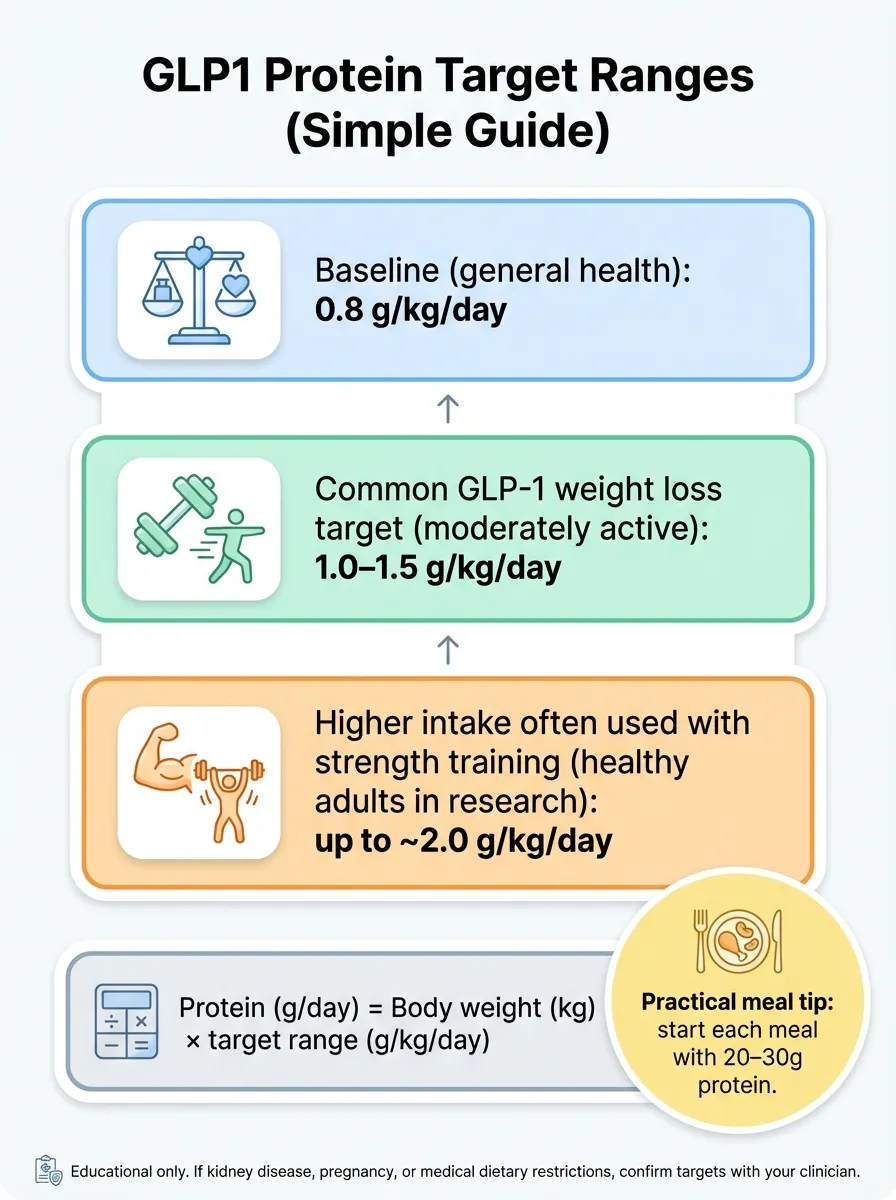
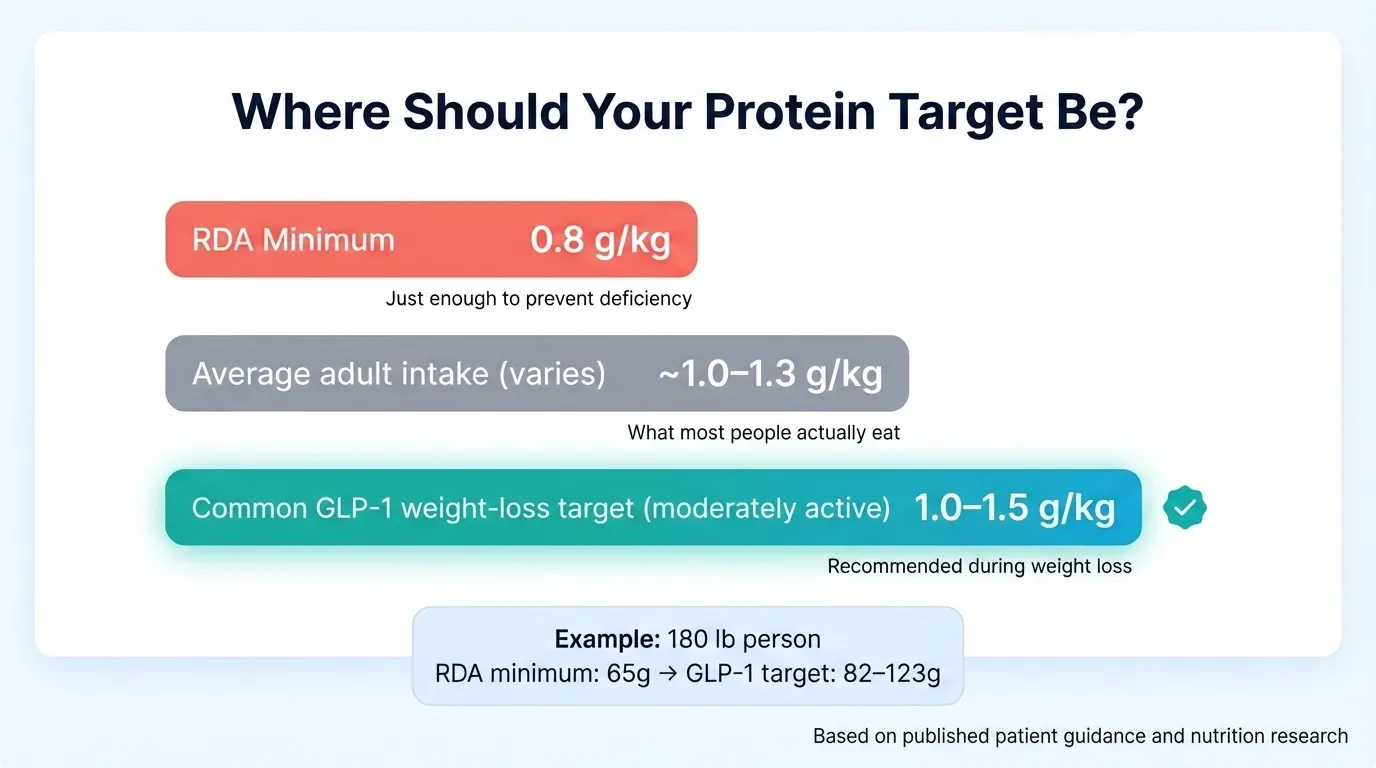
Many clinicians recommend 1.0–1.5 g/kg of body weight per day for people on GLP-1 medications to preserve lean muscle mass during weight loss—higher than the standard RDA (0.8 g/kg). Why? Rapid weight loss can lead to muscle loss if protein intake is inadequate.
Valid range: 80-600 lbs (36-272 kg)
2+ sessions per week
Enter your weight above to enable the calculator
Your Personalized Plan Awaits
Enter your details above and click "Calculate My Protein Target" to get your complete personalized plan.
Why higher protein? Clinicians recommend 1.0–1.5 g/kg/day on GLP-1s to preserve muscle during weight loss—higher than the standard RDA (0.8 g/kg).
The problem: Only 43% of GLP-1 users hit ≥1.2 g/kg/day. Appetite suppression makes it easy to undereat protein without realizing it.
Quick Reference: Protein Targets by Weight
Don't want to use the calculator? Here's a quick lookup table:
| Weight | 1.2 g/kg | 1.4 g/kg | 1.6 g/kg |
|---|---|---|---|
| 150 lbs (68 kg) | 80g | 95g | 110g |
| 175 lbs (79 kg) | 95g | 110g | 125g |
| 200 lbs (91 kg) | 110g | 125g | 145g |
| 225 lbs (102 kg) | 120g | 145g | 165g |
| 250 lbs (113 kg) | 135g | 160g | 180g |
How We Built This Calculator
Methodology: Our protein recommendations are based on published clinical guidelines for protein intake during intentional weight loss, including research on GLP-1 medication users specifically.
Last updated: January 2026
Medical note: If you have chronic kidney disease, are pregnant, or have other conditions affecting protein metabolism, consult your healthcare provider before significantly increasing protein intake.
How to Actually Hit Your Protein Target on GLP-1s
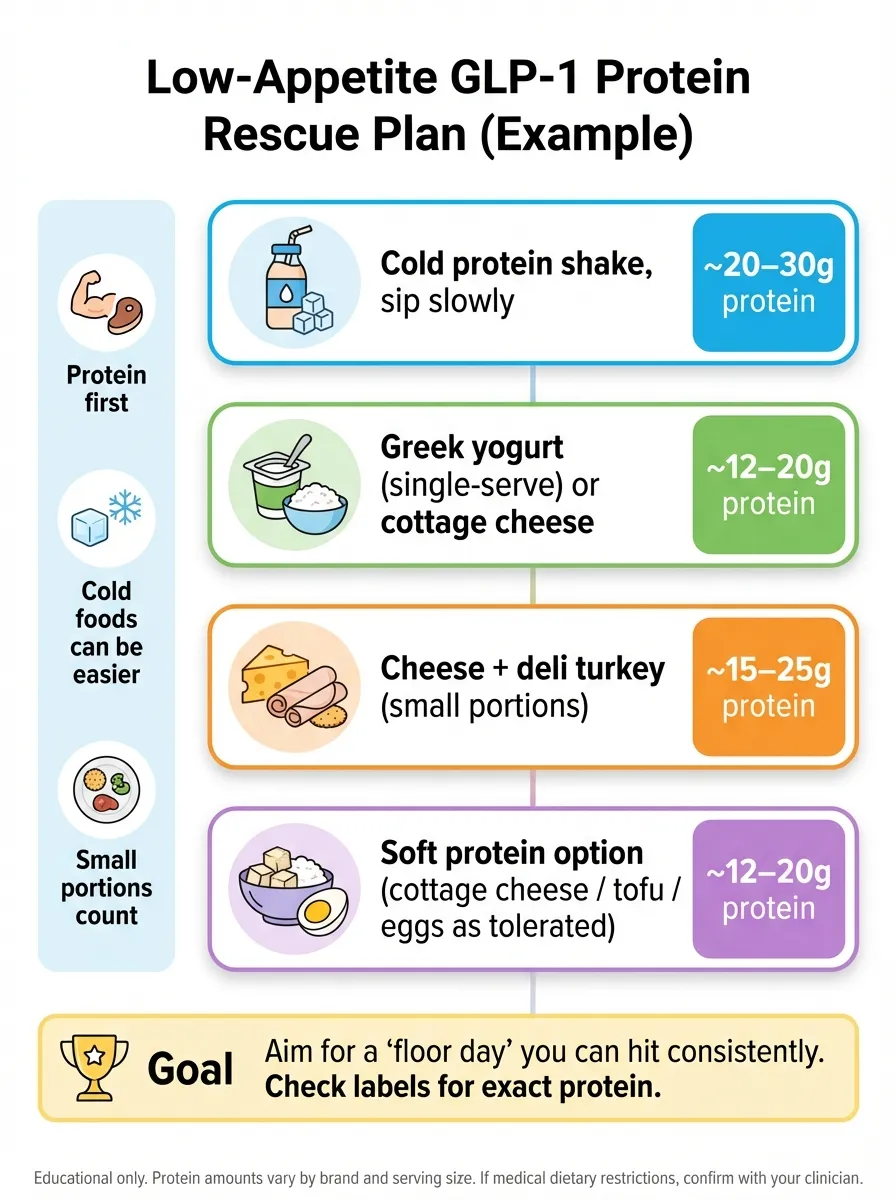
Knowing your target is one thing. Actually eating that much protein when your appetite is suppressed is another challenge entirely. Here's what works:
Protein first, every meal
Eat your protein portion before touching carbs or vegetables. When you're full quickly, at least you got the protein.
Front-load your day
Appetite is often higher in the morning. Get 30-40% of your daily protein at breakfast when you can tolerate it.
Keep liquid protein as backup
Protein shakes, milk, and drinkable yogurts go down easier than solid food when nausea hits.
Pick 3-4 anchor foods
Find a few high-protein foods you can eat reliably and rotate them. Greek yogurt, eggs, chicken, and cottage cheese are common choices.
| Time | What to Eat | Protein |
|---|---|---|
| Morning | Chilled protein shake or Greek yogurt | 20-25g |
| Midday | Cold deli turkey + cheese stick | 20-25g |
| Afternoon | Cottage cheese or another protein shake | 15-20g |
| Evening | Cold chicken or light fish + yogurt | 20-25g |
Total: ~75-95g. It's okay to fall short on bad days—aim to return to your full target when feeling better.
Why Protein Matters More on GLP-1 Medications
When you lose weight—through any method—you lose both fat and muscle. This is unavoidable. However, the ratio of fat-to-muscle loss depends heavily on two factors: protein intake and resistance training.
• GLP-1 medications suppress appetite significantly
• When appetite is low, protein often gets skipped first
• In some analyses, 25-40% of weight lost is lean mass
• Muscle loss accelerates if protein is inadequate
Metabolism: Muscle tissue burns more calories at rest than fat
Strength: Functional daily activities require muscle
Long-term success: Maintaining weight loss is easier with preserved muscle mass
The goal isn't just to lose weight—it's to lose fat while preserving as much muscle as possible. Adequate protein (plus resistance training) is how you accomplish that.
GLP-1 Protein Target Reference Chart
Full reference table from 150-300 lbs:
| Weight (lbs) | Weight (kg) | 1.0 g/kg | 1.2 g/kg | 1.4 g/kg | 1.6 g/kg |
|---|---|---|---|---|---|
| 150 | 68 | 70g | 80g | 95g | 110g |
| 175 | 79 | 80g | 95g | 110g | 125g |
| 200 | 91 | 90g | 110g | 125g | 145g |
| 225 | 102 | 100g | 120g | 145g | 165g |
| 250 | 113 | 115g | 135g | 160g | 180g |
| 275 | 125 | 125g | 150g | 175g | 200g |
| 300 | 136 | 135g | 165g | 190g | 220g |
Highlighted column (1.4 g/kg) represents the midpoint of most clinical recommendations for weight loss.
High-Protein Foods That Work on GLP-1s
Not all protein sources are equal when you're dealing with reduced appetite and potential nausea. Here are the most practical options:
| Food | Serving | Protein | Calories | Why It Works |
|---|---|---|---|---|
| Greek Yogurt (plain, 0% fat) | 1 cup (245g) | 23g | 130 | Cold, smooth, easy on GLP-1 nausea. High protein density. |
| Cottage Cheese (low-fat) | 1 cup (226g) | 28g | 163 | Soft texture, versatile. Can eat cold. Casein protein digests slowly. |
| Chicken Breast (grilled) | 4 oz (113g) | 31g | 165 | Lean, high protein-to-calorie ratio. Meal prep staple. |
| Eggs (whole, large) | 2 eggs | 12g | 140 | Versatile, easy to digest. Good for breakfast protein boost. |
| Egg Whites | 1 cup | 26g | 126 | Ultra-lean protein. Add to scrambles or smoothies. |
| Turkey Deli Meat | 4 oz (113g) | 22g | 120 | Cold, pre-sliced, convenient. Great for nausea days. |
| Canned Tuna (in water) | 4 oz (113g) | 22g | 90 | Inexpensive, shelf-stable. High protein per calorie. |
| Salmon (baked) | 4 oz (113g) | 25g | 206 | Omega-3s plus protein. Satisfying for smaller portions. |
| Shrimp (cooked) | 4 oz (113g) | 24g | 112 | Low calorie, fast cooking. Good cold in salads. |
| Lean Ground Beef (93%) | 4 oz (113g) | 24g | 170 | Versatile for many dishes. Good iron source. |
| Tofu (extra firm) | 1/2 block (7 oz) | 21g | 183 | Plant-based option. Absorbs flavors well. |
| Protein Powder (whey) | 1 scoop (30g) | 25g | 120 | Convenient, mixes into shakes or foods. Fast absorption. |
Protein shakes are a practical tool—not a replacement for whole foods, but a reliable backup. Look for:
- At least 20-30g protein per serving
- Low sugar (under 5g ideally)
- Whey, casein, or plant-based (pea/rice blend) as main protein
- Brands with third-party testing (NSF, Informed Sport)
Many people find that cold, blended shakes are easier to consume than warm or thick shakes when experiencing GLP-1 side effects.
Protein Per Meal — The Distribution Strategy
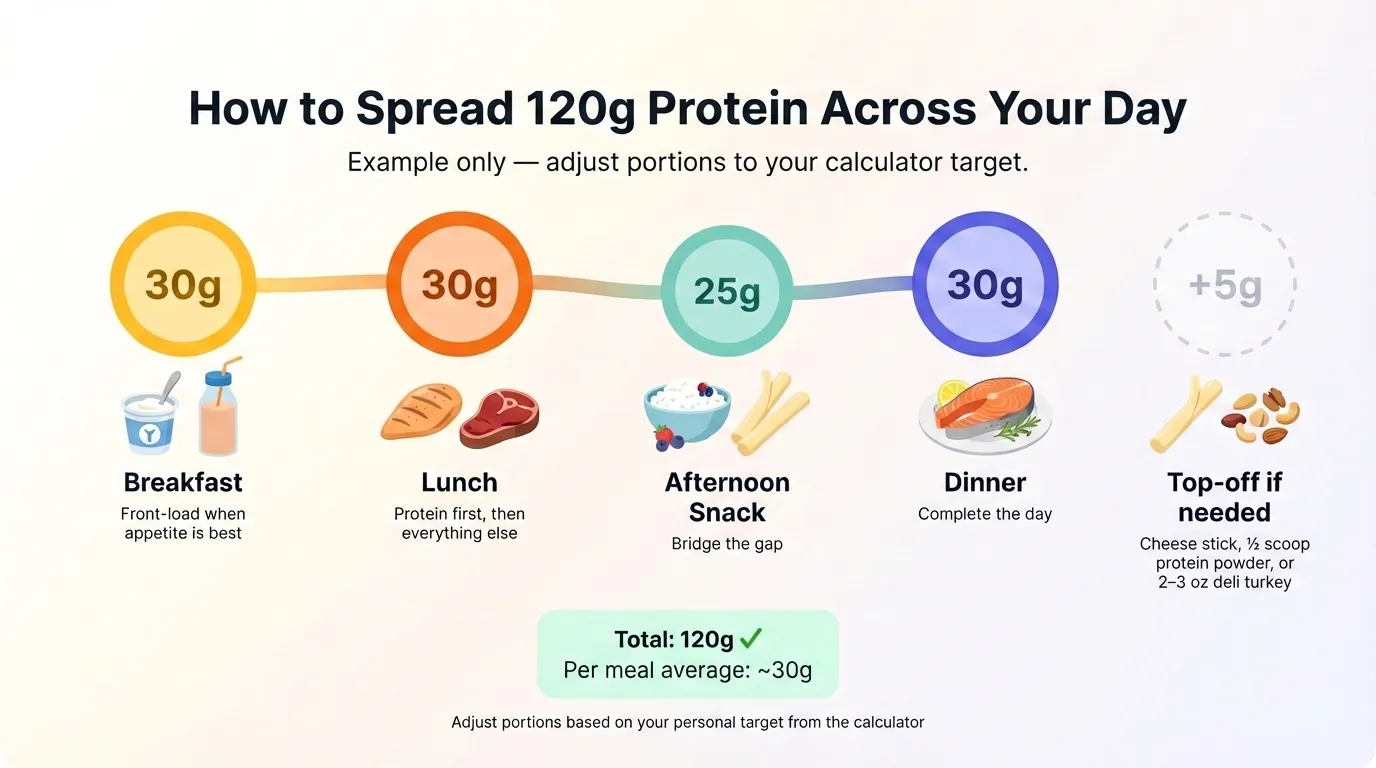
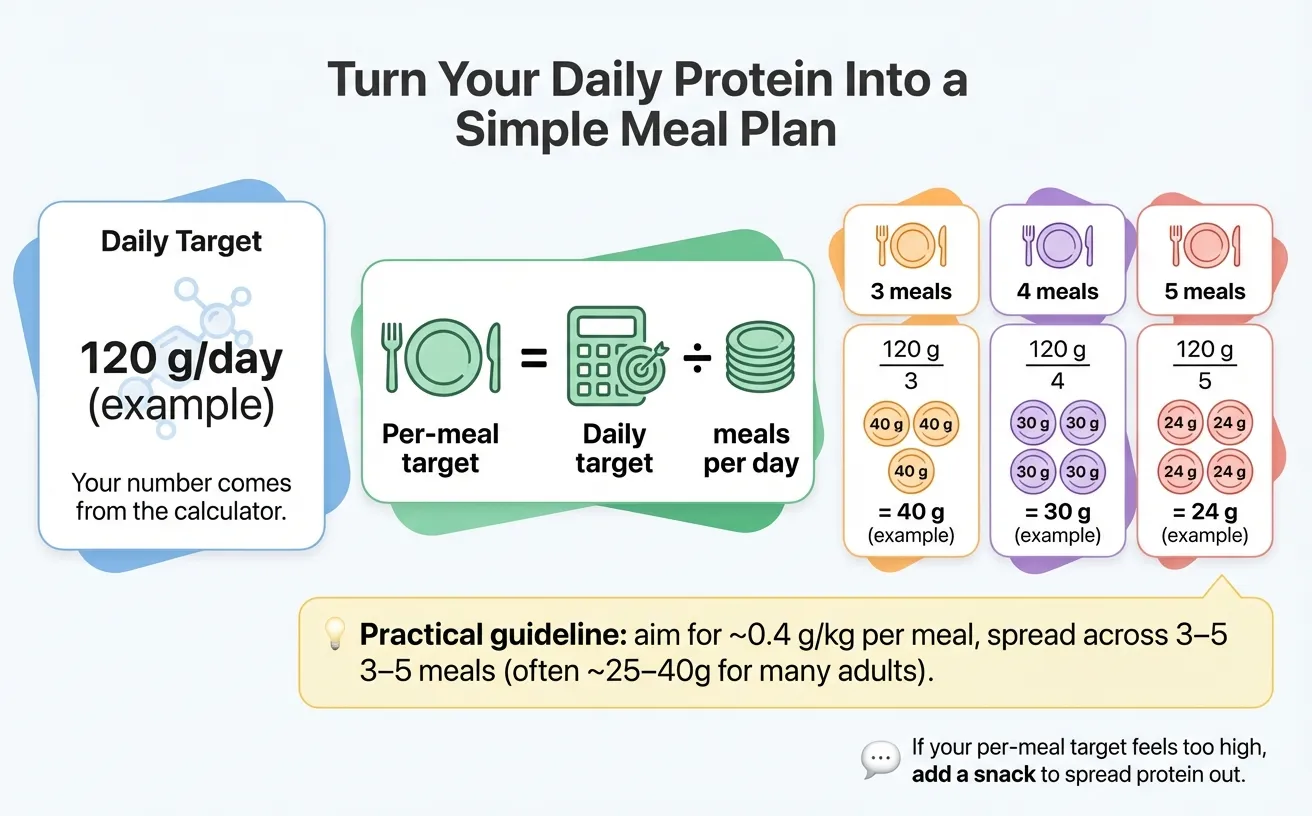
Visual example uses rounded values for simplicity
Research suggests the body can only use ~25-40g of protein per meal for muscle protein synthesis. Spreading intake across meals optimizes utilization.
| Meals/Day | 100g Target | 120g Target | 140g Target |
|---|---|---|---|
| 3 meals | ~33g each | ~40g each | ~47g each |
| 4 meals | ~25g each | ~30g each | ~35g each |
| 5 meals | ~20g each | ~24g each | ~28g each |
Breakfast
Greek yogurt (1 cup) + 2 eggs scrambled
Lunch
Grilled chicken breast (4 oz) + salad
Afternoon Snack
Cottage cheese (1 cup)
Dinner
Salmon (4 oz) + vegetables
Daily Total
119gShould You Use Current Weight or Goal Weight?
Use your current weight. Here's why:
- Your body needs protein to support your current lean mass, not your future lean mass
- Using goal weight often results in inadequate protein during active weight loss
- Muscle preservation happens now, during weight loss—not after
Recalculate every 10-15 pounds lost. As your weight decreases, your protein needs (in absolute grams) will decrease slightly. This keeps your intake appropriate without the risk of undereating protein during the critical weight loss phase.
Can You Eat Too Much Protein?
For most healthy adults, intakes up to 2.0-2.2 g/kg have not been shown to cause harm in clinical research. Your kidneys are designed to handle protein metabolism.
However, there are some situations where protein intake should be discussed with a healthcare provider:
| Situation | Consideration |
|---|---|
| Chronic kidney disease (CKD) | May require protein restriction depending on stage. Consult nephrologist. |
| Pregnancy | Protein needs increase, but should be guided by OB-GYN. GLP-1s typically discontinued during pregnancy. |
| Gout history | Very high protein may affect uric acid levels in susceptible individuals. |
For the vast majority of GLP-1 users without these conditions, protein intake in the 1.0-1.6 g/kg range is well within safe limits.
Special Situations
Frequently Asked Questions
The Bottom Line
If you're on a GLP-1 medication for weight loss, protein intake is one of the most important—and most overlooked—factors for long-term success.
Calculate your target: Use this calculator to find your personalized protein goal based on your weight and activity level.
Distribute across meals: Aim for 25-40g at each meal, prioritizing protein first when appetite is low.
Recalculate as you lose: Update your target every 10-15 lbs to keep protein intake appropriate for your changing body.
After you set your target
Choose the next step that fits your treatment plan.
Your protein goal is one part of the picture. If you are comparing treatment options, use the route that matches what you still need to decide.
Review one cash-pay compounded program
SponsoredMEDVi offers clinician-led compounded semaglutide and tirzepatide care; compounded products are not FDA-approved finished drugs.
See the full cost comparison
Compare 90-day prices, refill changes, fees, and FDA-approved versus compounded routes.
Check your starting path
Use the eligibility route when you want to understand whether a clinician may consider treatment.
Related Resources
References
- Almandoz JP, et al. "Investigating nutrient intake during use of glucagon-like peptide-1 receptor agonist: a cross-sectional study." Frontiers in Nutrition. 2023. Full text
- Phillips SM, et al. "Protein requirements beyond the RDA: implications for optimizing health." Applied Physiology, Nutrition, and Metabolism. 2016. PubMed
- Wharton S, et al. "Managing the gastrointestinal side effects of GLP-1 receptor agonists." Obesity Reviews. 2022. PubMed
- Heymsfield SB, et al. "Mechanisms, pathophysiology, and management of obesity." New England Journal of Medicine. 2017. PubMed
- Jäger R, et al. "International Society of Sports Nutrition Position Stand: protein and exercise." Journal of the International Society of Sports Nutrition. 2017. Full text
- Leidy HJ, et al. "The role of protein in weight loss and maintenance." American Journal of Clinical Nutrition. 2015. PubMed
- Wegovy (semaglutide) Prescribing Information. Novo Nordisk. 2024. FDA Label
- Morton RW, et al. "A systematic review, meta-analysis and meta-regression of the effect of protein supplementation on resistance training-induced gains in muscle mass and strength." British Journal of Sports Medicine. 2018. PubMed
- Dietary Guidelines for Americans, 2020-2025. U.S. Department of Agriculture and U.S. Department of Health and Human Services. Full text
Medical Disclaimer: This calculator and content are for educational purposes only and do not constitute medical advice. Consult with a licensed healthcare provider before making changes to your diet or exercise routine. Individual protein needs may vary based on health conditions, medications, and other factors not captured by this tool.