Wegovy HD vs Zepbound: Which Is Better in 2026?
By the Weight Loss Provider Guide Editorial Team · Last verified:
Disclosure: We may earn a commission if you start care through some links, at no extra cost to you. It never changes the facts on this page or which option the evidence supports. This is educational information, not medical advice — your prescriber makes the call.
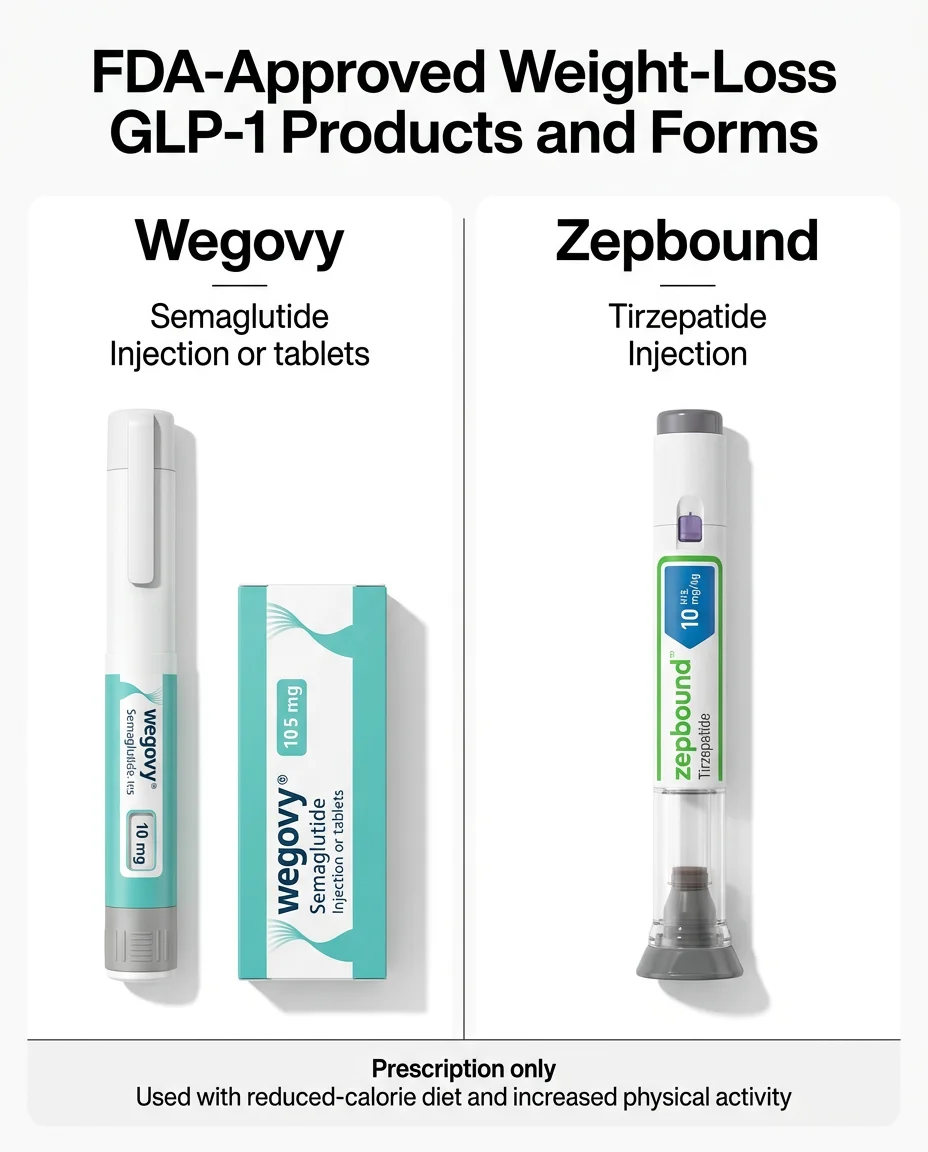
Wegovy HD vs Zepbound usually comes down to one question: are you upgrading or starting fresh? If you're starting from scratch, Zepbound is the stronger first conversation — it has a slightly higher top-dose result in trials, and it's the only one of the two FDA-approved to treat sleep apnea. If you're already on Wegovy 2.4 mg and you've stalled, Wegovy HD (the new 7.2 mg dose) is often the cleaner next step, because it keeps you on the same drug. Here's the catch nobody always says out loud: there is no clinical trial comparing Wegovy HD directly to Zepbound. Anyone claiming a proven winner is oversimplifying.
Pick by your situation (the 30-second version)
| If this is you… | Better first look | Why |
|---|---|---|
| Brand-new to GLP-1 meds | Zepbound | You can start on it. Wegovy HD is not a starting dose. |
| On Wegovy 2.4 mg and stalled | Wegovy HD | Stay on the same drug; the label allows the step up to 7.2 mg. |
| You have moderate-to-severe sleep apnea | Zepbound | It's the only one of the two FDA-approved for sleep apnea in adults with obesity. |
| You have known heart disease | Wegovy (semaglutide) | Semaglutide has FDA-approved heart-risk data; talk to your doctor. |
| Wegovy is already covered by your plan | Wegovy HD | Staying in-network can beat fighting for a switch. |
| You want the simplest cash price | Wegovy HD | $399/month flat vs Zepbound's "$449 if you refill in time." |
| You're on Medicare | Either can work | From July 2026, Wegovy (including HD) and the Zepbound KwikPen are both $50/month through the Medicare GLP-1 Bridge — but Zepbound's cheap vials aren't included. |
This is a starting point, not a prescription. Jump to the decision tool ↓ to get a pick built around your exact situation — or keep reading.
Wegovy HD vs Zepbound: the honest bottom line
Wegovy HD and Zepbound are both top-tier FDA-approved weight-loss injections, but they aren't interchangeable. Wegovy HD is a higher 7.2 mg dose of semaglutide for people who already tolerate regular Wegovy and need more. Zepbound is tirzepatide, works on two gut hormones instead of one, can be started from scratch, and is also approved for sleep apnea. The best choice depends on where you're starting, what your insurance covers, and your health history — not on a single trial number.
Let's clear up the words first, because they trip people up.
Wegovy HD is just regular Wegovy at a stronger dose: semaglutide 7.2 mg, taken as one shot a week. The FDA approved it on March 19, 2026. It is not a beginner dose. The label says you have to tolerate the 2.4 mg dose for at least 4 weeks first, and only move up if you need more weight loss. Think of it as an upgrade lane, not an on-ramp.
Zepbound is tirzepatide, also one shot a week. It's been FDA-approved for weight loss since November 2023. It's a “dual agonist,” which means it works on two appetite hormones (GIP and GLP-1) instead of one. You start low (2.5 mg) and step up over time. It's also the only one of the two that's FDA-approved to treat obstructive sleep apnea in adults with obesity.
Most people land in one of two camps:
- The upgrade camp. You're on Wegovy, you lost weight, then you stalled. You want more without starting over.
- The fresh-start (or switch) camp. You haven't started yet, or Wegovy didn't agree with you, and you're eyeing Zepbound.
We'll give you a clear path for both. But first, the thing every other page gets wrong.
Is there a head-to-head Wegovy HD vs Zepbound trial?
No. There is no clinical trial that puts Wegovy HD (7.2 mg) directly against Zepbound. The famous study people quote — where one drug beat the other by a lot — used the old 2.4 mg dose of Wegovy, not Wegovy HD. Wegovy HD's results come from its own separate trial. Comparing numbers across two different trials is not the same as proving a winner.
Here's the stat you've probably seen: in a head-to-head trial called SURMOUNT-5, tirzepatide led to about 20.2% weight loss versus about 13.7% for semaglutide over 72 weeks. That sounds like a knockout.
But read the fine print. That trial compared Zepbound to Wegovy at 1.7–2.4 mg — the old top dose. Wegovy HD didn't exist yet. It wasn't in the study. So that 20.2% vs 13.7% result tells you how Zepbound stacks up against old-dose Wegovy. It does not tell you how it stacks up against the new 7.2 mg HD dose.
When you look at the newer numbers side by side, the gap looks much smaller — but they come from different trials with different people, so treat “close” as “close,” not “settled.”
What we refuse to claim
We could juice this page with a clean “winner.” We won't, because it wouldn't be true. So here's what you will not see us say:
- ❌ “Wegovy HD is proven equal to Zepbound.” (No head-to-head trial exists.)
- ❌ “Zepbound is proven better than Wegovy HD.” (Same reason.)
- ❌ “They're identical because the numbers are close.” (Different trials.)
- ❌ “Compounded semaglutide or tirzepatide is the same as Wegovy HD or Zepbound.” (It isn't.)
Our one honest admission: if your only goal is the biggest proven weight-loss number, Zepbound has the better-documented track record today, and the one direct trial we have went its way. That's real.
But here's why that may not change your answer: that trial used old-dose Wegovy, and most real decisions aren't won or lost on a few percentage points. They're won on whether you can stay on the drug, afford it, and tolerate it. If you're already doing well on Wegovy, stepping up to HD is often the smarter, lower-friction move than switching drugs. And if Zepbound genuinely fits you better — say, you're starting fresh or you have sleep apnea — that matters more than a two-point gap in trial averages from different studies.
How much weight do people lose on Wegovy HD and Zepbound?
In the most conservative way of counting (the number that includes everyone in the study), Wegovy HD averaged about 18.8% body-weight loss at 72 weeks, and Zepbound's top 15 mg dose averaged about 20.9%. Those are close, but they come from two different trials, so the practical decision should ride on access, fit, cost, and side effects — not a two-point gap.
To compare fairly, you have to use the same method for both drugs. Here's the apples-to-apples version, using the “count everyone” number from each drug's FDA label:
| Metric | Wegovy HD (semaglutide 7.2 mg) | Zepbound (tirzepatide 15 mg) |
|---|---|---|
| Average weight loss at 72 weeks (counting everyone) | ~18.8% | ~20.9% |
| Compared with placebo in the same study | ~3.9% | ~3.1% |
| Compared with the older dose | Wegovy 2.4 mg: ~15.5% | — |
“Counting everyone” means people who quit early are included. The “stuck-with-it” numbers are higher (~20.7% for Wegovy HD, up to ~22.5% for Zepbound 15 mg). The gap stays about the same size either way — small.
What that could mean for your body
Trial averages aren't promises, but they help you picture it. Here's the simple math at three starting weights:
| Your starting weight | At ~18.8% (Wegovy HD avg) | At ~20.9% (Zepbound 15 mg avg) |
|---|---|---|
| 200 lb | ~38 lb | ~42 lb |
| 250 lb | ~47 lb | ~52 lb |
| 300 lb | ~56 lb | ~63 lb |
This is plain multiplication from study averages, not a prediction of your result. Some people lose much more, some less. Your dose, habits, and body all matter. Run your own numbers with our GLP-1 weight-loss calculator →
One more thing worth knowing: if you have type 2 diabetes, weight loss tends to run lower for both drugs. That's normal — just set expectations with your prescriber.
How much do Wegovy HD and Zepbound cost in 2026?
Without insurance, Wegovy HD runs about $399/month through the maker's cash program, and Zepbound runs about $299–$449/month — but Zepbound's lowest high-dose price has a catch (you have to refill within 45 days, or it can climb to roughly $499–$699). With commercial insurance that covers it, either drug can drop to as little as $25/month. Prices change often, so check yours before you commit.
All prices verified as of — recheck before you buy.
The cash price, side by side
| Pathway | Wegovy HD | Zepbound |
|---|---|---|
| Sticker (list) price | ~$1,349/month | ~$1,086/month |
| Maker's cash program | ~$399/month (NovoCare) | $299 (2.5 mg) / $399 (5 mg) / $449 (7.5–15 mg) (LillyDirect) — vial or KwikPen |
| With commercial insurance | as low as $25/month | as low as $25/month (KwikPen) |
| Medicare (from July 1, 2026) | $50/month via the Medicare GLP-1 Bridge (all Wegovy formulations including HD) | $50/month via the Bridge — KwikPen only; cheaper single-dose vials are not included |
Two things to flag
1. Zepbound's 45-day refill rule
That low price for the higher doses only holds if you refill within 45 days. Miss the window and the price for those doses can climb to roughly $499–$699, depending on dose and current terms. Wegovy HD, by contrast, is a simpler flat $399 in a pen — no window, no vial to draw.
2. Intro pricing has an expiration date
Some of Novo Nordisk's lower starter-dose offers run through December 31, 2026, and these programs can change anytime. If you're close to starting, it's worth checking the live price.
Our cost-per-result snapshot (an editorial estimate)
| Option | Yearly cash cost | Avg. weight loss | Rough cost per 1% lost |
|---|---|---|---|
| Wegovy HD ($399/mo) | $4,788 | 18.8% | ~$255 |
| Zepbound with the $449 offer (on-time refill) | $5,388 | 20.9% | ~$258 |
| Zepbound at ~$699 high-dose price (missed window) | $8,388 | 20.9% | ~$401 |
Editorial estimate only. Ignores dose ramp-up, insurance, and individual response. The takeaway: at the discounted cash prices, the two are nearly a tie on cost-per-result — and Zepbound only gets expensive if you miss that refill window.
✅ Check your coverage free — before you choose
Before you pay cash or ask to switch, find out what your insurance will actually do. Ro's free GLP-1 Insurance Coverage Checker reports whether your plan may cover Wegovy, Zepbound, or another GLP-1, and whether you'll need prior authorization. It's free to anyone — you don't have to be a member.
Check my GLP-1 coverage (free) →Can you get Wegovy HD or Zepbound on Medicare in 2026?
Yes — starting July 1, 2026. Before that date, Medicare generally won't cover either drug for weight loss alone. But from July 1, 2026 through 2027, the new Medicare GLP-1 Bridge gives eligible Part D members a flat $50/month copay for all Wegovy formulations (including the HD injection) and the Zepbound KwikPen. Zepbound's single-dose vials and single-dose pen are not included.
What's covered for $50/month (for weight loss): all forms of Wegovy — the HD injection, the standard injection, and the pill — plus the Zepbound KwikPen, and Foundayo. The $50 copay stays flat no matter how high your dose goes.
What's not covered through the Bridge: Zepbound's cheaper single-dose vials and its single-dose pen. If you want Zepbound on the Bridge, it has to be the KwikPen.
Who qualifies: you must be enrolled in a Medicare Part D plan (or a Medicare Advantage plan with drug coverage). Eligibility is based mainly on weight and health — generally a BMI of 35 or higher, or 27 or higher with a related condition like heart disease or prediabetes. Prior authorization is required.
Fine print: that $50 copay does not count toward your Part D deductible, and it does not count toward the annual out-of-pocket cap on your other drug costs. The Bridge runs through the end of 2027.
So on Medicare, this isn't really “Wegovy vs Zepbound” on price — both land at $50 through the Bridge. It becomes a fit question: which drug suits your body and goals?
Which one fits your situation?
The headline numbers are close, so your situation should break the tie. Sleep apnea points to Zepbound. Known heart disease points to semaglutide (Wegovy). Already doing well on Wegovy points to the HD step-up. Starting from zero points to Zepbound, since Wegovy HD isn't a starter dose. On Medicare, both land at $50/month through the Bridge (KwikPen for Zepbound). Match yourself to the right lane below.
- •You have moderate-to-severe sleep apnea (with obesity). → Lean Zepbound. It's the only one of the two FDA-approved to treat sleep apnea, and that approval can also help with coverage.
- •You have known heart disease. → Lean Wegovy (semaglutide). Wegovy is FDA-approved to lower the risk of major heart events in adults with established cardiovascular disease who are overweight or obese. That heart benefit was proven at the 2.4 mg dose — discuss whether HD changes anything for you.
- •You're already on Wegovy 2.4 mg and tolerating it well, but stalled. → Lean Wegovy HD. Same drug, no need to restart. The label literally built this dose for you. (Your plan may still want a fresh prior authorization for the higher dose.)
- •You've never started a GLP-1. → Lean Zepbound (if choosing between these two). You can't start on Wegovy HD — you'd start on regular Wegovy and work up. Zepbound is built to be started.
- •You're on Medicare. → Either can work. From July 2026, Wegovy (including HD) and the Zepbound KwikPen are both $50/month through the Bridge. Pick based on fit, not price.
- •Needles make you anxious. → Both come in easy-to-use pens. The cheapest Zepbound option is a vial you draw yourself — if you want grab-and-go simplicity, the Wegovy HD pen or the Zepbound KwikPen may suit you better.
- •Your budget tops out around $400/month. → Wegovy HD's flat $399 is the most predictable. Zepbound fits a ~$400 cap at the 5 mg dose ($399), but maintenance doses (7.5–15 mg) are $449 with on-time refills — and more if you miss the window.
Try our Wegovy HD vs Zepbound decision tool
Wegovy HD vs Zepbound Decision Tool
Answer what you can — we'll narrow it down. This is guidance, not a diagnosis — confirm with your prescriber.
Select at least two options above to see your personalized lean.
🎯 Found your lane? Here's your next move.
If you've got a clear lean, the simplest path is to see current pricing and start a medical intake with a provider that carries FDA-approved options and handles the insurance paperwork for you.
Side effects: what's the same, and what's different?
Both drugs cause the same core side effects — nausea, diarrhea, vomiting, constipation, and belly pain — and they're usually worst while you're moving up to a higher dose. Neither is “safer” for everyone. Two real differences: Wegovy HD has a notable rate of altered skin sensation, and Zepbound's label shows that more than half of users had some stomach-related side effect.
Let's be straight: these are powerful drugs, and the trade-off for big results is that most people feel something, especially early. Slowly raising the dose (titration) is the main way to keep them manageable.
| Side effect | Wegovy HD (7.2 mg) | Zepbound (5–15 mg) |
|---|---|---|
| Most common side effects | Nausea, vomiting, diarrhea, constipation, belly pain | Nausea, diarrhea, vomiting, constipation, belly pain |
| The standout signal | Dysesthesia ~22% (vs ~6% on the 2.4 mg dose, under 1% on placebo) | ~56% had some stomach-related side effect (vs ~30% on placebo) |
| Stopped due to stomach side effects | ~3% (similar to the 2.4 mg dose; under 1% on placebo) | ~1.9% (5 mg) to ~4.3% (15 mg); 0.5% on placebo |
| What to ask your prescriber | “How do I handle skin-sensation changes if they show up?” | “How do I manage stomach side effects during dose increases?” |
What stands out for Wegovy HD is dysesthesia — an odd or altered skin sensation, like tingling, numbness, sensitive skin, or a mild burning feeling. About 22% of people reported it in the Wegovy HD trial, compared with roughly 6% on the 2.4 mg dose. It's usually not dangerous, but it's real — tell your prescriber promptly if it shows up.
What stands out for Zepbound is that stomach side effects are common: about 56% of people had at least one across the 5, 10, and 15 mg doses. Most of it happened during the ramp-up and faded, and serious problems were rare.
The serious-but-rare risks — bring these to your doctor
Both medicines carry the same boxed warning and cautions. You don't need to memorize this, but you should discuss it before starting:
- Thyroid tumor warning. Both carry a boxed warning about a risk of thyroid C-cell tumors seen in animal studies. Do not use if you or a close family member has had medullary thyroid cancer or a condition called MEN 2.
- Pancreatitis (inflammation of the pancreas): rare, but seek care for severe, lasting belly pain.
- Gallbladder problems, which can come with fast weight loss.
- Dehydration and kidney strain if vomiting or diarrhea is severe.
- Severe stomach-emptying problems. Zepbound's label specifically says it's not recommended if you have severe gastrointestinal disease, including severe gastroparesis.
- Birth control pills (Zepbound). Zepbound can make oral birth control pills less effective, especially right after you start and after each dose increase. The label advises switching to a non-pill method, or adding a barrier method, for 4 weeks after starting and 4 weeks after each dose bump. Non-oral birth control is not affected.
- Eye changes in some people with diabetes (diabetic retinopathy).
- Surgery and anesthesia: because these drugs slow stomach emptying, tell your surgical team you're taking one before any procedure with sedation.
- Pregnancy: not for use if you're pregnant or planning to be.
One firm rule: don't take Wegovy and Zepbound together, or stack either one with another GLP-1 medicine. Both labels say combining them is not recommended. If you switch, you switch — you don't add.
Should you upgrade to Wegovy HD or switch to Zepbound?
The simple rule: upgrade to Wegovy HD if you're already doing reasonably well on Wegovy and mainly need more weight loss; switch to Zepbound if Wegovy isn't working, the side effects are too much, sleep apnea is in the picture, or your coverage favors Zepbound. Either way, it's a decision to make with your prescriber — and you should never take both at once.
Choose the upgrade (Wegovy → Wegovy HD) if:
- You lost weight on Wegovy, then plateaued.
- You tolerate the 2.4 mg dose fine.
- Your insurance already covers Wegovy.
- You'd rather not gamble on a new drug and a new approval.
Choose the switch (Wegovy → Zepbound) if:
- Wegovy didn't move the scale much for you.
- The side effects were rough.
- You have sleep apnea, or want the dual-hormone approach.
- Your plan prefers Zepbound.
The upgrade is usually the lower-friction move: same drug, no restart, often the same pharmacy. Just know that because Wegovy HD is a distinct 7.2 mg dose, your plan may still ask for a new or updated prior authorization before it pays for the higher strength.
Switching usually means a new prescription and, often, a new prior authorization, plus starting Zepbound low and working up again. It's not a dealbreaker — it's just more steps.
What people actually worry about with this choice
The same themes come up again and again: the fork in the road between stepping up to 7.2 and switching to Zepbound; the fear of “starting over” and losing hard-won progress; frustration that Zepbound isn't covered by their plan; and the dread of food noise and cravings coming back during a plateau. If you see yourself in those, you're in good company. This choice feels bigger than a prescription because it is — it's about not losing the progress you fought for.
Bring these questions to your prescriber
- Am I a better fit to step up to Wegovy HD, or to switch?
- Would my current side effects get worse at 7.2 mg?
- Would switching to Zepbound need a new prior authorization?
- If I switch, what dose do I start at?
- Do my sleep apnea, heart history, or diabetes change the call?
🧭 Not sure if you're an “upgrade” or a “switch” person?
That's the most common place people get stuck. Our free 60-second matching quiz asks a few questions and gives you a personalized action plan — including which drug to ask about and where to start.
Take the free 60-second matching quiz →How and where to get Wegovy HD or Zepbound
You have three honest routes: straight from the maker (NovoCare for Wegovy HD, LillyDirect for Zepbound), through your insurance with a prescription, or through a telehealth provider that handles the paperwork and can ship cash orders. All of them require a real prescription and a medical screening.
| Route | Rx needed? | Free insurance check? | Handles prior-auth? | Cash price up front? | Notes |
|---|---|---|---|---|---|
| Ro (telehealth) | Yes | Yes (open to everyone) | Yes (insurance concierge) | Yes — same as NovoCare/LillyDirect | Carries Zepbound (KwikPen + vial) and the Wegovy line; confirm exact Wegovy HD 7.2 mg availability at intake |
| NovoCare | Yes | Limited (savings tools) | Limited | Yes — ~$399 for Wegovy HD | Wegovy only |
| LillyDirect | Yes | Not for cash orders | Not for cash orders | Yes — $299–$449 | Zepbound only; vial or KwikPen; mind the 45-day refill rule |
| Sesame Care (telehealth) | Yes | Provider choice | Varies | Listed at intake | Branded GLP-1 lineup; solid option if you want to pick your provider |
Route 1 — Telehealth that does the heavy lifting (our pick: Ro)
If you want someone to check your coverage, handle the prior-authorization paperwork, and ship to your door, a telehealth provider is the easiest path. For these two FDA-approved brand-name drugs, our first recommendation is Ro, because it pairs branded GLP-1 access with real insurance support.
- Free insurance check for everyone (not just members) — it tells you what your plan may cover and whether prior authorization is likely.
- An insurance concierge that handles the prior-authorization paperwork for you.
- Branded GLP-1 options including Zepbound (KwikPen and the cash vial) and the Wegovy line, at the same cash prices as the makers' own programs.
- Membership pricing: $39 for the first month, then $149/month — or as low as $74/month if you prepay for a year. (Medication is billed separately.)
We like Ro here because the reader's biggest unknown is usually coverage, and Ro's free checker answers it before you spend anything.
Route 2 — Through your insurance
If your plan covers one of these for weight loss, this is usually the cheapest path — as low as $25/month. You'll need a prescription and, in most cases, prior authorization. If you get denied, don't stop there — ask your prescriber about filing an appeal or an exception request with supporting documentation.
Route 3 — Straight from the maker
- Wegovy HD: NovoCare's cash program, about $399/month.
- Zepbound: LillyDirect's cash options (vial or KwikPen), $299–$449/month (mind the 45-day refill rule).
You'll still need a valid prescription, and you manage the refills and logistics yourself. It's the most hands-on route, but there's no membership fee.
Who should not use these picks
- On Medicaid? Many of these cash and telehealth paths won't work for you. Talk to your state Medicaid program about coverage first.
- Looking for the cheapest “semaglutide” or “tirzepatide” you can find? That usually means a compounded version — a different decision with different risks. Read below first.
What we did not include: compounded look-alikes
This page is about FDA-approved Wegovy HD and FDA-approved Zepbound — full stop. We deliberately left out compounded semaglutide and compounded tirzepatide. The FDA says compounded GLP-1 drugs are not FDA-approved, and the agency doesn't review them for safety, effectiveness, or quality before they're sold. Compounded semaglutide is not Wegovy HD, and compounded tirzepatide is not Zepbound. They might be cheaper, but they're not the same product.
What we actually verified for this comparison
We built this page from primary sources: FDA approval notices and prescribing information for the medical facts, the makers' own pricing pages for costs, CMS for the Medicare rules, and provider pages for access details. Anything we couldn't fully confirm is labeled so you can double-check. We re-verify pricing monthly.
| What we checked | Where we checked it | Status |
|---|---|---|
| Wegovy HD FDA approval & dose rules | FDA approval notice + Wegovy prescribing information | Verified |
| Wegovy HD weight loss (~18.8% counting everyone) | Wegovy prescribing information | Verified |
| Wegovy HD dysesthesia rate (~22%) | Wegovy prescribing information | Verified |
| Zepbound indications, dosing, sleep apnea approval | Zepbound prescribing information | Verified |
| Zepbound weight loss (~20.9% at 15 mg, counting everyone) | Zepbound prescribing information | Verified |
| Zepbound GI side-effect rate (~56%), birth-control & gastroparesis cautions, don't combine GLP-1s | Zepbound prescribing information | Verified |
| Wegovy HD cash price (~$399) | NovoCare | Verified as of research date |
| Zepbound cash price & 45-day rule | LillyDirect | Verified as of research date |
| Medicare GLP-1 Bridge ($50/mo, July 2026; which drugs are/aren't covered) | CMS | Verified as of research date |
| Ro membership & free coverage checker | Ro | Verified as of research date |
| Exact per-symptom side-effect percentages; Wegovy HD availability on a specific telehealth provider | FDA labels / provider intake | Confirm at the source before relying on them |
How we decide a “winner” for a situation: we weigh how strong the evidence is, how much weight people lost, how easy it is to start, how predictable the cash price is, the insurance and Medicare path, fit for specific health conditions, side effects, switching friction, and how clear the next step is. Then we tell you which one leads — and we label that as our editorial conclusion, not a medical order.
Wegovy HD vs Zepbound FAQ
Still not sure which GLP-1 program is right for you?
Take our free 60-second matching quiz and get a personalized action plan.
Get my personalized GLP-1 action plan (free, 60 seconds) →Sources
- FDA — Wegovy HD approval announcement (fda.gov press release, March 2026)
- FDA — Wegovy (semaglutide) prescribing information (accessdata.fda.gov)
- FDA — Zepbound (tirzepatide) prescribing information (accessdata.fda.gov / dailymed.nlm.nih.gov)
- Eli Lilly — SURMOUNT-1 and SURMOUNT-5 results (investor.lilly.com; New England Journal of Medicine, 2025)
- Novo Nordisk — STEP UP program results and Wegovy HD label data
- NovoCare — Wegovy / Wegovy HD pricing (novocare.com)
- LillyDirect — Zepbound self-pay pricing (lilly.com/lillydirect)
- CMS — Medicare GLP-1 Bridge: Information for Beneficiaries (cms.gov)
- Ro — weight-loss pricing and GLP-1 Insurance Coverage Checker (ro.co)
- Sesame Care — online weight-loss program (sesamecare.com)
- FDA — concerns about unapproved (compounded) GLP-1 drugs (fda.gov)
About this article: Weight Loss Provider Guide is an independent comparison resource for GLP-1 telehealth providers. We compiled the medical facts on this page from FDA approval notices and prescribing information, the pricing from manufacturer pages (NovoCare and LillyDirect), the Medicare rules from CMS, and access details from provider pages (Ro and Sesame Care). We used reader forums only to understand people's concerns, never as medical evidence.
Affiliate disclosure: Some links on this page are affiliate links (Ro, Sesame Care). If you start care through one of our links, we may earn a commission at no extra cost to you. It never changes what we verified, what we recommend, or what we warn you about. LillyDirect and NovoCare are not partners — links to them are plain external links.
Medical disclaimer: This article is educational and is not a substitute for advice from your own clinician. A prescriber decides whether any medication is right for you.
Last updated: . Prices are reverified periodically.